
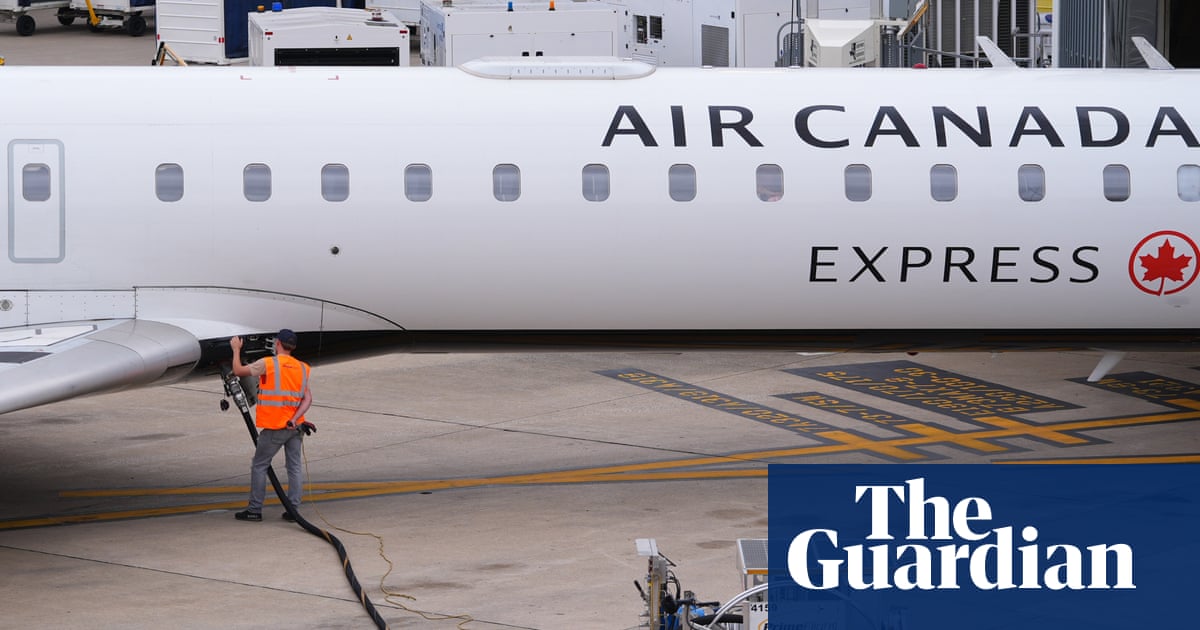
Air Canada is suspending flights from Toronto and Montreal to JFK starting 1 June, with service set to resume on 25 October, as jet fuel prices have doubled since the Iran conflict began. The airline says the changes will affect about 1% of passenger-carrying capacity, and it is also delaying other routes and reducing frequency on lower-profit flights. Rising fuel costs are prompting broader airline industry cuts and emergency funding requests, underscoring a sector-wide margin and demand squeeze.
This is not a simple route cut; it is a signal that marginal seat supply on transborder business-heavy corridors is becoming uneconomic faster than airlines can reprice. The first-order loser is AC.TO, but the second-order pressure is on every carrier with a short-haul network into high-frequency Northeast U.S. markets, where fuel is a larger share of ASM costs and schedule elasticity is low. If the fuel spike persists another 4-8 weeks, expect more frequency cuts on thinner routes before outright capacity reductions, which usually hits revenue quality before it hits headline load factors.
The market is likely underestimating how quickly this turns into margin compression for low-cost carriers and regional operators. When fuel doubles, the impact is nonlinear: routes that were only contributing modestly to fixed-cost absorption move from breakeven to destroyer status, forcing capacity rationalization or emergency balance sheet actions. Spirit's funding request is especially notable because it suggests the stress point is not demand but liquidity; that raises the odds of covenant pressure, sale-leaseback activity, and muted forward capacity growth across the leisure segment.
From a second-order perspective, fewer transborder flights can actually tighten pricing for surviving incumbents on core Canada-U.S. corridors, so AC is likely balancing yield protection against absolute capacity loss. The real macro risk is that this becomes a self-reinforcing loop: higher fuel → fewer flights → worse unit economics on remaining flights → more cancellations. A genuine reversal likely requires either a sustained fall in crude or visible stabilization in Middle East shipping insurance/freight, not just a one-day reopening headline.
The contrarian angle is that investors may be too quick to extrapolate this into a broad airline demand collapse. If premium transborder traffic is resilient, the carriers with the strongest hubs and best pricing power can preserve RASM even with fewer departures, while the weakest players are forced to shrink first. That suggests this is more a relative-value trade within airlines than a blanket short on the sector.
AI-powered research, real-time alerts, and portfolio analytics for institutional investors.
Request TrialOverall Sentiment
strongly negative
Sentiment Score
-0.55
Ticker Sentiment
