

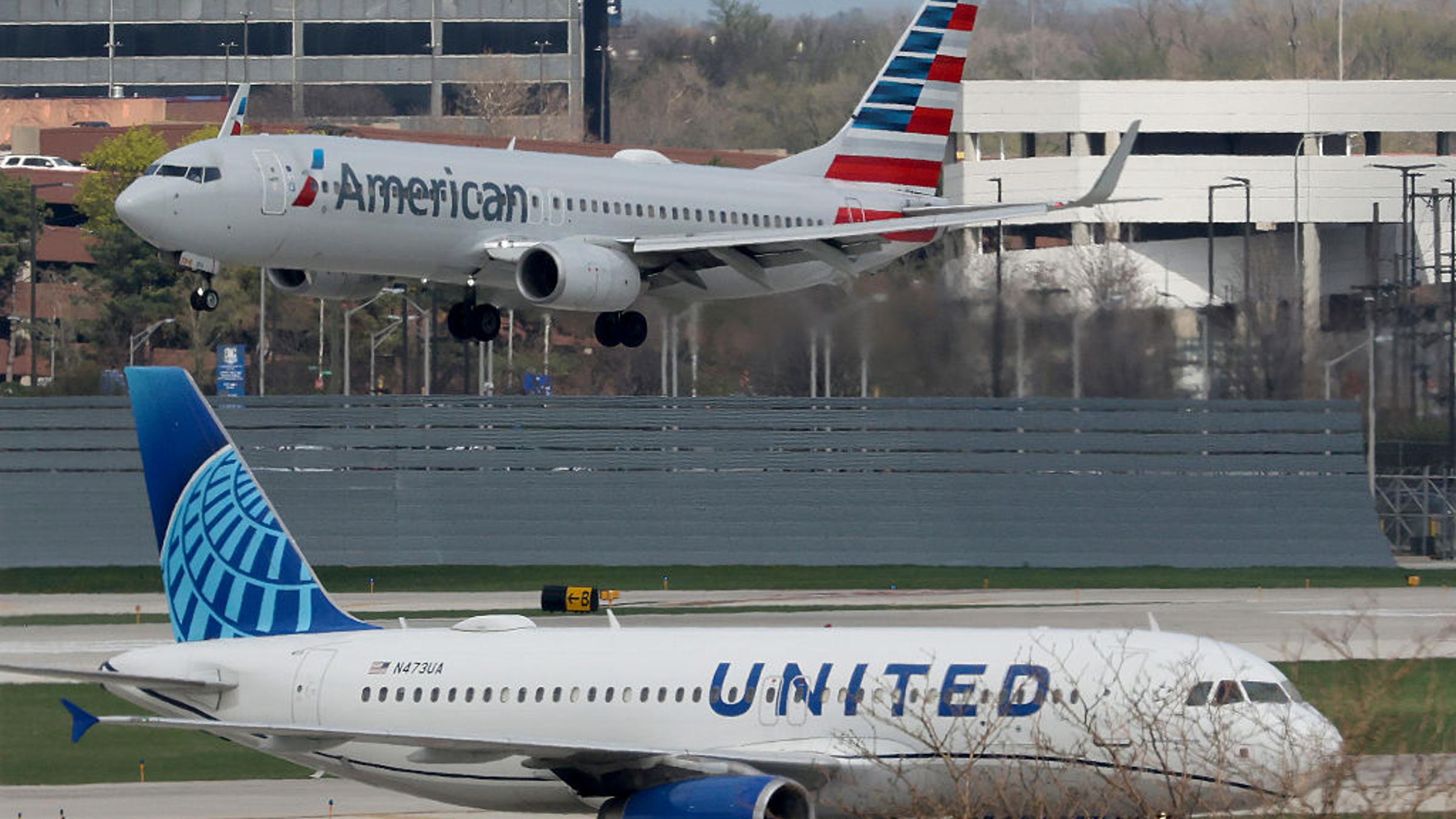
The FAA will cap daily flights at Chicago O’Hare at 2,708 from May 17 through Oct. 24, forcing up to 372 fewer flights per peak day to curb widespread summer delays. The order was driven by airport construction and capacity constraints, and it could meaningfully affect American Airlines and United Airlines, which the FAA said have expansion plans at O’Hare. American estimated cuts of no more than 40 flights per day, while United may need to cut about 200 flights per day at peak times.
This is a capacity reset, not a demand shock. The key second-order effect is yield dilution for the two dominant carriers at O’Hare: both are being forced to give up peak-day network leverage during the highest-margin leisure and business travel window, while competitors with less hub exposure can potentially re-route aircraft into less constrained Midwest markets and preserve utilization. In the near term, the operational loser is the carrier with the larger banked schedule and more connection-heavy exposure, because a cut at a hub has a nonlinear impact on missed connections, crew positioning, and aircraft rotations beyond the raw flight count.
The market may underappreciate that this is partly a normalization of service quality, which can be negative for topline but constructive for unit economics if it reduces irregular-ops costs, compensation, and reaccommodation spend. That said, the biggest risk is not just fewer departures; it is network spillover into forward bookings, corporate share, and loyalty economics if customers associate the hub with chronic unreliability into late summer. If construction progress disappoints, the restriction could become a rolling cadence issue, extending the drag into autumn scheduling and forcing capacity redeployment rather than a clean one-season fix.
From a trade perspective, the setup is more asymmetrically negative for the carrier with the heavier O’Hare buildout because the market will likely focus on lost revenue before accounting for offsetting yield support from higher reliability. The contrarian angle is that this may ultimately improve the competitive position of the stronger operator if it can absorb the cut with fewer network disruptions and pull share from a weaker rival in adjacent markets. The better risk/reward is to trade relative rather than outright, since both names face a temporary headwind but only one appears meaningfully more exposed to peak-day reductions and operational complexity.
AI-powered research, real-time alerts, and portfolio analytics for institutional investors.
Request TrialOverall Sentiment
mildly negative
Sentiment Score
-0.15
Ticker Sentiment
