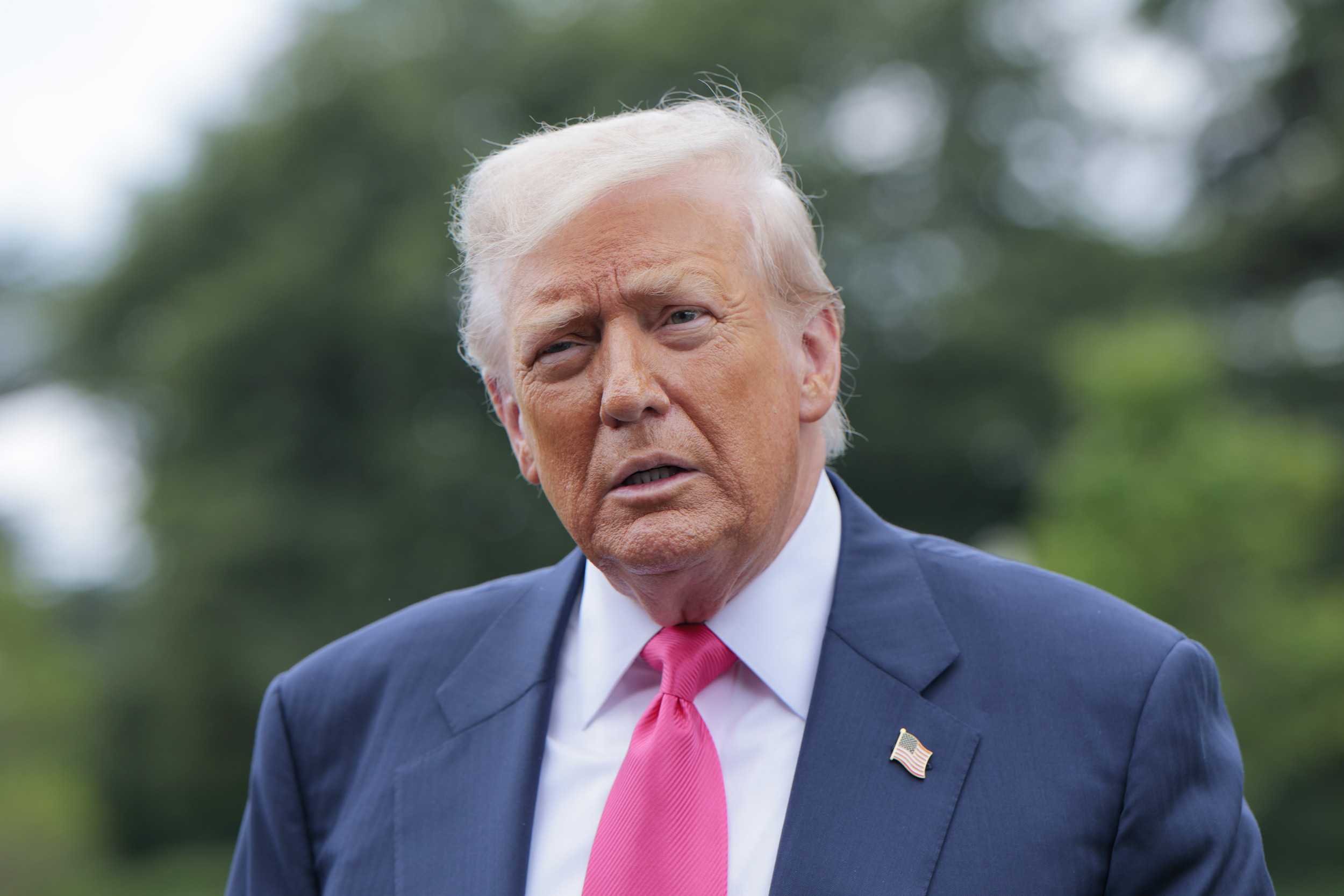
President Trump defended the weakening U.S. dollar, asserting its benefits for exports and tourism, even as the dollar index recorded a 1% weekly decline to 97.448 and a more than 10% year-to-date drop. However, financial experts largely dispute Trump's rationale, highlighting that a weaker dollar increases import costs and fuels inflation for U.S. consumers, contrary to his claims of eradicated inflation (June CPI rose 0.3%). They attribute the dollar's sustained weakness to concerns over U.S. fiscal policy and ballooning debt, warning of prolonged inflationary pressures for households despite potential benefits for multinational corporations.
The U.S. dollar is under significant pressure, evidenced by a 1% weekly decline in the dollar index to 97.448 and a more than 10% drop year-to-date. This weakness persists despite President Trump's public defense of a weaker currency as a tool to boost trade, a stance that introduces policy uncertainty. Financial experts cited in the report strongly contest this optimistic view, highlighting the negative ramifications for the U.S. economy, which is heavily reliant on consumption and imports. They argue a weaker dollar directly fuels inflation by increasing the cost of imported goods, a view supported by a 0.3% monthly rise in the June CPI and a 3% year-over-year increase in food costs, which contradict claims that inflation has been eliminated. The dollar's depreciation is attributed to fundamental concerns over U.S. fiscal policy, including deficit spending and ballooning debt, which are eroding global confidence. This structural weakness is notable as it occurs even with relatively high U.S. interest rates, signaling that macroeconomic risks may be overriding traditional currency drivers and could lead to prolonged inflationary pressure on U.S. households.
AI-powered research, real-time alerts, and portfolio analytics for institutional investors.
Overall Sentiment
moderately negative
Sentiment Score
-0.50
Ticker Sentiment
