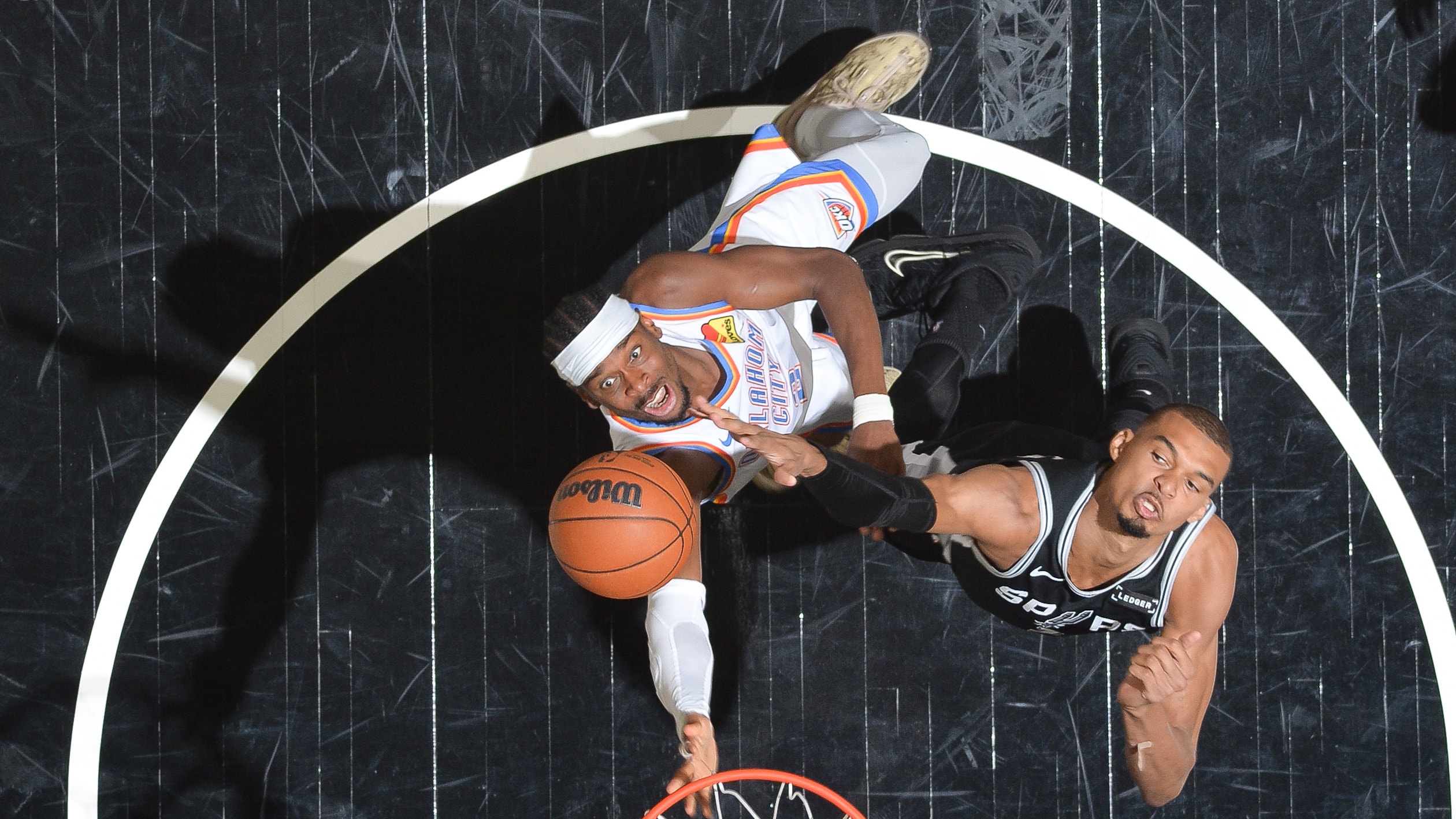
The article previews a Game 7 between the defending champion Oklahoma City Thunder and the San Antonio Spurs, with the winner advancing to face the New York Knicks in the Finals. Key on-court variables include Shai Gilgeous-Alexander's shooting efficiency, Victor Wembanyama's production, and the availability of Jalen Williams and Ajay Mitchell, both ruled out for Game 7. The piece is primarily sports analysis and has minimal direct market impact.
This is a pure attention-shock event, not a fundamentals story: a high-stakes Game 7 between elite, young teams is the kind of live-sports window that briefly de-risks cord-cutting narratives and concentrates audience share into a single programming slot. The immediate beneficiaries are the network and its ad stack, but the second-order effect is more important: if the telecast overperforms, it strengthens the negotiating leverage of premium live rights holders into the next media cycle, especially around NBA inventory scarcity and incremental pricing for postseason windows.
For media-adjacent equities, the setup is asymmetric because the outcome is binary while the monetization is multiplicative. A strong Game 7 audience can support CPMs, prove incremental value of streaming simulcast, and reinforce the thesis that live sports is the last defensible bastion against subscription churn. The loser is any name already priced for a softer live-sports engagement backdrop; this kind of event can compress the debate back toward “sports still matters” and extend the runway for rights-cost inflation to flow through to incumbents with scale.
The contrarian point is that the actual on-court quality gap has already been large in the series, so the market may underestimate how much outcome uncertainty matters more than star power for incremental ratings. If the game becomes a blowout early, the audience tail can decay fast despite the event branding, limiting the upside to ad inventory and social spillover. Conversely, a tight fourth quarter can create a same-night rerating in sentiment around live event scarcity, but the trade horizon is hours to days, not months.
The best risk-reward is to express this through media infrastructure and live-sports beneficiaries rather than the teams themselves: the money is in the attention flow and rights optionality, not the sport result. If the broadcast materially beats recent postseason comps, expect a short-lived rally in names with live-events leverage and a read-through to future bargaining power on sports rights.
AI-powered research, real-time alerts, and portfolio analytics for institutional investors.
Request TrialOverall Sentiment
neutral
Sentiment Score
0.05
