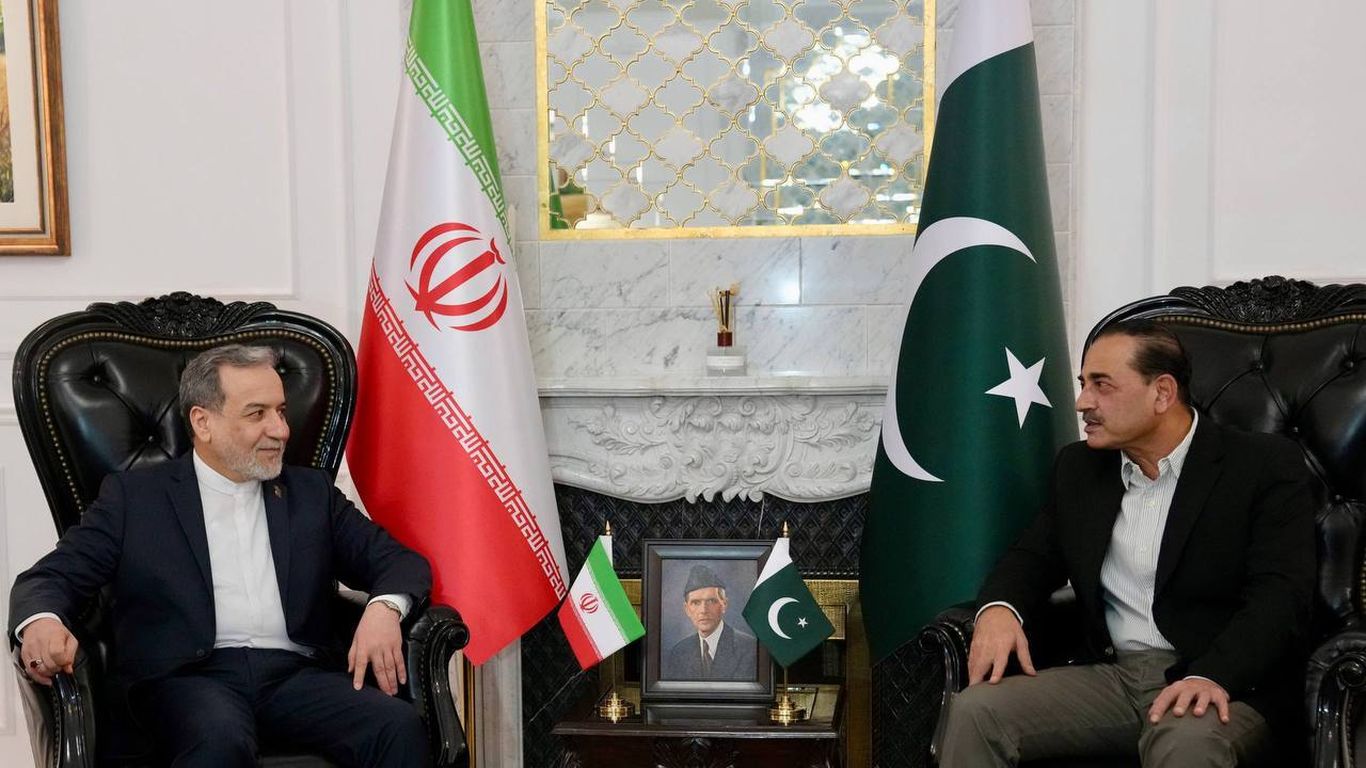
Iran has responded to the latest U.S. amendments to a draft war-ending plan, signaling diplomacy remains active even as Trump keeps a U.S. naval blockade in place and weighs further military action. The U.S. is pressing to keep the nuclear issue in the text and prevent Iran from moving enriched uranium from bombed sites or restarting activity there while talks continue. The situation remains highly volatile, with new military options reportedly briefed to Trump by senior U.S. national security officials.
This is less a détente than a managed escalation framework, which matters because markets tend to price binary war/no-war outcomes while the base case here is a prolonged coercive standoff. That is usually the worst setup for risk assets tied to the Gulf: shipping insurance, tanker availability, and regional risk premia can reprice immediately even if physical flows never fully stop. The first-order beneficiary is the U.S. security complex; the second-order beneficiary is any non-Gulf supply chain that can absorb incremental freight and insurance demand without direct exposure to Hormuz.
Energy is the cleanest transmission channel, but the more interesting trade is not simply “long oil.” The blockade/no-fly/military-threat backdrop creates a convexity premium for front-month crude and refined products, while medium-dated prices can lag if the market assumes diplomacy eventually resets flows. That steepens backwardation and can punish refiners if prompt feedstock becomes harder to source, even as upstream producers gain from higher realized prices. If the standoff persists for weeks, expect LNG, chemical feedstocks, and bulk freight to move as a cluster rather than as isolated headlines.
The contradiction in the setup is that both sides appear to be using military signaling to improve bargaining leverage, which makes the downside tail more about miscalculation than intent. The market is probably underpricing a short-duration spike in energy and defense spending, but overpricing the odds of an immediate full supply shock. The real inflection point is not the next statement from either capital; it is whether naval posture changes or tanker traffic metrics deteriorate over the next 3-10 trading days.
Contrarianly, a partial de-escalation would likely be bearish for crude faster than consensus expects because positioning tends to get crowded on headline risk before a true flow disruption occurs. If diplomacy re-opens even narrowly, volatility should collapse faster than outright prices, creating opportunity in options rather than directionally long energy. The cleanest edge is to own convexity into the event while avoiding overly linear exposure once the market starts to believe the corridor remains open.
AI-powered research, real-time alerts, and portfolio analytics for institutional investors.
Request DemoOverall Sentiment
moderately negative
Sentiment Score
-0.35
