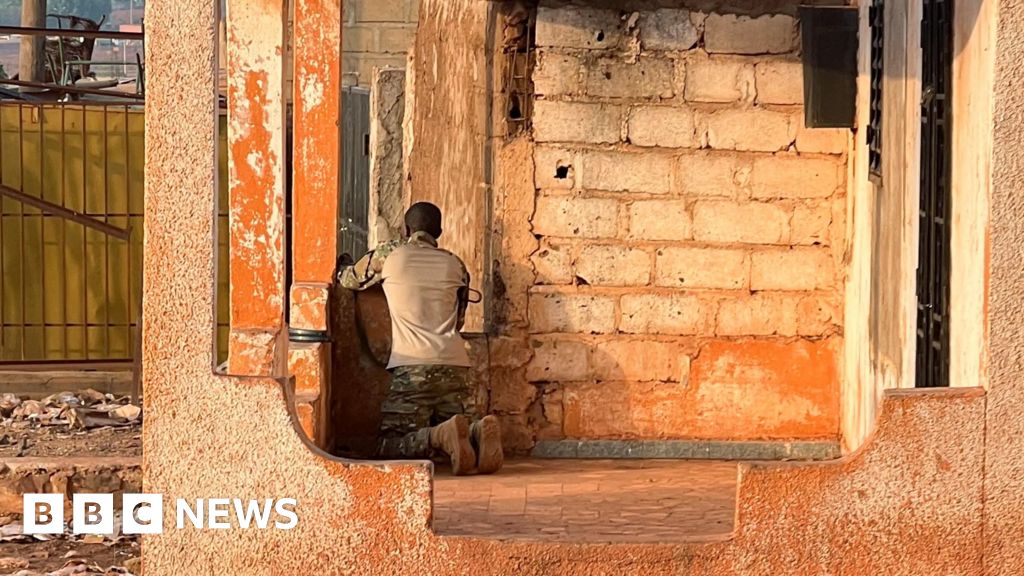
Armed groups launched coordinated attacks across Mali, including Bamako, with explosions and sustained gunfire reported near the Kati military base and Modibo Keita International Airport. Flights into Bamako were reportedly cancelled, while the US Embassy advised citizens to shelter in place amid ongoing fighting. The escalation heightens geopolitical risk in Mali, where the junta is still struggling to contain a long-running Islamist insurgency.
This is less a one-off security headline than a stress test of a fragile sovereign that sits on top of several regional transmission channels. The immediate market read is still local, but the second-order effect is a higher probability of logistics disruption across the Sahel corridor: if roads around the capital and airport remain intermittently shut, import-dependent businesses face inventory shortages within days, while insurers and reinsurers will likely widen war-risk pricing for West Africa routes over the next 1-3 weeks.
The bigger macro issue is credibility collapse in the junta’s security franchise. When a regime is already struggling to project control and then cannot secure the capital or key transport nodes, the market tends to reprice not just political risk but also the probability of fiscal slippage, capital controls, and delayed external support over the next 1-3 months. That hits domestic banks, telecoms, consumer imports, and any project finance tied to infrastructure or resource development, even if those names are not directly in the headlines.
Contrarian risk: the move may be under-extended in global terms because Mali is not a deep benchmark-weighted market, but the tail risk is regional contagion, not direct index beta. If the attacks prove coordinated and sustained, neighboring states and French-speaking frontier economies with similar insurgency risk can see a faster widening in sovereign spreads than equity markets imply, especially if foreign embassies issue broader travel/security advisories and aid flows pause. Conversely, if the junta restores airport access and arrests a credible network within 48-72 hours, the market can fade the headline quickly, but that would only address the tactical shock, not the structural insurgency premium.
For portfolios, the cleaner expression is to own the external beneficiaries of risk premia rather than try to short a thin local market. The event supports higher bids for defense/security contractors, private security providers, satellite surveillance, and energy/logistics names with exposed Sahel routes, while pressuring frontier sovereign debt sentiment across the region. The trade is best framed as a volatility event with a 1-4 week window for tactical dislocation and a 3-12 month window for deeper sovereign risk repricing if attacks persist.
AI-powered research, real-time alerts, and portfolio analytics for institutional investors.
Request DemoOverall Sentiment
strongly negative
Sentiment Score
-0.65
