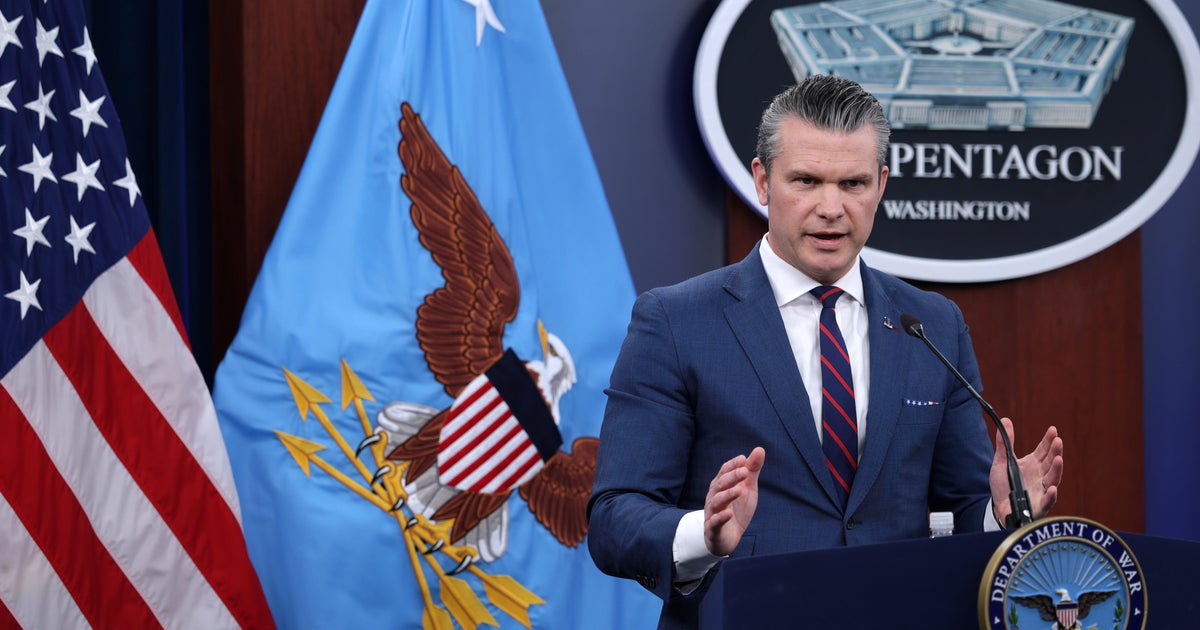
U.S. Defense Secretary Pete Hegseth and CENTCOM commander Adm. Brad Cooper held a briefing as the U.S. campaign against Iran, dubbed Operation Epic Fury, entered its sixth day; U.S. forces have reportedly struck nearly 2,000 targets with over 2,000 munitions and claim sinking an Iranian warship by torpedo. The conflict has produced at least six U.S. Army Reserve fatalities and a U.S. military buildup described as more than 50,000 troops, ~200 fighter aircraft, two carrier strike groups and bombers — the largest U.S. deployment in the Middle East in a generation. For investors this elevates near-term risk-off pressures: potential disruptions to regional oil supply, upside volatility in energy and defense equities, and safe-haven flows into Treasuries and gold if the campaign escalates.
Market structure: Defense primes (LMT, RTX, NOC, GD) and oil majors (XOM, CVX) are direct beneficiaries from sustained military action and higher risk premia; expect 5–15% relative outperformance in 1–3 months if regional activity persists. Losers include commercial airlines/cruise names (AAL, DAL, UAL, CCL, RCL) and logistics exposed to Gulf transit; these can underperform by 10–30% on prolonged disruptions. Supply/demand: a credible risk of 1–3 mb/d effective crude flow disruption (Strait of Hormuz routing/insurance spikes) tightens prompt crude balances and lifts front-month Brent/WTI spreads; oilfield services (SLB, HAL) benefit from higher activity and dayrates.
Risk assessment: Tail risks include rapid escalation to wider regional war, cyber strikes on pipelines, or OPEC+ political supply shocks pushing Brent > $120 (high-impact, low-probability) which would trigger stagflation and policy shock. Time horizons: immediate (days) = volatility spikes and flight-to-quality; short (weeks–months) = oil/defense repricing and widening credit spreads; long (quarters–years) = incremental US/EU defense budgets and capex in energy. Hidden dependencies: tanker insurance rates, re‑routing costs, and spare capacity at OPEC+ members; catalysts include OPEC meetings, diplomatic backchannels, and US force posture announcements.
Trade implications: Tactical: establish 2–3% long positions in LMT and RTX (core) and 1–2% long XOM/CVX if Brent closes >$90 for three consecutive sessions; pair trade long LMT (2%) / short DAL (1.5%) to express asymmetric defense vs travel risk. Options: buy 3‑month LMT 10% OTM call spreads sized to 1% NAV and buy 3‑month XOM call spreads if Brent >$95; hedges: 1–2% GLD and 2% TLT as volatility/flight hedges. Entry: deploy within next 5 trading days; exit: scale down if Brent falls 10% from peak or VIX <20.
Contrarian angles: Consensus may overpay for perpetual defense/oil exposure—histor precedents (1991 Gulf War, 2019 tanker incidents) show 30–50% mean reversion in 3–6 months after de‑escalation. Consider buying protection (5–7% notional puts) on core defense longs or selling premium (30‑day iron condors) on SPX if IV rank >70 to harvest inflated volatility. Long-term second‑order winners include renewable equipment names (ENPH, BE) if oil stays >$100 for 6–12 months; consider a small 0.5–1% thematic overweight contingent on sustained energy prices.
AI-powered research, real-time alerts, and portfolio analytics for institutional investors.
Request TrialOverall Sentiment
moderately negative
Sentiment Score
-0.60
