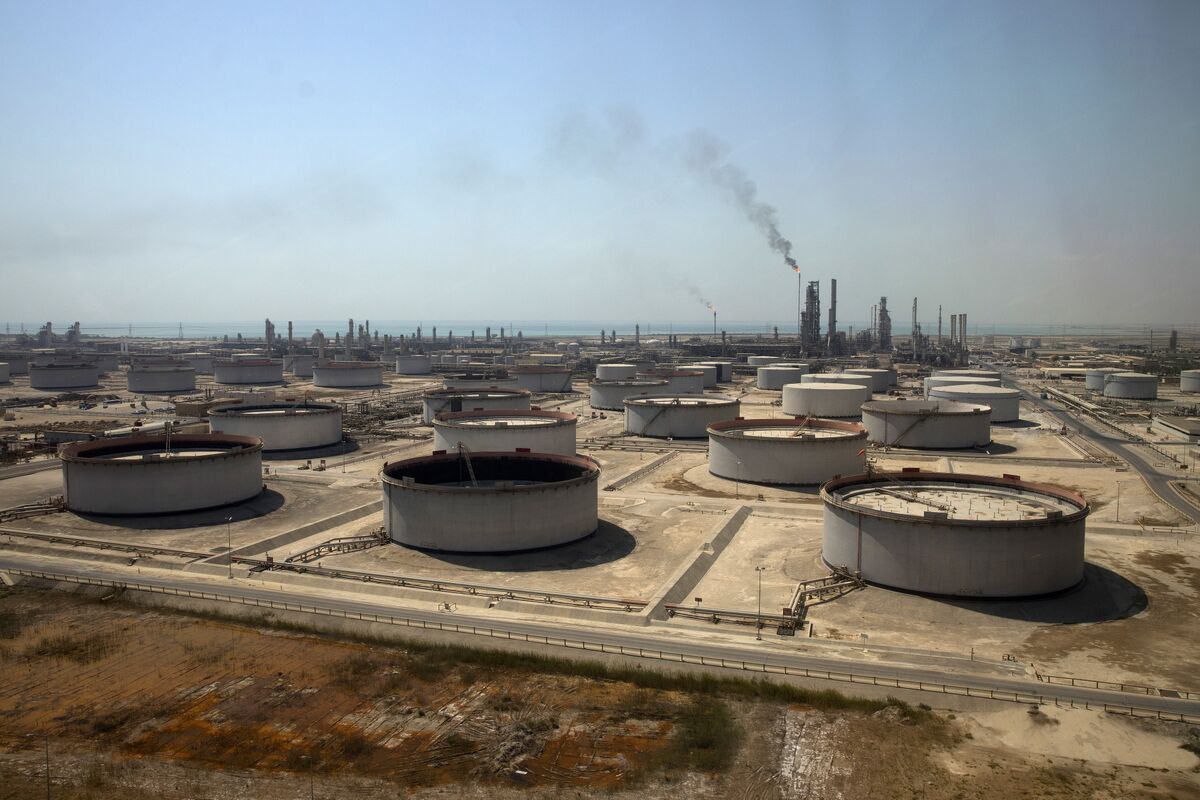
OPEC crude output plunged by a record 7.88 million barrels per day to 20.79 million barrels per day in March, as Middle East conflict throttled exports from Iraq, Saudi Arabia, the UAE and Kuwait. The decline is the steepest in data back to the 1980s and underscores a significant geopolitical supply shock for global oil markets.
The immediate winner is not just crude itself but the entire complex of marginal barrels and call options on higher flat price: US shale, Canadian heavy, and offshore producers gain pricing power precisely because Middle East supply risk is the most politically constrained source of replacement barrels. The second-order effect is a wider prompt-time structure, which tends to reward storage, physical traders, and refiners with inventory optionality more than outright upstream beta if the disruption proves temporary. The market may be underestimating how quickly this can transmit into distillate and freight rather than staying confined to Brent. When Middle East exports are impaired, the system loses not only crude molecules but also the most flexible low-sulfur feedstock slate, which can lift middle distillate cracks and benefit refiners with advantaged crude access while hurting airlines, trucking, and chemicals on a 1-3 month lag. The key risk is policy reversal, not geology: once price spikes threaten inflation optics, the likely response is a mix of SPR signaling, diplomatic de-escalation, and opportunistic rerouting that can cap the upside faster than analysts expect. If this is a short-duration supply shock, the trade is a volatility event rather than a secular re-pricing; if it persists beyond a few weeks, downstream demand destruction and recession odds start to overwhelm the initial supply premium. Contrarian view: consensus may be too focused on headline crude tightness and not enough on the fact that the disruption clusters in producers who can eventually restore flows if hostilities stabilize. That makes the near-term asymmetric trade one of owning oil volatility and relative value within energy, not blindly chasing spot exposure. The cleaner expression is long beneficiaries with low breakeven and short oil-sensitive consumers where margin compression is not yet fully discounted.
AI-powered research, real-time alerts, and portfolio analytics for institutional investors.
Request DemoOverall Sentiment
strongly negative
Sentiment Score
-0.55
