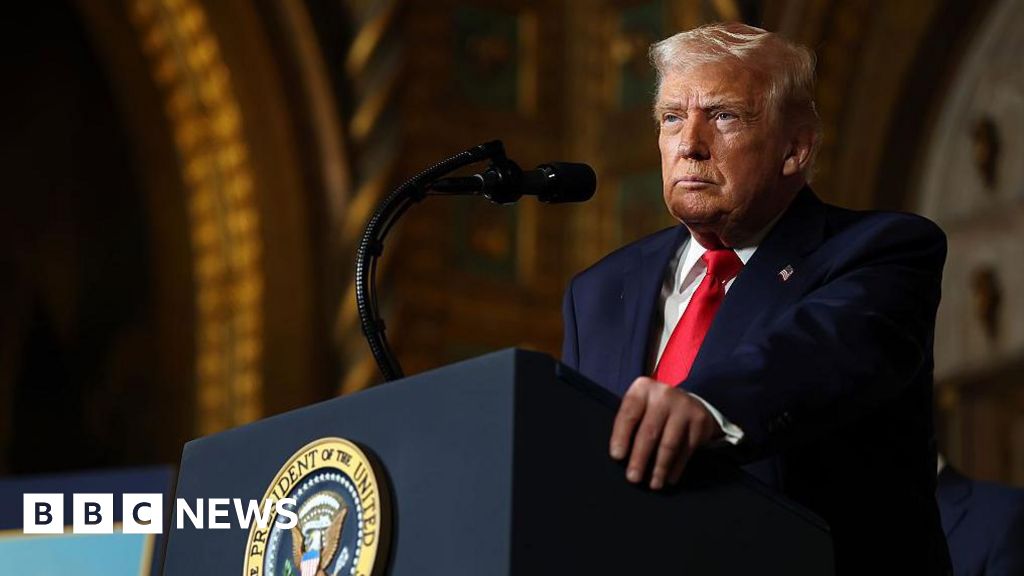
The US carried out coordinated strikes with Nigerian forces against Islamic State elements in Sokoto state, which the US and Nigerian officials described as a joint operation and said could be followed by further action. The action follows President Trump’s designation of Nigeria as a “Country of Particular Concern,” a step that can enable sanctions, and underscores deeper US security involvement in Nigeria amid disputed claims of targeted religious violence. For investors, the operation modestly raises geopolitical and sovereign-risk considerations for Nigeria, supports potential upside for defense exposure, and presents downside risk to regional stability and FX/commodity-sensitive assets.
MARKET STRUCTURE: The US strike and designation of Nigeria as a "Country of Particular Concern" raises risk premia in African EM assets and modestly benefits US defense contractors; expect a 10–50bp immediate widening in Nigeria sovereign USD spreads and a 1–3% weakening of NGN in the first 7–14 days if operations expand. Oil supply fundamentals are largely unaffected (Nigeria oil geography is southern), so direct commodity shocks to Brent are capped to a tactical +$0.5–$3/bl via risk premium rather than physical disruption. Financing and insurance costs for regional projects (energy, mining, infra) will rise 50–200bps, pressuring project IRRs and new FDI flows in next 3–12 months.
RISK ASSESSMENT: Tail risks include a retaliatory terrorist attack in Nigeria or against Western assets (low prob. 5–15% over 6 months but high impact), US/Nigerian escalation leading to sanctions on trade partners, or domestic backlash that increases civil instability and refugee flows; each could widen EM spreads 100–300bps and push safe-haven Treasuries yields down 20–60bps. Short-term (days–weeks) expect risk-off; medium-term (3–12 months) depends on Tinubu-US coordination and local counterinsurgency efficacy; long-term (years) the structural farmers/herders conflict still determines stability. Hidden dependency: political optics in US (election cycle) may drive policy irrespective of on-the-ground effectiveness, accelerating or halting aid/operations within 30–90 days.
TRADE IMPLICATIONS: Tactical safe-haven longs (USTs, gold) and selective defense longs are actionable; expect defense tickers to re-rate 3–8% on renewed small-scale overseas ops over 1–3 months while EMB and Nigeria exposure underperform. FX pair trades (long USD/NGN) and short EM sovereign credit are preferred; oil call spreads are a cheap gamma play if escalation spreads beyond Nigeria. Monitor CDS moves: a >100bp move in Nigeria CDS should trigger de-risking of regional EM positions.
CONTRARIAN ANGLES: Consensus may overstate direct benefit to large US defense primes (LMT, RTX) because AFRICOM operations are low-capex; upside may be limited to 3–8% and already partially priced. More underpriced is the tail that sanctions or persistent instability would materially impact Nigerian debt service and oil sector contracts — that outcome would be asymmetric and under-hedged by many EM holders. Historical parallels (limited US strikes in Somalia/Mali) show short-lived risk-off followed by normalization in 2–6 months unless local governance collapses; trades should be sized for that skew.
AI-powered research, real-time alerts, and portfolio analytics for institutional investors.
Request DemoOverall Sentiment
moderately negative
Sentiment Score
-0.35
