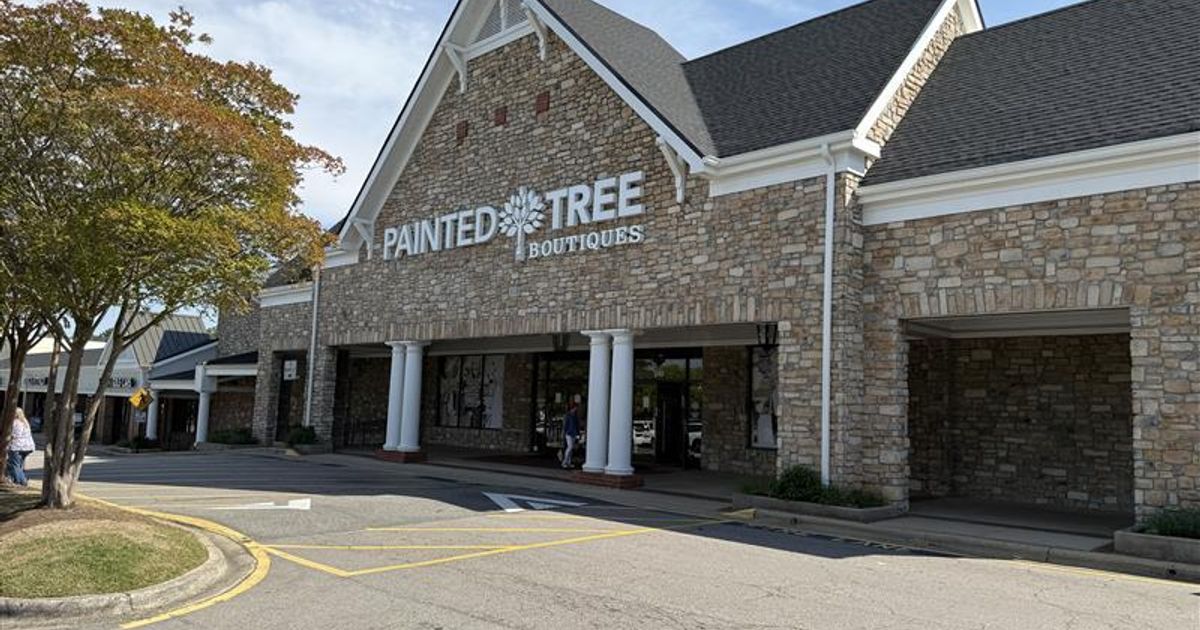
Painted Tree Boutiques will cease all business operations immediately, shutting down more than 60 stores nationwide, including locations in Raleigh and Cary, North Carolina. Vendors were told to retrieve inventory by Sunday, April 24. The closure points to a significant operational failure and is negative for small-business retail tenants and partner vendors, though the broader market impact should be limited.
This is less about one distressed niche operator and more about the fragility of the local-retail “platform” model: the economics depend on high occupancy, fast vendor churn, and trust that the host keeps traffic flowing. When the operator shuts down abruptly, the damage is asymmetric—small merchants lose inventory access and working capital immediately, while landlords inherit a messy re-leasing process and likely lower rent per square foot. That creates a second-order pressure on any comparable concept that monetizes micro-tenants, shared storefronts, or short-duration leases, because vendors will now demand tighter cash controls and clearer escrow protections.
The near-term loser set is broad in private markets: retail incubators, suburban strip centers, and any franchised multi-vendor concept that uses prepayment or consignment-like structures. The risk is not just store closures; it is a confidence shock that can reduce vendor willingness to prepay build-out fees or hold inventory in speculative channels for the next 2-3 quarters. If this spills into lender scrutiny, small-format retail operators with weak liquidity could face a funding squeeze before sales data deteriorates visibly.
For public comps, the signal is mildly bearish for leasing velocity in secondary suburban retail, but the more actionable angle is distress optionality. If the business model was reliant on monthly vendor turnover, replacement economics deteriorate quickly after a reputational event like this, which can reset valuation of adjacent concepts downward even without direct exposure. The contrarian view is that one failed operator does not equal a category collapse; prime-center landlords and experiential retail with real traffic generation may benefit as vendors migrate to better-capitalized platforms with stricter underwriting.
Catalyst-wise, the next 1-3 weeks matter for inventory retrieval, legal claims, and whether landlords begin marketing vacated boxes at concessions. Over 3-12 months, watch for broker comments on small-format retail renewals and any uptick in vacancy or tenant improvement allowances in tertiary suburban malls and strip centers.
AI-powered research, real-time alerts, and portfolio analytics for institutional investors.
Request TrialOverall Sentiment
strongly negative
Sentiment Score
-0.75
