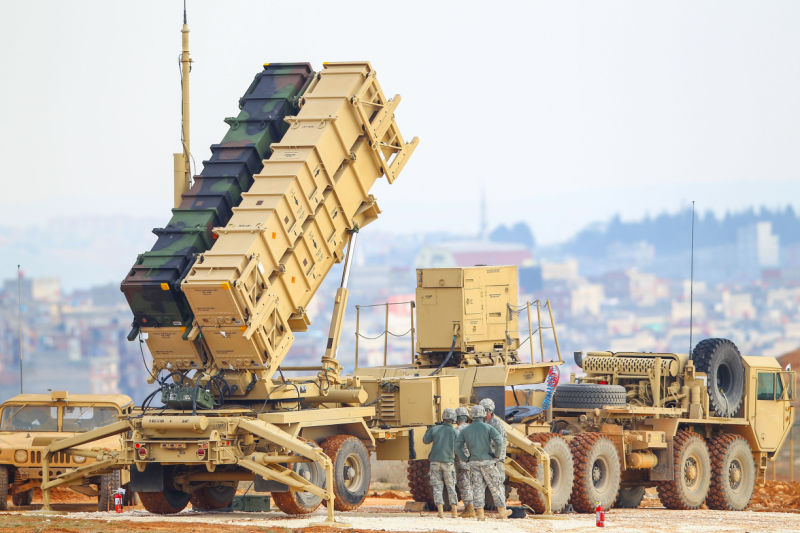
The Trump administration approved more than $8.6 billion in military sales to Israel, Qatar, Kuwait, and the UAE by bypassing standard congressional review through emergency waivers. The packages include $4.01 billion in Patriot missile replenishment for Qatar, $2.5 billion for Kuwait's battle command system, and APKWS sales to Qatar, Israel, and the UAE. The move underscores elevated geopolitical risk in the region and is likely supportive for defense contractors including BAE Systems, RTX, Lockheed Martin, and Northrop Grumman.
This is a clearer read-through for the large-cap defense complex than for the geopolitical headlines themselves. The marginal benefit accrues to the suppliers with existing U.S. government channel leverage and high mix of spares/munitions: RTX, LMT, and NOC get a bid to backlog visibility and near-term book-to-bill, but the real second-order effect is that emergency-waiver procurement shortens decision latency and raises the probability of repeat orders if regional threat levels remain elevated into next quarter. That matters more for RTX than for the others because missile defense replenishment and interceptors tend to convert faster into revenue than platform-heavy awards.
The underappreciated point is that these approvals are not just “more defense spending”; they are a signal that the Pentagon/State Department is prioritizing readiness stockpiles over diplomatic friction. That creates a setup for margin support in munitions and integrated air-defense chains, but also increases the risk of production bottlenecks if demand compounds across allied theaters. In that scenario, the winners are the names with higher aftermarket/service content and the losers are primes that need large-platform conversion cycles to show through in quarterly numbers.
The move is probably overdone in the very short term for anything outside the named defense beneficiaries. There is no direct fundamental link to EBAY, and any auction-platform acquisition chatter looks like noise relative to the materiality here; the actionable trade is not a broad “risk-on” expression but a selective defense basket against a market that may have to reprice sustained replenishment demand over 3–6 months. Contrarian risk: if ceasefire conditions hold and emergency waivers fade, the trade reverts quickly because the headline value can be politically large while the recurring revenue impact is only moderate unless follow-on orders materialize.
AI-powered research, real-time alerts, and portfolio analytics for institutional investors.
Request DemoOverall Sentiment
neutral
Sentiment Score
-0.05
Ticker Sentiment
