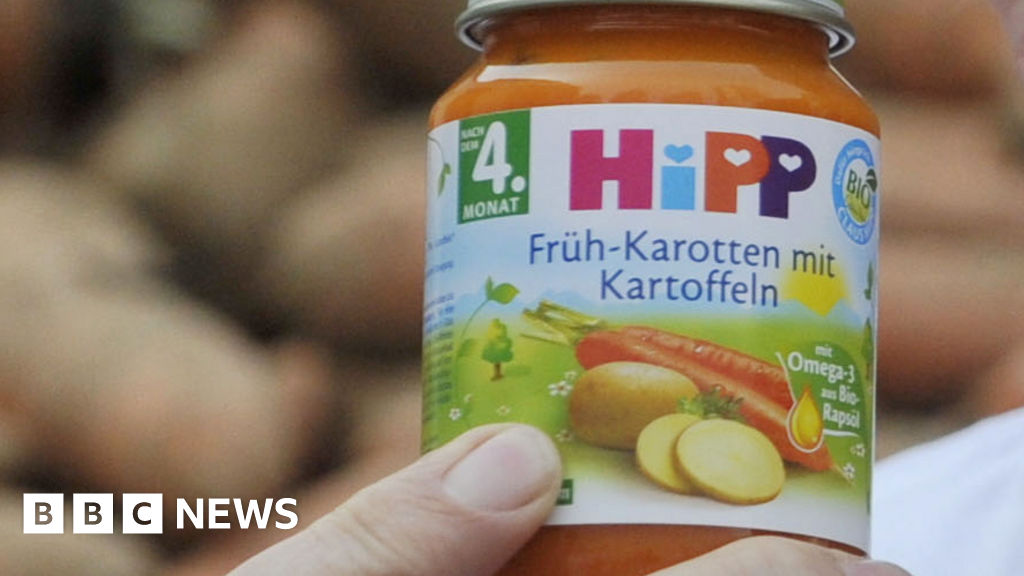
A 39-year-old man was arrested in Austria after rat poison was found in baby food jars, triggering a recall by HiPP and the recovery of five contaminated jars across Austria, the Czech Republic, and Slovakia. Authorities say at least one poisoned jar may still be in circulation, and parents have been warned to watch for tampering signs and seek medical advice if infants show symptoms. The incident is materially negative for HiPP from a product safety, legal, and reputational standpoint, though the broader market impact should be limited.
This is less a single-brand incident than a broad trust shock to the packaged infant nutrition category. The immediate winner is not a direct competitor in the same aisle so much as the entire “fresh-prepared” and private-label ecosystem, where parents can switch quickly on perceived safety rather than price. The first-order volume hit should be concentrated in the next 1-4 weeks, but the margin damage can persist for several quarters if retailers demand additional testing, traceability documentation, and shelf resets.
The bigger second-order risk is governance and compliance contagion: if consumers infer that a premium brand’s QA controls missed both physical tampering and delayed internal escalation, the market will start pricing the category on process reliability rather than brand equity. That tends to favor incumbents with vertically integrated supply chains, serialized packaging, and stronger retailer relationships, while penalizing firms with outsourced co-packers or long audit cycles. The recall also creates a cost inflation wedge as companies across the category likely increase lab testing, tamper-evident packaging, and insurance spend, which may compress gross margins even where volumes recover.
For the accused manufacturer, the main bearish catalyst is not the arrest itself but the likely extension of the incident into litigation, regulatory scrutiny, and retailer de-listing risk over the next 30-180 days. The upside reversal case would require rapid forensic proof that contamination was isolated and that controls caught the issue before consumer harm, which would cap the duration of the demand hit. Absent that, this looks like a classic “reputation decay” event where the stock impact can outlast the operational incident by 2-3 quarters.
The contrarian angle is that the market may overestimate permanent brand damage if no additional poisoned jars are found and the company responds with unusually aggressive remediation. In that scenario, the bigger trade is not a long-term consumer-share rerating but a short-lived squeeze in supply-chain and compliance costs, especially for peers with weaker food-safety infrastructure. The safest expression is to fade any broad rally in the infant-food subgroup and wait for evidence of retailer pushback before assuming the category’s demand shift is durable.
AI-powered research, real-time alerts, and portfolio analytics for institutional investors.
Request DemoOverall Sentiment
strongly negative
Sentiment Score
-0.70
