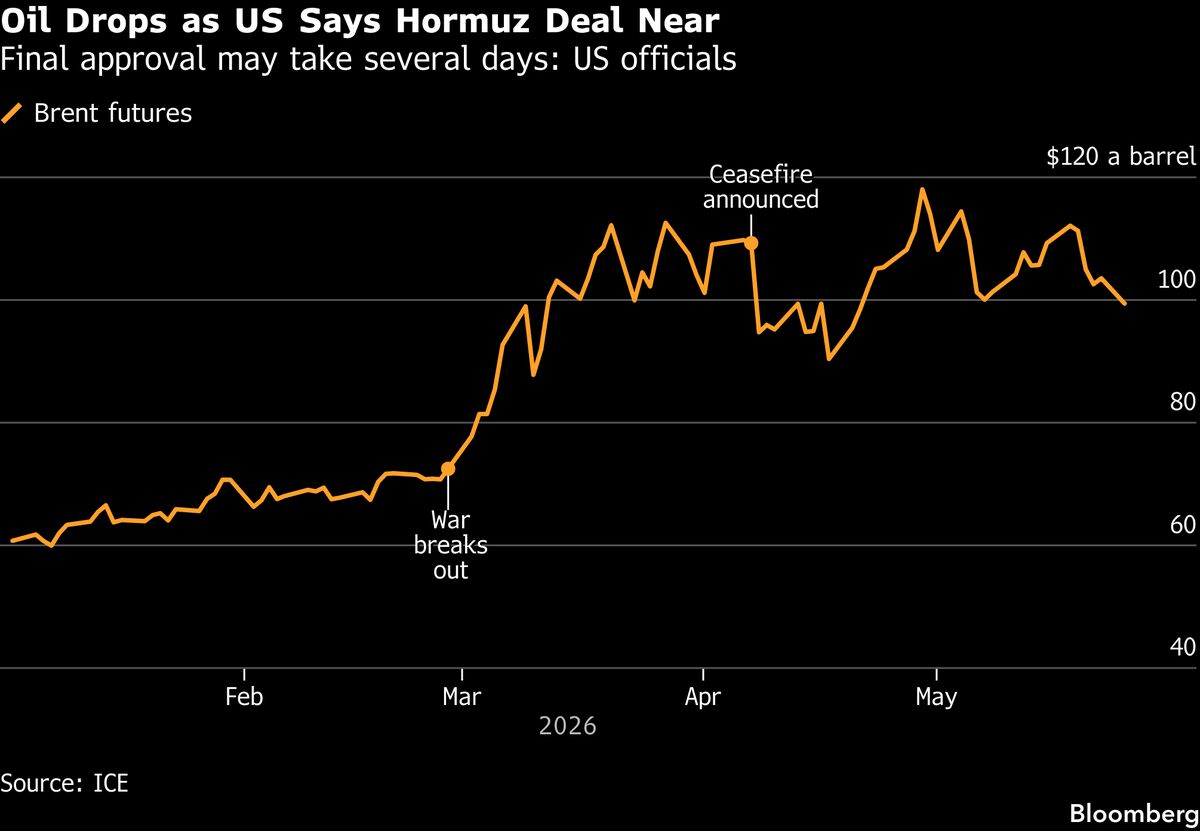
Markets rallied on signs the US and Iran are inching toward a deal, lifting global equities toward record highs while crude oil fell on hopes the Strait of Hormuz could remain open and oil flows restored. The dollar weakened and Japanese government bonds rallied as risk sentiment improved. Secretary of State Marco Rubio said the US was giving diplomacy every chance, reinforcing the market's optimistic tone.
The first-order move is straightforward: lower geopolitical risk premium compresses oil, but the more interesting effect is cross-asset positioning unwind. Crowded long-energy / long-dollar / short-duration hedges are vulnerable if this de-escalation holds for even a few sessions, because systematic strategies will likely force more selling in crude-linked vol and re-risking into cyclicals and high beta equities.
The second-order beneficiary set is broader than “oil importers.” Asia-centric transport, airlines, chemicals, and consumer discretionary in oil-sensitive economies should see margin relief, while the biggest losers are producers and any balance sheets levered to $75+ crude assumptions. A sustained reopening of the Strait of Hormuz would also reduce shipping insurance and tanker rates, which is a hidden headwind for energy freight winners and a tailwind for global trade-sensitive names.
The key risk is that the market is pricing a durable diplomatic resolution off a very thin signal set. A headline-driven fade is likely if negotiations stall, if enforcement details are vague, or if any hardline response reintroduces supply risk; that matters more on a days-to-weeks horizon than over months, where the base case remains a volatile negotiation process rather than a clean settlement.
Contrarian read: the move may be directionally right but too large in duration. Even if flows normalize, spare capacity, sanctions enforcement, and tanker routing frictions mean the market should probably price a lower but non-zero geopolitical premium rather than a full unwind. That argues for fading extreme downside in crude rather than outright chasing beta into the hardest rallying equities.
AI-powered research, real-time alerts, and portfolio analytics for institutional investors.
Overall Sentiment
moderately positive
Sentiment Score
0.58
