
Who Is Lorna Hajdini? The JPMorgan Executive Named In Lawsuit Over Workplace Allegations
Source: NDTV
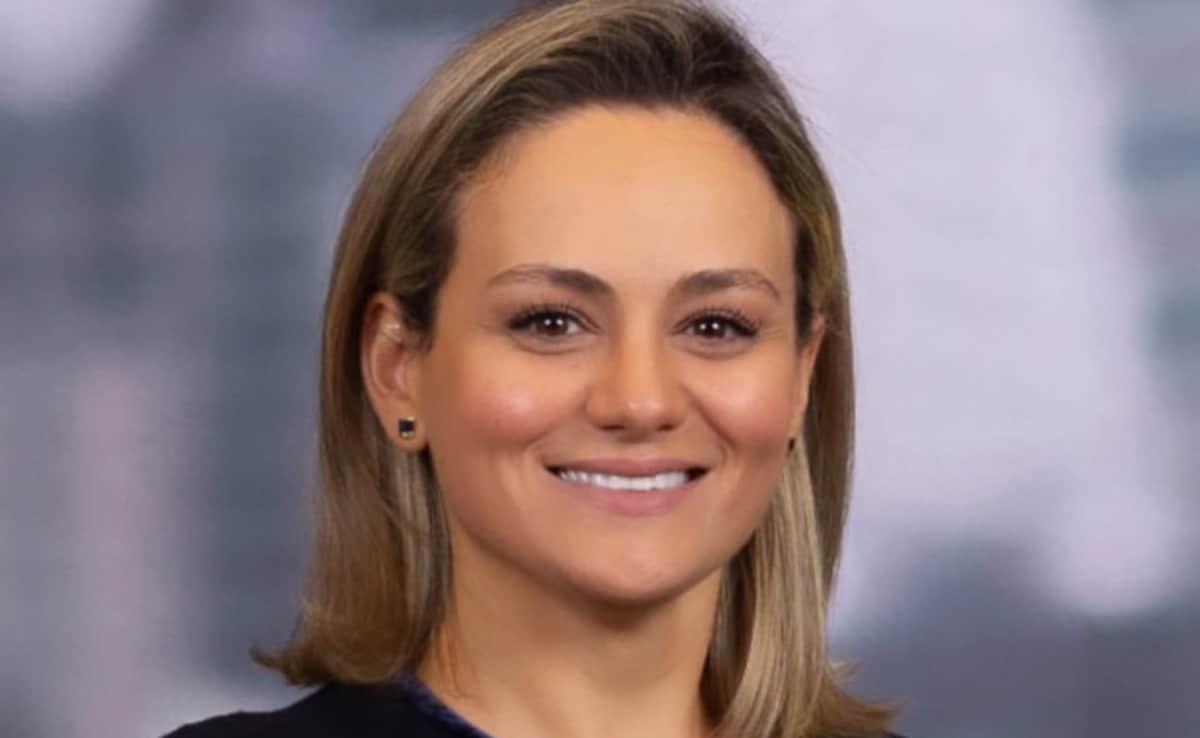
A JPMorgan executive director, Lorna Hajdini, has been accused in a lawsuit of sexual abuse, racial harassment, and professional coercion by a junior colleague, with the complaint filed in New York County Supreme Court on Apr. 27. JPMorgan says an internal HR and legal investigation found no evidence supporting the allegations. The case raises reputational and governance risk for the bank, but immediate market impact is likely limited unless new evidence emerges.
Analysis
This is less about the headline allegation itself than about the asymmetry between reputational risk and legal process risk for a systemically important bank. Even when the facts ultimately do not support the claim, senior-level misconduct cases tend to raise the expected cost of control failures: more legal spend, tighter HR oversight, slower internal mobility, and a modest but persistent drag on culture-sensitive hiring in revenue-generating teams. For a franchise like JPM, that matters most in businesses where relationship continuity and team cohesion are part of the product — leveraged finance, sponsor coverage, and capital markets execution.
The second-order issue is governance optics. Management can contain direct financial damage quickly, but repeated conduct narratives around any large bank create a longer-duration discount via board scrutiny, investor questions on incentive design, and a higher probability of follow-on claims once a lawsuit becomes public. That can translate into a small but real multiple headwind if the market starts pricing a pattern rather than an isolated incident, especially into earnings season when analysts probe expense discipline and operating leverage.
From a trading perspective, the immediate price impact is likely to be muted unless discovery yields new facts or additional claimants emerge. The bigger catalyst set is over the next 1-3 months: amended complaints, counsel commentary, and any sign of internal control lapses beyond the initial investigation. If the case stays contained and no broader governance thread develops, the move is likely to fade; if not, the issue can broaden from a single-name legal overhang into a sector-wide conversation about staffing, supervision, and conduct risk in large-cap banks.
The contrarian angle is that the market may already be well trained to discount these episodes as headline noise unless they implicate senior management directly or produce regulator engagement. That suggests the better expression is not a blunt short JPM, but a relative-value or options-based hedge that benefits from volatility compression if the company quickly reestablishes control of the narrative.
AllMind Terminal
AI-powered research, real-time alerts, and portfolio analytics for institutional investors.
Request TrialMarket Sentiment
Overall Sentiment
moderately negative
Sentiment Score
-0.45
Ticker Sentiment
Key Decisions for Investors
- Avoid outright shorting JPM on the headline alone; use a 2-6 week window and wait for discovery or additional allegations before adding directional risk.
- For event-driven traders, buy short-dated JPM put spreads into any bounce if implied volatility remains below realized; target a 1:2 risk/reward with the thesis that new disclosures could reprice governance risk quickly.
- Pair trade: short JPM / long BAC or WFC on a 1-3 month horizon if you want to isolate relative governance noise, since the setup is more about idiosyncratic conduct overhang than sector fundamentals.
- If JPM gaps lower on the news and stabilizes within 1-2 sessions, consider selling downside puts only after confirming no regulator escalation; the case is likely to be range-bound absent new evidence.
More News
- Zoom’s CEO agrees with Bill Gates, Jensen Huang, and Jamie Dimon: A 3-day workweek is coming soon thanks to AI
- 3 Dividend Stocks Built for Retirement to Buy in September
- U.S. Treasury's Bessent, China's He to hold talks on AI, trade, critical minerals: Reuters
- US Treasury’s Bessent, China’s He to launch talks on AI, trade, critical minerals
- Trump says he will appoint a new AI adviser, without providing details
- US Treasury’s Bessent, China’s He to meet on Sunday at JPMorgan headquarters