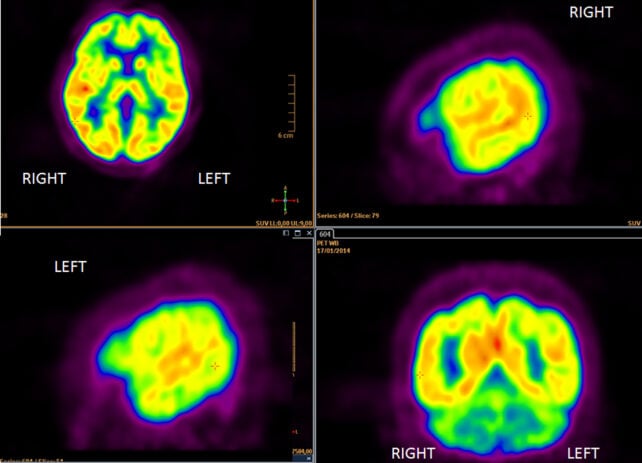
A blood biomarker, pTau217, showed strong promise for detecting Alzheimer's pathology years before symptoms, with 317 cognitively healthy participants followed for an average of eight years. The test closely matched amyloid and tau PET scan findings and in some cases flagged future amyloid positivity before scans turned abnormal. While the results are encouraging for earlier risk prediction, the study is still research-stage and more data are needed before clinical adoption.
This is a platform story, not a single-drug story: if pTau217 becomes the front-door screening tool, the economic value migrates toward whoever controls high-volume blood testing, confirmatory workups, and longitudinal monitoring. The first-order beneficiaries are diagnostics incumbents and lab networks, but the second-order winner could be any scaled healthcare platform that can own the referral funnel from primary care to neurology to imaging, because the test creates a new recurring patient-identification workflow rather than a one-time assay.
The market is probably underestimating the commercialization lag. Technical validation is moving faster than reimbursement, guideline adoption, and clinician behavior, so the monetization window is likely measured in years, not quarters. The key bottleneck is not sensitivity — it is proving that earlier detection changes outcomes enough to justify payor coverage; if that evidence slips, adoption will concentrate in academic centers and wealthy self-pay populations, limiting the revenue ramp.
The biggest second-order effect is on imaging utilization and downstream therapy economics. A blood-first triage layer should reduce low-yield PET scans, compressing demand growth for imaging capacity in routine screening while increasing the conversion rate of positive cases into higher-margin confirmatory imaging and specialty visits. If disease-modifying Alzheimer’s therapies continue to expand, this also raises the strategic value of companies that can combine diagnostics with treatment-pathway management, because earlier diagnosis increases the addressable pool for therapy before patients are functionally lost to underdiagnosis.
Contrarianly, the market may be too excited about ‘earlier detection’ and not enough about ‘actionability.’ A biomarker that predicts pathology but not dementia risk can still disappoint commercially if it produces anxiety without altering treatment decisions. That creates a classic hype/implementation gap: the science can be right while the equity setup remains muted until reimbursement codes, guidelines, and real-world utility data catch up.
AI-powered research, real-time alerts, and portfolio analytics for institutional investors.
Request TrialOverall Sentiment
mildly positive
Sentiment Score
0.35
