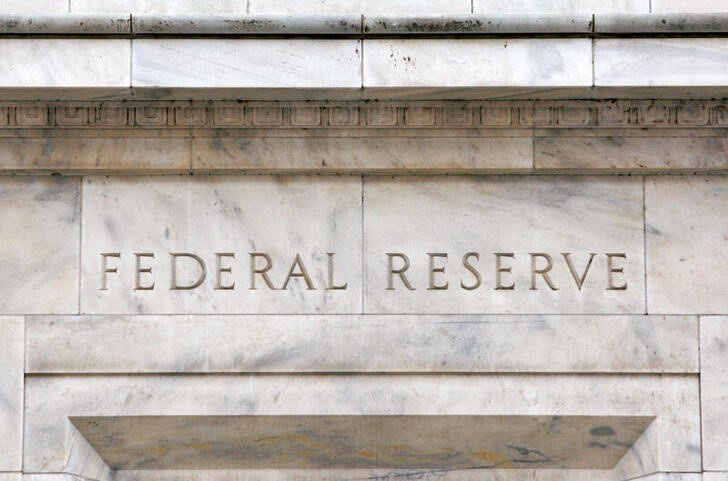
IMF chief economist Pierre-Olivier Gourinchas said the Fed's move away from strong forward guidance is "entirely appropriate," while noting central banks still need some long-term direction for markets. He argued rigid guidance can become costly when inflation shifts unexpectedly, citing the 2021-2022 U.S. inflation surge. The comments underscore a market-wide policy communication shift under new Fed Chair Kevin Warsh and could influence rate expectations and yields.
The market implication is not about one Fed communication tweak; it is about the path of rates becoming more data-dependent and less pre-committed, which usually steepens the dispersion between duration-sensitive and earnings-sensitive equities. In that regime, high-multiple software/AI names can get whipsawed because even a small repricing of terminal-rate expectations compresses valuation faster than near-term fundamentals can re-accelerate. That matters most for names like SMCI and APP, where the stock can trade as much on liquidity and multiple support as on operating beats.
Second-order, less guidance means the market has to price a larger share of policy probability off incoming data, which tends to increase volatility around CPI, payrolls, and Treasury auctions. If inflation proves sticky, the absence of explicit forward guidance should help the Fed keep optionality, but it also removes a dovish anchor that had been supporting long-duration assets on bad growth prints. The practical result is a regime where rallies are more fragile and drawdowns more abrupt until real yields settle into a tighter range.
The contrarian angle is that the market may be underestimating how constructive a cleaner communication framework can be for risk assets once the initial uncertainty passes. If the Fed stops overpromising, the upside surprise function improves: fewer policy reversals, less credibility risk, and potentially a lower volatility premium in rates over a multi-month horizon. That said, the near-term trade is still to fade crowded duration longs on any hot data, because the first-order reaction will be multiple compression rather than a fundamental earnings reset.
AI-powered research, real-time alerts, and portfolio analytics for institutional investors.
Overall Sentiment
neutral
Sentiment Score
0.05
Ticker Sentiment
