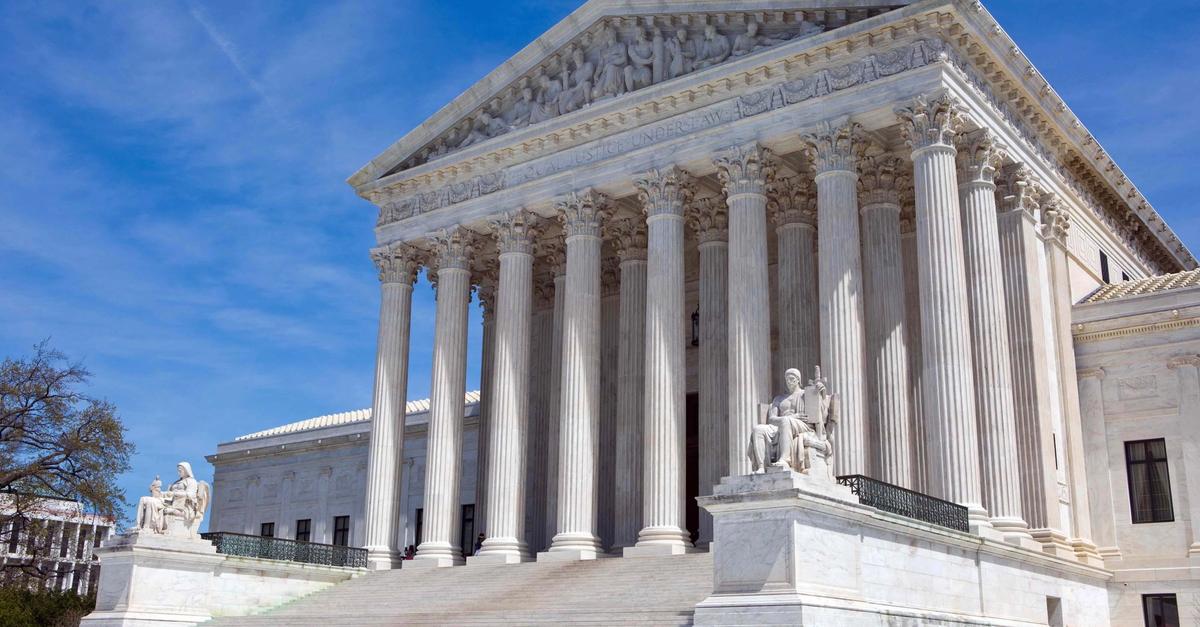
The Supreme Court cleared Alabama to use its 2023 congressional map for now, vacating a lower-court block and remanding the case for further review in light of Callais. The decision creates near-term election uncertainty ahead of Alabama's primary next week, but it is a legal/political development with limited direct market implications. Justice Sotomayor dissented, arguing the order could confuse voters and that the lower court’s Fourteenth Amendment findings remain independently valid.
The near-term market read is not about Alabama-specific equities but about how far courts will tolerate election-law gamesmanship and how much procedural chaos can be monetized by incumbents. The immediate winner is any political actor that benefits from uncertainty and time compression: legal delays can create de facto status quo protection even when the underlying merits remain hostile. That matters because these disputes increasingly turn into calendar arbitrage, where election timing is more valuable than final legal correctness.
The second-order effect is on rule-of-law risk premia, especially for sectors exposed to state-level policy reversals or litigation-heavy regulation. If courts are seen as more willing to unwind lower-court injunctions on short notice, it raises volatility around any process-dependent outcome: redistricting, permits, ballot access, and state enforcement actions. Expect more last-minute legislative “fixes” designed to manufacture mootness or procedural leverage, which should increase event risk around November 2026 and into the next census-cycle political map battles.
The contrarian take is that the market may be overestimating how durable this is as a structural precedent. The opinion is procedural, not a clean merits win, and the dissent signals a meaningful risk that lower courts can still preserve relief on independent constitutional grounds. That creates a split-horizon setup: days-to-weeks uncertainty can spike, but months-to-years the underlying legal exposure may reassert itself, especially if trial courts build tighter records on intentional discrimination rather than dilution alone. This is more likely to create whipsaw than a stable policy regime.
AI-powered research, real-time alerts, and portfolio analytics for institutional investors.
Request DemoOverall Sentiment
neutral
Sentiment Score
-0.05
