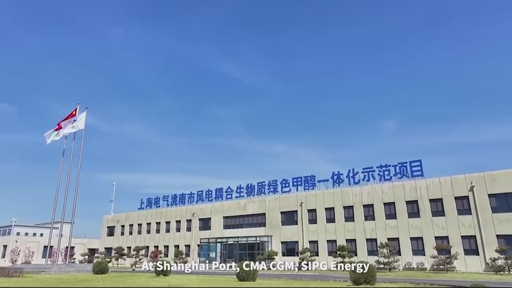
Shanghai Electric partnered with Shanghai International Port Group and CMA CGM to supply a record 8,000 metric tons of biometanol to ships at Shanghai Yangshan port, citing the Taonan green methanol project as the main feedstock source. The article highlights stable large-scale deliveries, backed by a north-to-south green fuel corridor (Jilin production via Dalian port storage to Shanghai supply) and claims Taonan is the first large-scale plant to produce biometanol combining green electricity and biomass. Shanghai Electric also plans to scale up via Taonan Phase II (biomass gasification coupled with green hydrogen, green methanol, and SAF), which should support expansion of green fuel capacity for shipping and aviation.
The economically relevant signal is not the ceremonial bunkering event; it is proof that a nascent fuel corridor can operate repeatedly without immediate logistics breakdown. If that holds, Shanghai Electric’s optionality shifts from single-project optics to a repeatable systems-integrator model with higher-quality recurring revenue, but the market will only pay for that if utilization, margins, and working-capital turns show up in filings. Until then, the headline is mostly a sentiment event, not a fundamental inflection.
Second-order winners are the adjacent infrastructure owners: port storage, inland transport, blending, and marine-fuel logistics providers that can sit on the spread between production and final bunker delivery. The bigger strategic loser is conventional marine fuel mix, but the near-term competitive threat is still more narrative than volume because green methanol remains constrained by feedstock, certification, and delivered-cost economics versus LNG and low-sulfur fuel oil. If this is real, it is a beachhead for future green fuel contracts, not an immediate displacement wave.
The main risk is that this remains a subsidy-anchored demonstration with weak economics once scaled. Over the next 1-3 months, the catalyst path is disclosure: order backlog, phase II capex, third-party customer commitments, and any evidence of repeat liftings; without that, the market should fade the enthusiasm. Over 6-18 months, the bull case only works if the company converts the platform into audited EBITDA and not just ESG framing; otherwise the story can reverse quickly on margin dilution or project delays.
Consensus is likely overestimating the immediate P&L impact and underestimating the strategic value of having a working domestic green-fuel corridor in China. That makes the stock a better watchlist name than a chaseable trade today. The cleanest falsifier is simple: if the next results do not show higher industrial revenue, better project economics, or additional contracted volumes, this should be treated as one-off validation rather than a re-rating event.
AI-powered research, real-time alerts, and portfolio analytics for institutional investors.
Request DemoOverall Sentiment
mildly positive
Sentiment Score
0.35
Ticker Sentiment
