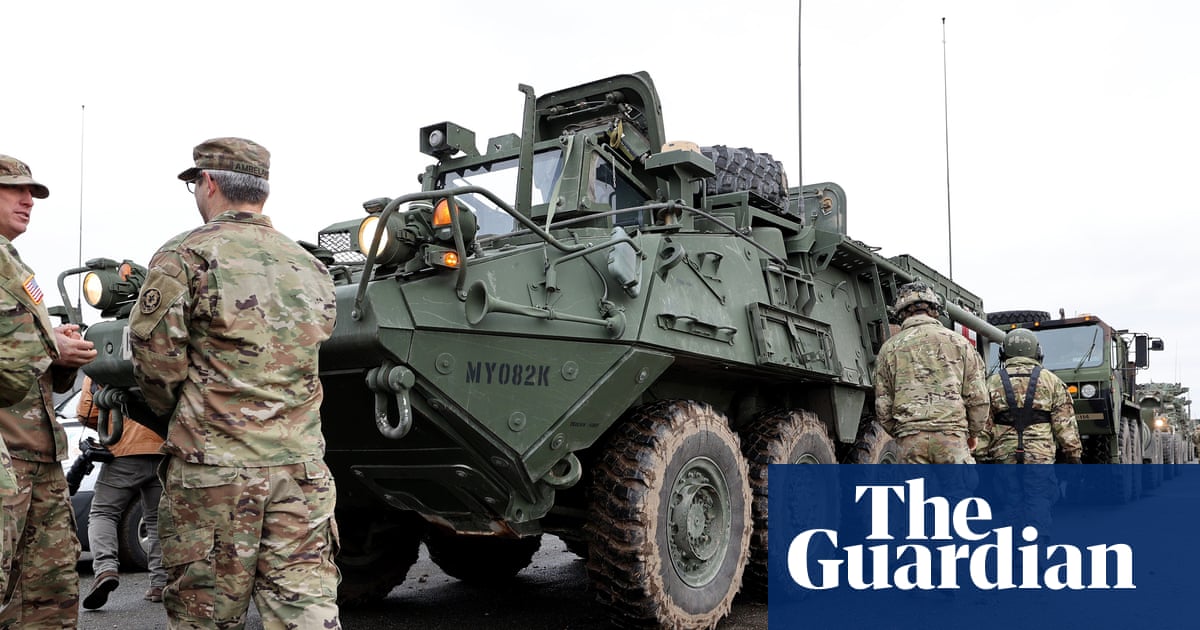
The US plans to withdraw 5,000 troops from Germany over the next 6-12 months, a move NATO says it is still trying to understand and which underscores Europe’s need to spend more on defense. Germany called the move anticipated, but the announcement follows a sharp feud between Trump and Chancellor Friedrich Merz over the Iran war and broader transatlantic security policy. The article also flags potential delays in US arms deliveries to European allies and a possible congressional clash if US troop levels in Europe fall below the 76,000 benchmark.
The market implication is not the troop count itself; it is the signaling that US security guarantees are becoming more contingent and transactional. That raises the option value of European rearmament, but more importantly it shifts procurement timing forward: governments can no longer assume multi-year US delivery certainty, so they will likely pre-fund domestic capacity, stockpiles, and non-US alternatives over the next 6-18 months. The second-order winner is the European defense industrial base, especially names with bottlenecked production in air defense, munitions, command-and-control, and protected mobility, because political urgency now matters more than unit economics.
The more interesting loser is not Germany alone but US exporters of delayed systems: near-term revenue may not disappear, but shipment slippage can push recognition out by quarters while order books remain inflated. That creates a temporary valuation trap in primes with heavy Europe exposure if investors assume booked sales are equivalent to cash conversion; meanwhile, suppliers of components and ammunition benefit faster than platform integrators because replenishment cycles are shorter and politically easier to fund. A weaker transatlantic defense relationship also increases the probability that Europe diversifies away from US-only platforms, which is a slow-burn negative for future TAM in fighter jets, long-range fires, and missile defense.
Tail risk is legislative: Congress already signaled red lines on force levels, so a deeper drawdown would invite a bipartisan pushback that could constrain the administration within weeks to months. If the Iran file stabilizes or NATO allies offer visible burden-sharing, the headline risk can fade quickly; the fundamental re-rating, however, should persist because capex decisions are being made now. The contrarian view is that the move may be smaller than the rhetoric suggests, but even a small reduction is enough to justify a structural premium for non-US defense capacity.
On balance, this is a relative-value rather than outright beta event: defense spending is being reallocated, not reduced. The best trade is to own the beneficiaries of urgency and hedge the legacy suppliers whose Europe backlog may be repriced for timing risk rather than volume risk.
AI-powered research, real-time alerts, and portfolio analytics for institutional investors.
Request DemoOverall Sentiment
mildly negative
Sentiment Score
-0.25
