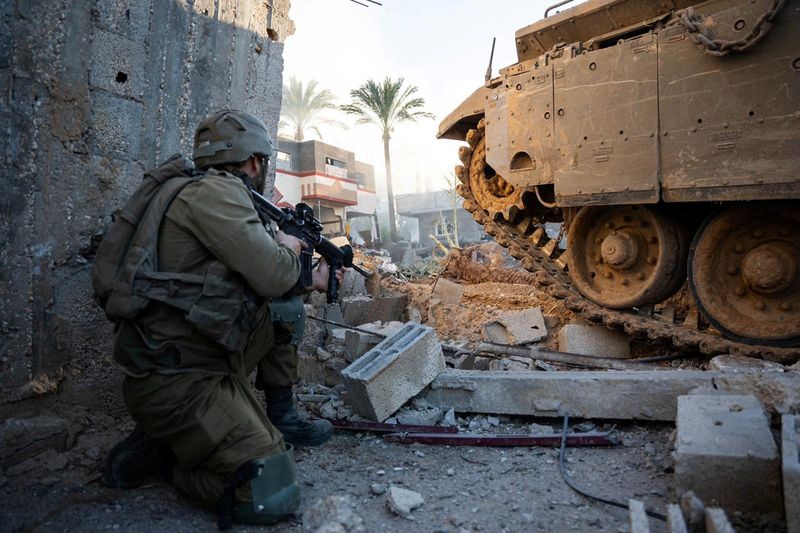
770+ people reported killed and hundreds of thousands displaced amid Israeli strikes on Hezbollah positions after cross-border rocket fire beginning March 2; Hezbollah continues launching rockets into northern Israel. Israel and Lebanon are expected to hold direct talks in the coming days (potentially in Paris or Cyprus) possibly led by Israel’s Ron Dermer with Jared Kushner playing a U.S. role, aimed at ending fighting and addressing Hezbollah’s role. The situation raises material upside risk to regional volatility and oil/shipping disruption (Strait of Hormuz/reopening rhetoric cited), signaling near-term risk-off price action for energy markets and regional assets.
A localized increase in geopolitical risk centered on key Middle Eastern corridors typically transmits to markets through three channels: an immediate shipping/insurance premium, a short-term crude risk premium, and a policy/defense spending re-price. Shipping insurers and charter rates reprice almost instantly; rerouting or convoying adds voyage days and effective fleet drawdown (a 7–10 day detour can cut available capacity by ~5–10%), which historically pushes spot tanker earnings (TCE) 20–40% higher in the first 4–8 weeks. Energy markets respond with a fast, concentrated move in the front end of the curve — a 10–20% perceived supply-risk push usually manifests as a $10–20/bbl front-month swing before longer-run fundamentals reassert themselves.
Defense and aerospace suppliers are the classic multi-quarter beneficiaries, but the second-order winners are component suppliers (avionics, guidance, RF semiconductors) and logistics contractors with existing sustainment contracts; these firms win from accelerated orders and higher margins on expedited builds. Conversely, industries sensitive to fuel and insurance costs — container and passenger shipping, flag-of-convenience tanker owners with low balance-sheet flexibility, and regional tourism-dependent service firms — will see margin compression in the same timeframe. Watchable metrics that lead or lag price moves: bunker/freight rate curves, war-risk insurance premiums, and days-on-route for VLCCs/AFRAMAX in AIS data.
Two scenario catalysts dominate P&L risk: a rapid diplomatic de-escalation (mean-reversion within 2–8 weeks) versus sustained maritime interdiction or blockades (risk premium persistent for 3–12+ months). The market often overprices persistence after initial shocks; insurance and freight spikes historically revert ~50% within six weeks absent a structural chokepoint. Trade sizing should reflect this convexity — use short-dated convex instruments to capture spikes and longer-dated exposure for secular defense/industrial re-rating if the conflict broadens or budget cycles accelerate.
AI-powered research, real-time alerts, and portfolio analytics for institutional investors.
Request DemoOverall Sentiment
strongly negative
Sentiment Score
-0.62
