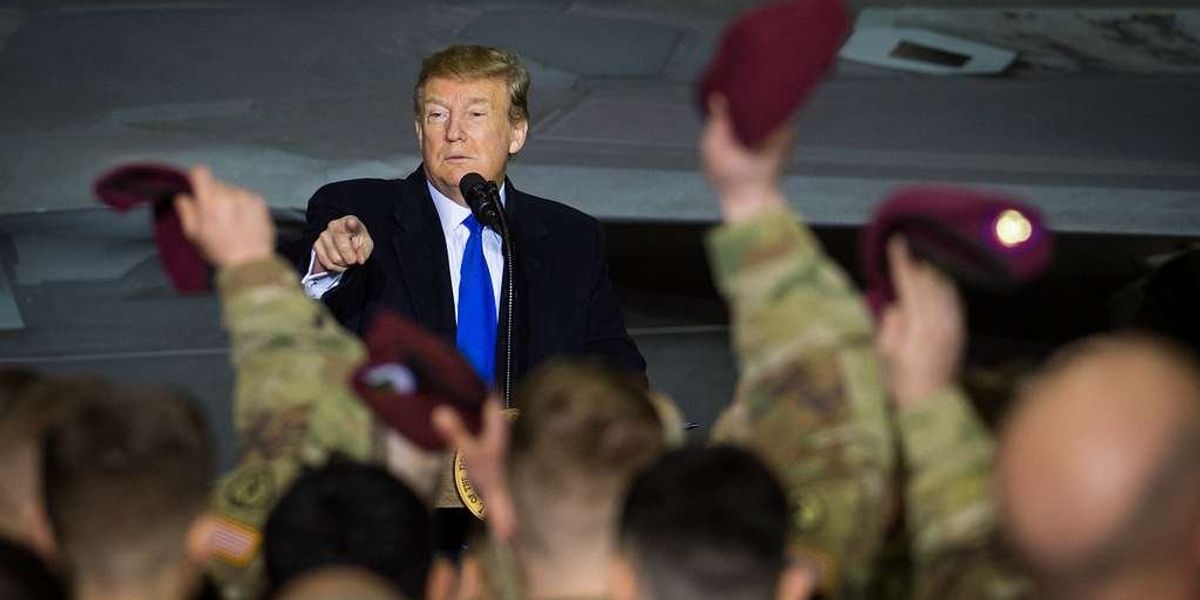
The article says Trump’s invasion of Iran and broader culture shifts under the defense secretary are driving military retention problems, with members retiring early, not reenlisting, or seeking discharge. A counselor quoted by NPR said Army retention is “crumbling fast,” and a hotline for conscientious objectors recently took on more than 80 new clients, nearly double its average annual total. The reporting points to wider upheaval in the armed services and a major geopolitical escalation with potential market-wide risk implications.
The bigger signal is not just manpower leakage, but a compounding readiness tax: when retention softens, the first-order hit is recruiting and training costs, but the second-order hit is force quality, promotion depth, and deployment flexibility. That tends to show up with a lag of 6-18 months, which means market pricing may be slow to reflect the operational risk until it becomes visible in budget revisions, incentive spending, and contract backfills. If retention deterioration is driven by perceived mission illegitimacy plus cultural backlash, it is harder to reverse than a cyclical hiring issue.
For defense primes, this is mixed. Near term, any readiness shortfall usually translates into more spending on retention bonuses, training pipeline expansion, and contractor substitution, which is a tailwind for large integrators with services-heavy exposure and for firms tied to personnel systems, simulation, and sustainment. But if military leadership concludes that optics and internal cohesion are deteriorating, procurement timing can get noisier, and programs that depend on stable end-user demand may see slower award velocity as the bureaucracy prioritizes internal stabilization over new commitments.
The contrarian angle is that some of the market may assume wartime mobilization automatically lifts defense equities, when in practice personnel attrition can reduce execution quality and delay the revenue conversion of increased nominal budgets. The real beneficiary is likely not headline weapons exposure, but the ecosystem around training, retention, medical separation processing, and outsourced logistics. If this story gains traction into the next 1-2 quarters, expect political pressure to dilute the most divisive personnel policies, which would be the clearest reversal catalyst for the retention headwind.
AI-powered research, real-time alerts, and portfolio analytics for institutional investors.
Request DemoOverall Sentiment
strongly negative
Sentiment Score
-0.50
