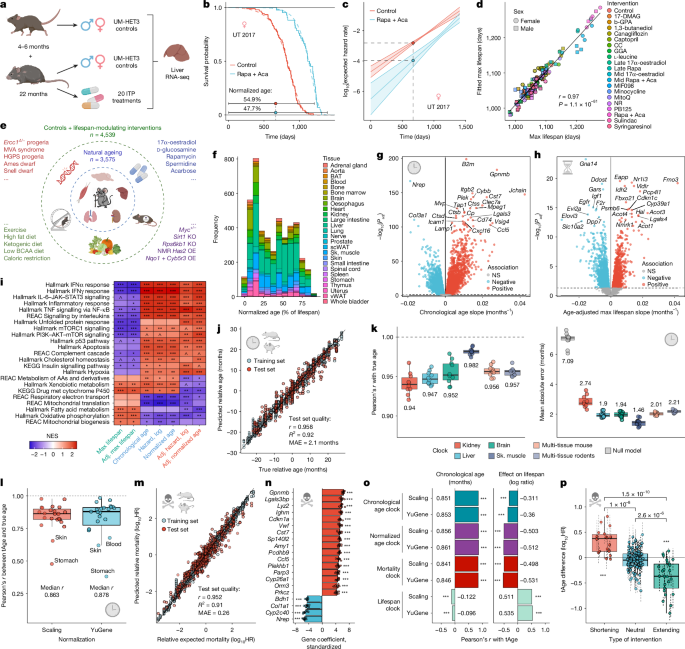
The study develops multi-species transcriptomic clocks for chronological age and expected mortality across more than 11,000 samples from four mammals, with strong cross-species and single-cell validation. It identifies conserved biomarkers such as CDKN1A, LGALS3 and GPNMB, and shows the clocks track interventions including caloric restriction, Klotho knockout, parabiosis, reprogramming and disease states. This is primarily a scientific tools and biomarkers advance rather than a near-term commercial event, so direct market impact appears limited.
This is a structural positive for TACO as a data/analytics layer rather than a one-off consumable product. The paper effectively turns transcriptomics into a higher-resolution alternative to methylation clocks, which raises the value of workflow software, model hosting, QC pipelines, and cross-platform normalization tools; that is the kind of moat that can compound as more labs want interpretable age/mortality readouts without building the infrastructure themselves.
Second-order, the bigger commercial wedge is not basic age estimation but intervention-response stratification. If module-level clocks become a screening standard, the demand shifts toward tooling that can answer "which pathway moved?" rather than just "how old is the sample?" That favors software with visualization, API integration, and reproducibility features, and disadvantages undifferentiated wet-lab biomarker vendors that only sell a single endpoint with limited mechanistic resolution.
The contrarian point is that adoption could still lag even if the science is robust. Transcriptomics remains noisier and more operationally burdensome than blood-based epigenetics/proteomics, so the near-term monetization likely stays in research, preclinical, and translational pharma rather than routine clinical use. That means the first revenue inflection is probably 12-24 months away via enterprise licenses, pharma collaborations, and platform usage, not diagnostics volume.
For competitive dynamics, the paper pressures any company marketing aging clocks as black-box wellness products: this work makes mechanistic interpretability a differentiator and could pull buyer attention toward platforms that can be validated against disease, mortality, and intervention datasets. The biggest risk is that the field fragments into many small research-use-only tools with weak standardization, limiting pricing power and keeping TACO’s value tied to academic adoption unless it can establish itself as the default interface layer.
AI-powered research, real-time alerts, and portfolio analytics for institutional investors.
Request DemoOverall Sentiment
mildly positive
Sentiment Score
0.20
Ticker Sentiment
