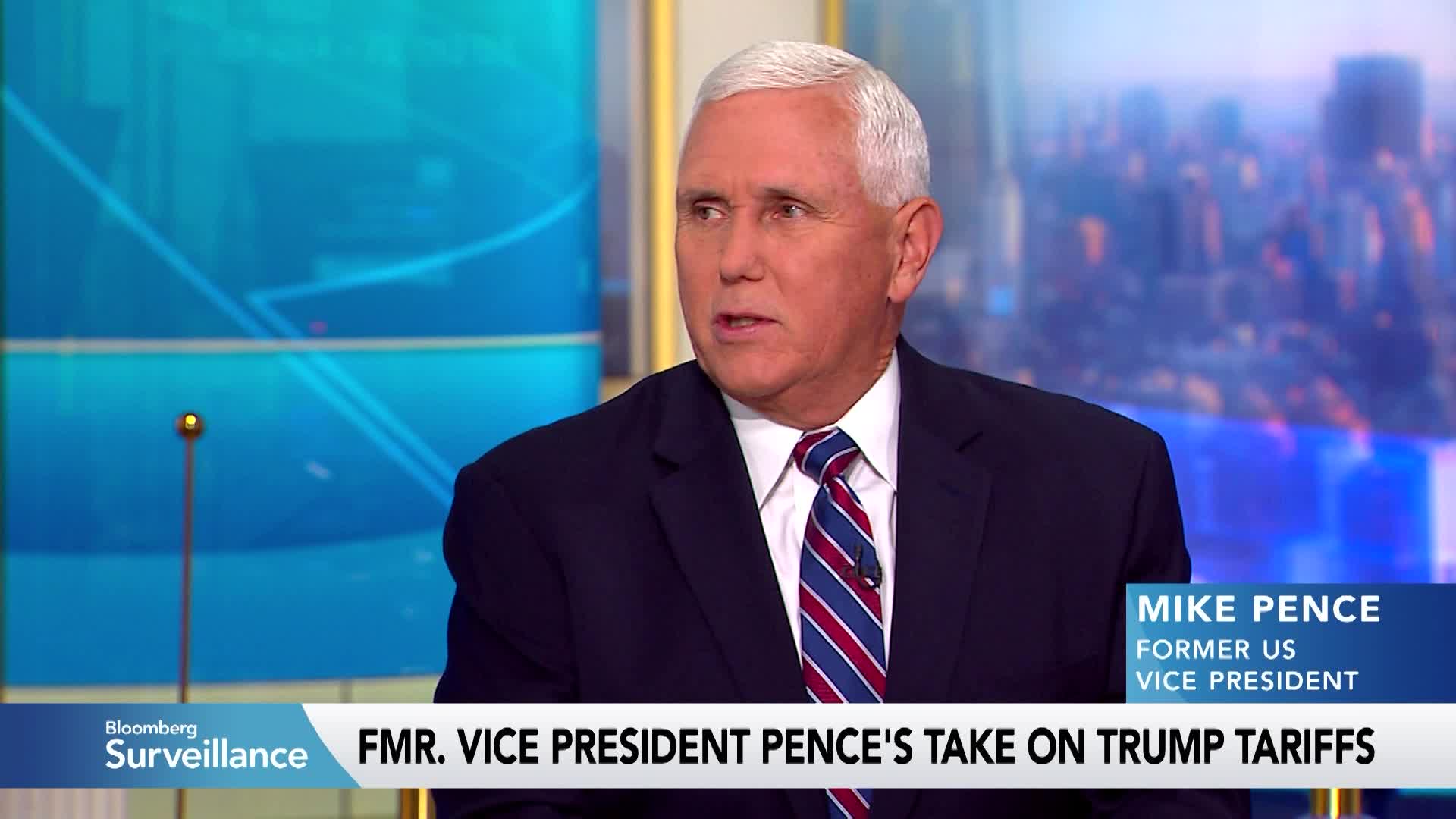
Former US Vice President Mike Pence, in an appearance on Bloomberg Surveillance, addressed a broad agenda encompassing former President Trump's trade policies and Federal Reserve relations, the US's missile strike against Iran, Middle East peace efforts, and strategies for resolving the conflict in Ukraine.
Former US Vice President Mike Pence's commentary on Bloomberg Surveillance provides insight into key policy debates relevant to institutional investors. His remarks covered significant economic and geopolitical themes, including the trade and tariff strategies from the Trump administration and a critical stance on Federal Reserve Chair Jerome Powell's leadership, underscoring the potential for renewed political pressure on monetary policy. On the geopolitical front, Pence addressed the US military posture toward Iran, ongoing efforts for Middle East peace, and strategies for resolving the Russia-Ukraine conflict. While the commentary itself carries a low market impact score of 0.1, it serves as a reminder of the persistent influence these themes—trade protectionism, central bank independence, and international conflict—have on market sentiment and long-term strategic asset allocation, particularly within the context of domestic politics and potential future administrations.
AI-powered research, real-time alerts, and portfolio analytics for institutional investors.
Request DemoOverall Sentiment
neutral
Sentiment Score
0.00
