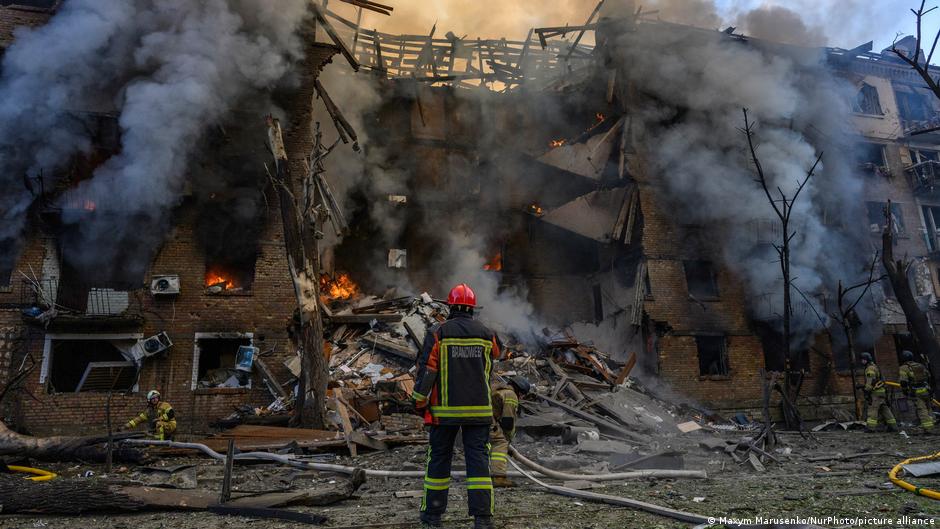
Russia’s repeated bombardment of Kyiv and its warning for foreign diplomats to leave the city triggered formal rebukes from the EU, Germany, and the UN, while the EU and Germany summoned Russian envoys. The Kremlin said it plans more "systematic" strikes on defense-related targets in Kyiv, heightening escalation risks in the war. A joint statement from 50 countries also condemned the attacks and threats to diplomatic institutions.
This is less about near-term battlefield optics and more about a durable increase in perceived capital destruction risk in Kyiv-linked assets. When a state actor publicly signals “systematic” strikes on command-and-control and defense-adjacent targets, the market should discount not just physical damage but also operating friction: higher insurance costs, slower permitting, tighter logistics, and greater dispersion of critical staff. That typically widens the valuation gap between firms with domestic Ukrainian exposure and those with NATO-based manufacturing footprints.
The second-order winner is the pan-European defense supply chain, especially names that can capture substitution demand if Ukrainian capabilities are disrupted and European rearmament budgets accelerate. The loser set is broader than obvious local infrastructure: any contractor, utility, telecom, or logistics node tied to eastern European continuity plans faces a higher probability of project delays and contingency spending. The most underappreciated effect is on sanctions policy: each escalation episode makes it harder for wavering European governments to justify any loosening, which supports a multi-quarter tightening bias around dual-use exports and procurement restrictions.
Near term, the key catalyst is whether rhetoric converts into a new pattern of repeat strikes over the next 1-3 weeks; if so, risk premia will likely reprice quickly in defense, cyber, and satellite/communications names. Over a 3-6 month horizon, the larger issue is budgetary: emergency air-defense and infrastructure repair spending can crowd out discretionary outlays, while also pulling forward orders for interceptors, drones, and hardened networking. The contrarian read is that headline risk may be peaking faster than fundamentals, so the cleanest expression is relative value, not outright macro shorts.
AI-powered research, real-time alerts, and portfolio analytics for institutional investors.
Request DemoOverall Sentiment
strongly negative
Sentiment Score
-0.80
Ticker Sentiment
