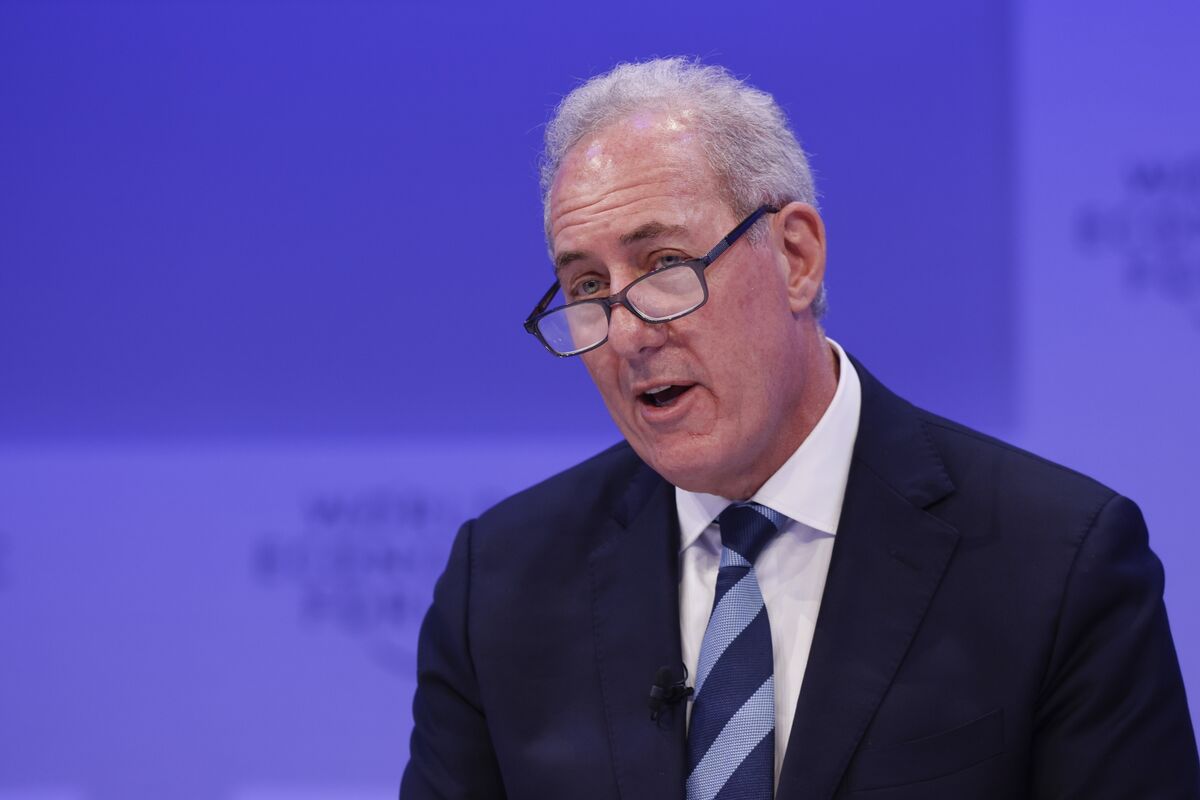
Michael Froman, President of the Council on Foreign Relations and former U.S. Trade Representative, contends that the traditional global trading system has collapsed, a process initiated prior to the Trump administration and exacerbated by subsequent trade barriers. He describes the emergence of a new 'polyamorous' global trading system where allies and partners fluidly navigate between different poles and blocs, indicating a significant reorientation of international trade dynamics and geopolitical alliances.
The established global trading framework has effectively collapsed, a trend that began prior to the Trump administration's tariffs and has been reinforced by subsequent U.S. policy. According to former U.S. Trade Representative Michael Froman, this is being replaced by a 'polyamorous' global trading system, where nations and partners fluidly navigate between different geopolitical and economic blocs. This structural shift, underscored by a high market impact score of 0.7 and an uncertain tone, represents a fundamental reorientation of international commerce away from a singular, rules-based order. The move towards this more liquid, multi-polar arrangement introduces significant ambiguity for global supply chains, tariff policies, and geopolitical alliances, as the ultimate costs and benefits of this new paradigm remain undefined.
AI-powered research, real-time alerts, and portfolio analytics for institutional investors.
Request DemoOverall Sentiment
mildly negative
Sentiment Score
-0.20
Ticker Sentiment
