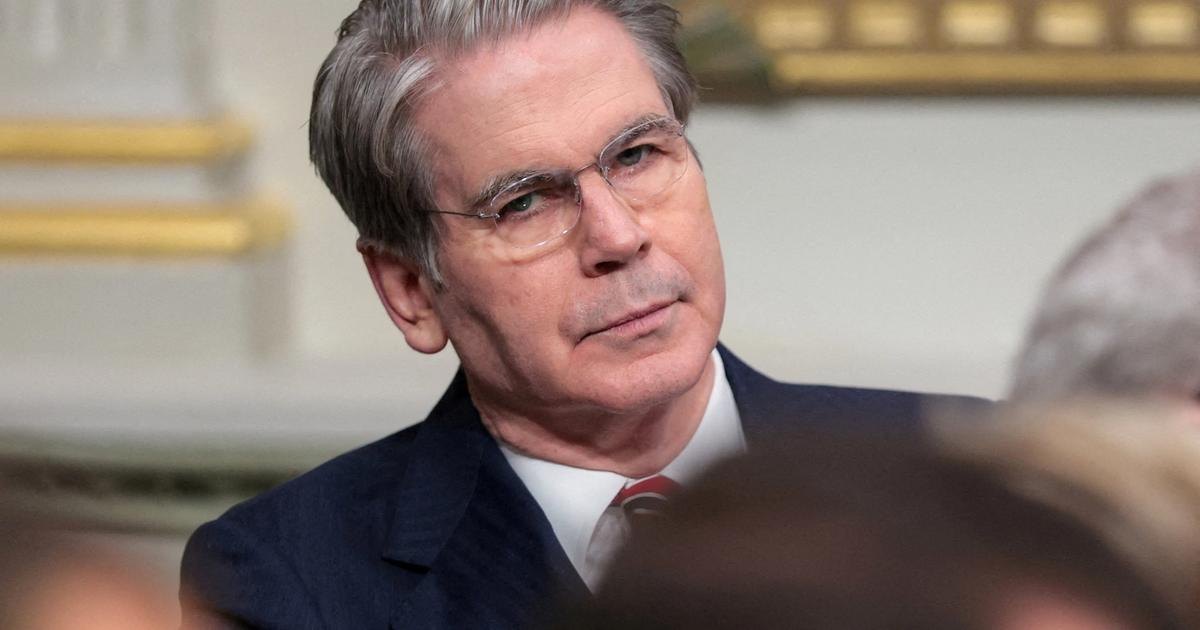
Treasury Secretary Scott Bessent said the Fed should "wait and see" on rate cuts amid the Iran war, emphasizing that inflation is being driven higher by surging oil and gas costs and that the recent price spike is likely transitory. He suggested the economy was strong entering the year but may need "make-up" growth after a softer start, while also saying the dollar has strengthened during the conflict. The interview also touched on bank citizenship data collection, Fed governance, prediction markets, AI-related cybersecurity risks, and China supply-chain leverage in rare earths and autos.
The market implication is not simply “higher-for-longer” or “lower-for-longer,” but a wider dispersion regime. A conflict-driven oil spike with a still-resilient core economy is historically hostile to duration, long-end multiples, and rate-sensitive cyclicals, while helping cash-generative energy, defense-adjacent logistics, and select dollar earners. The key second-order effect is that policy uncertainty delays the Fed’s reaction function, which keeps real rates elevated even if headline inflation prints hotter for a few months.
The bigger underappreciated risk is a stagflationary pocket that is too small to force immediate recession pricing but large enough to compress margins in transportation, airlines, chemicals, and consumer discretionary. If energy costs bleed into expectations for 6–10 weeks, the market will likely reprice 2025 cuts down, steepen front-end vol, and punish the most levered balance-sheet stories first. That creates a time asymmetry: the next 2–8 weeks are about macro volatility, while the medium-term question is whether supply chains and consumer sentiment absorb the shock or turn it into a broader demand slowdown.
On geopolitics and trade, any perceived weaponization of supply chains reinforces the strategic case for domestic/onshore substitution, but the near-term winners are not the obvious industrial reshoring names; they are companies with pricing power, inventory depth, and non-China sourcing optionality. The contrarian view is that the market may be overpricing persistent inflation while underpricing a faster normalization if the conflict remains contained and energy retraces; if so, the current setup becomes a short-lived rates scare rather than a regime shift. That argues for expressing the view through options and relative value, not outright beta.
AI-powered research, real-time alerts, and portfolio analytics for institutional investors.
Request TrialOverall Sentiment
neutral
Sentiment Score
-0.05
