




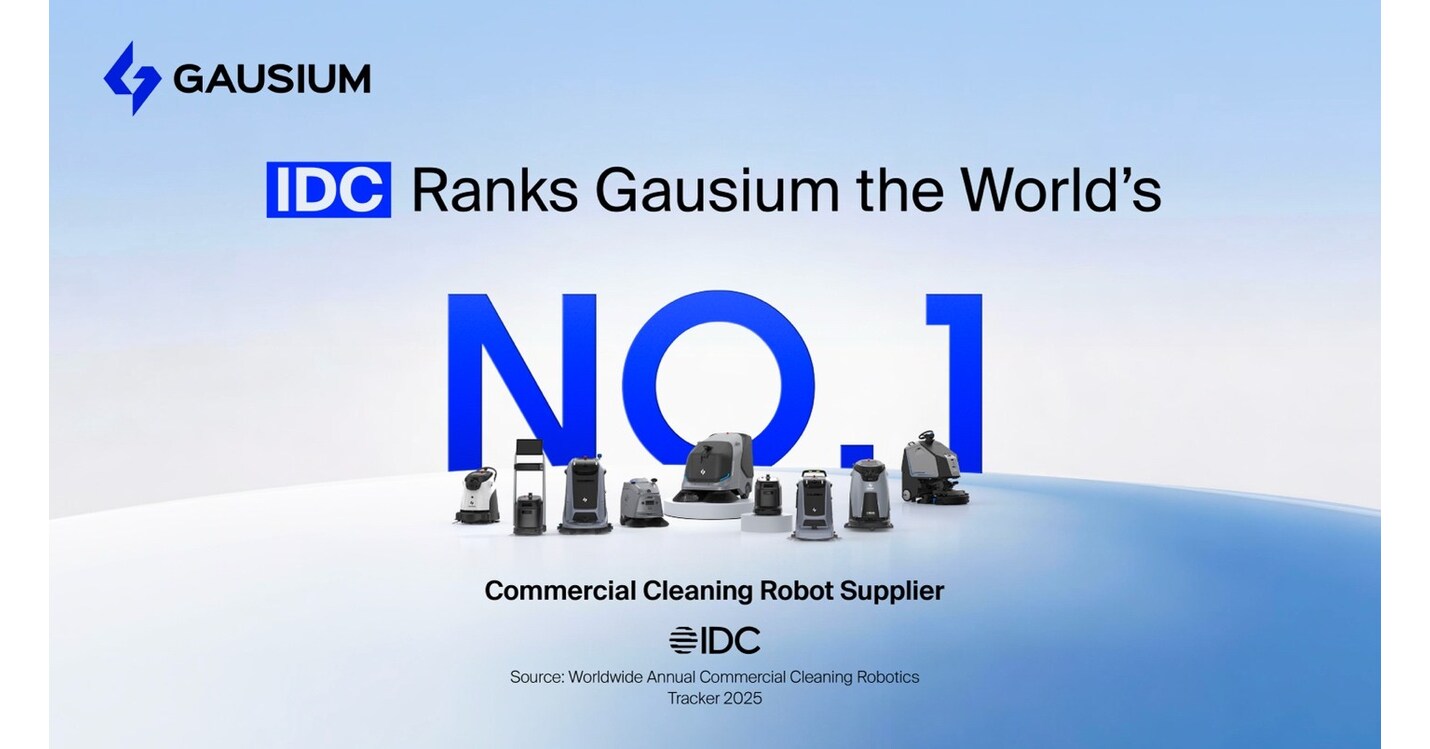
Gausium was ranked the world’s No.1 commercial cleaning robot supplier by IDC for both shipments and revenue in its 2025 tracker, maintaining the top spot for several consecutive years. IDC estimates the global commercial cleaning robot market at $760M, up 48.5%, with Gausium positioned across regions and core application segments. The article emphasizes scalability via standardized hardware/software to enable fleet rollouts, alongside IDC expectations for continued market growth through 2030.
This reads more like proof-of-market than a directly monetizable earnings event. The important mechanism is that cleaning robotics is moving from pilot deployments to procurement standardization, which shifts value away from one-off hardware sales toward fleet management, service, and software attach; that typically rewards the operator with the best field support and installed-base retention, not necessarily the vendor with the loudest AI narrative. For public markets, the immediate read-through is modest: customer productivity gains are real, but the P&L impact on large end users like KO should be too small to matter quarter-to-quarter.
The second-order pressure is on labor-heavy facilities services and regional cleaning contractors, where robotics can become a bid-defense tool for scaled incumbents and a margin compressor for smaller players that cannot amortize installation, maintenance, and software integration. If the category scales, the winners over 6-18 months are likely the companies that can bundle hardware with recurring service contracts; the losers are point-solution robot vendors and labor brokers that compete only on headcount. The near-term catalyst is not shipments, but evidence in customer renewals and gross margin expansion that robots are reducing labor hours per site rather than just adding capex.
Contrarian view: the market may be overpricing the durability of the growth rate. In a sub-$1B market, top-share rankings can persist while economics remain fragile, and a slowdown in procurement or higher service costs can expose that 'AI leader' status is not the same as a scalable earnings model. The thesis is falsified if customer payback periods stretch, maintenance drag keeps gross margins flat, or adoption is concentrated in flashy flagship sites rather than broad rollouts.
AI-powered research, real-time alerts, and portfolio analytics for institutional investors.
Request TrialOverall Sentiment
mildly positive
Sentiment Score
0.25
Ticker Sentiment
