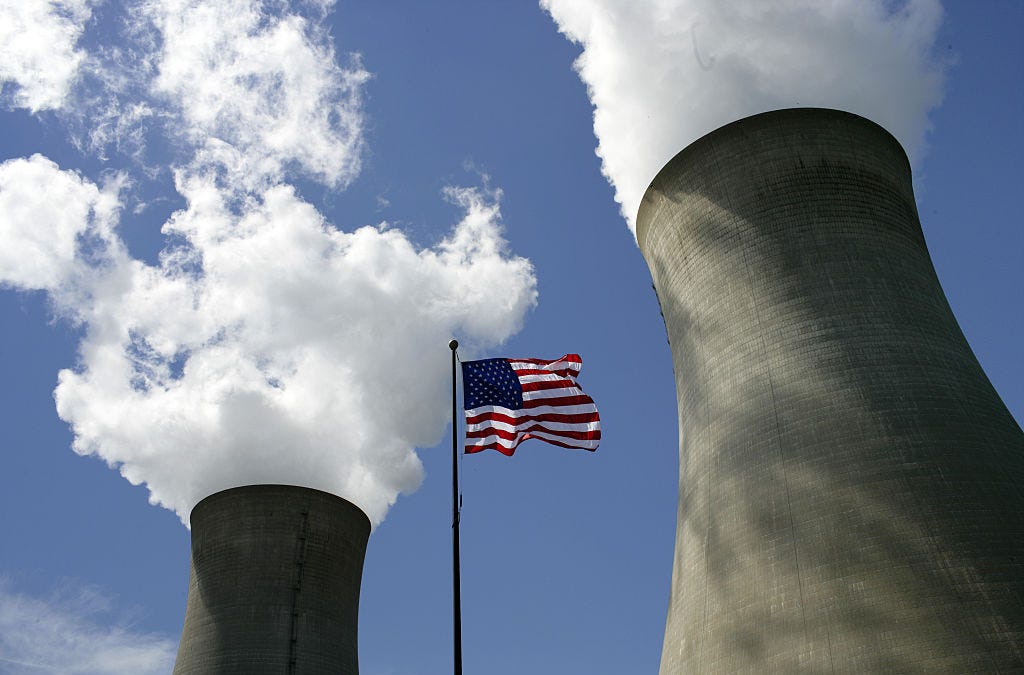
The Trump administration has begun rolling out new NRC approval rules for microreactors, the first step in a broader regulatory overhaul aimed at speeding U.S. nuclear buildouts. The article frames this as a meaningful shift away from the years-long permitting delays that have constrained nuclear deployment for decades. The near-term impact is sector-positive, especially for small modular reactor and nuclear infrastructure developers, though the piece is policy-focused rather than company-specific.
The policy shift is less about near-term megawatts than about collapsing regulatory option value. Microreactors create a lower-friction approval pathway that can reprice the entire nuclear supply chain because once a licensing template exists, larger standardized designs should face lower marginal permitting costs and shorter financing gaps. The second-order winner is not just reactor developers; it is any company that can industrialize repeatable deployment, secure fuel, and provide behind-the-meter power to defense, remote industrial, and AI/data-center customers.
The market may be underestimating how defensible the first-mover advantage will be if the government standardizes procurement around a few acceptable architectures. That favors firms with existing regulatory documentation, proven manufacturing partnerships, and access to HALEU or other advanced fuel pathways. By contrast, incumbents tied to bespoke, utility-scale builds could see valuation pressure if capital starts rotating toward modular systems with faster permitting and shorter payback periods.
The key risk is timeline slippage: political support can move faster than the NRC, state siting, fuel availability, and supply-chain qualification. A policy headline can trade in days, but revenue inflection is likely months to years out unless the government becomes the anchor customer. The biggest reversal catalyst would be a safety incident, congressional pushback on cost overruns, or a change in administration that deprioritizes nuclear streamlining.
Consensus is probably too focused on "nuclear bullish" as a monolithic trade and not enough on the bifurcation between design winners and capital-intensive laggards. The underappreciated angle is defense and off-grid power: if microreactors clear the path first, military and critical-infrastructure demand can become the proof point that unlocks commercial financing. That makes this more of a regulatory-wedge story than an immediate broad power-price story.
AI-powered research, real-time alerts, and portfolio analytics for institutional investors.
Request DemoOverall Sentiment
mildly positive
Sentiment Score
0.20
