






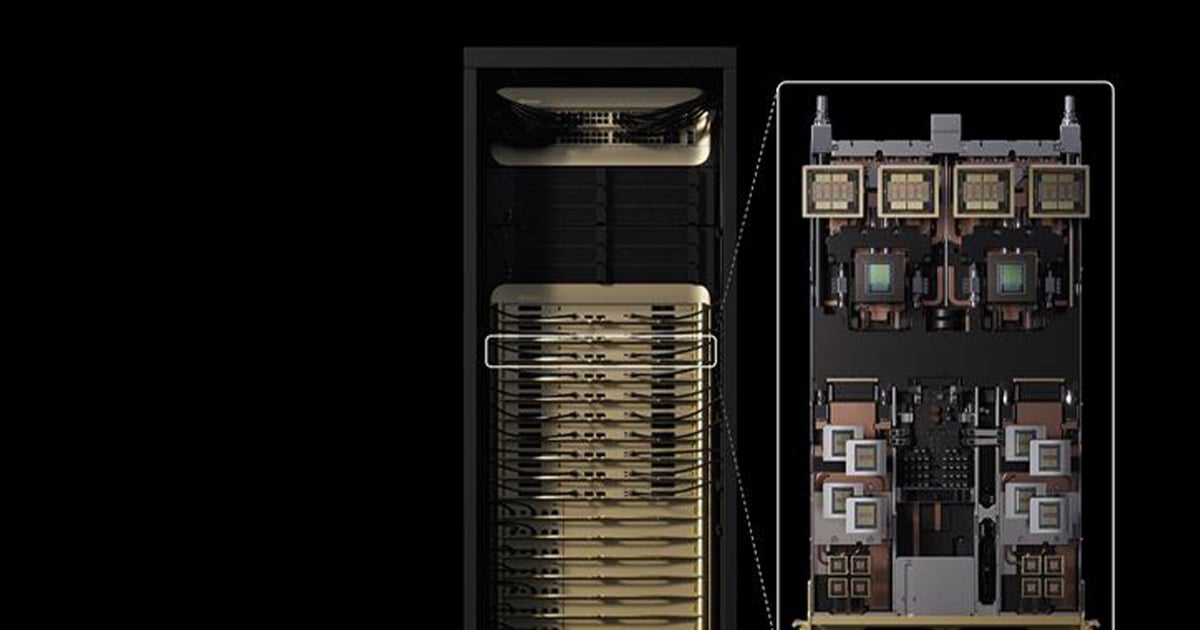
Nvidia said Vera Rubin and Vera CPUs are in full production and on track to ship this fall, while introducing DSX OS and DSX MaxLPS to improve AI factory efficiency and token performance. The company said Vera CPUs deliver 1.8x the performance of x86 CPUs and named Anthropic, OpenAI, SpaceXAI, Oracle Cloud Infrastructure, ByteDance, and several neoclouds as early adopters. The updates strengthen Nvidia’s AI infrastructure positioning and support its long-term growth narrative.
The strategic shift is that Nvidia is no longer selling isolated silicon; it is trying to own the control plane for AI compute. That matters because the margin pool migrates from one-time hardware sales toward recurring software, orchestration, and optimization layers that are harder to displace and structurally increase switching costs for cloud operators and enterprise AI factories. If adoption sticks, the biggest second-order winner is not just NVDA revenue but NVDA’s pricing power over adjacent ecosystem participants who now need to plug into its operating stack rather than merely buy accelerated hardware.
The near-term beneficiaries are the “picks and shovels” around capacity buildout: rack integrators, liquid cooling, networking, storage, and managed infrastructure names. The more interesting second-order effect is that the announcement implicitly raises the bar for hyperscalers and neoclouds: if they cannot match utilization gains from NVDA’s orchestration layer, their blended cost per token will diverge from competitors, compressing their margins or forcing more aggressive capex. That is bullish for the few operators with better power access and deployment discipline, but it is a warning sign for weaker balance sheets that may need to keep funding GPU growth just to stay relevant.
The main risk is timing. Product announcements can move the stock for days, but the economics only matter over the next several quarters if deployment, power efficiency, and software attach rates convert into measurable utilization gains. A counterintuitive risk is that if NVDA succeeds too well in abstracting infrastructure complexity, it commoditizes some of the differentiation cloud vendors hoped to sell to their own customers, shifting bargaining power further back to Nvidia over 6–18 months.
The consensus may be underestimating how much this pressures incumbent CPU vendors. If agentic workloads become latency-sensitive and software-orchestrated at scale, the battleground expands beyond AI accelerators into general-purpose compute refresh cycles, which could make legacy CPU share losses more durable than the market currently prices. The bull case is real, but the stock now needs evidence of conversion from platform narrative to attach-rate, utilization, and backlog momentum rather than just headline adoption.
AI-powered research, real-time alerts, and portfolio analytics for institutional investors.
Request TrialOverall Sentiment
moderately positive
Sentiment Score
0.62
Ticker Sentiment
