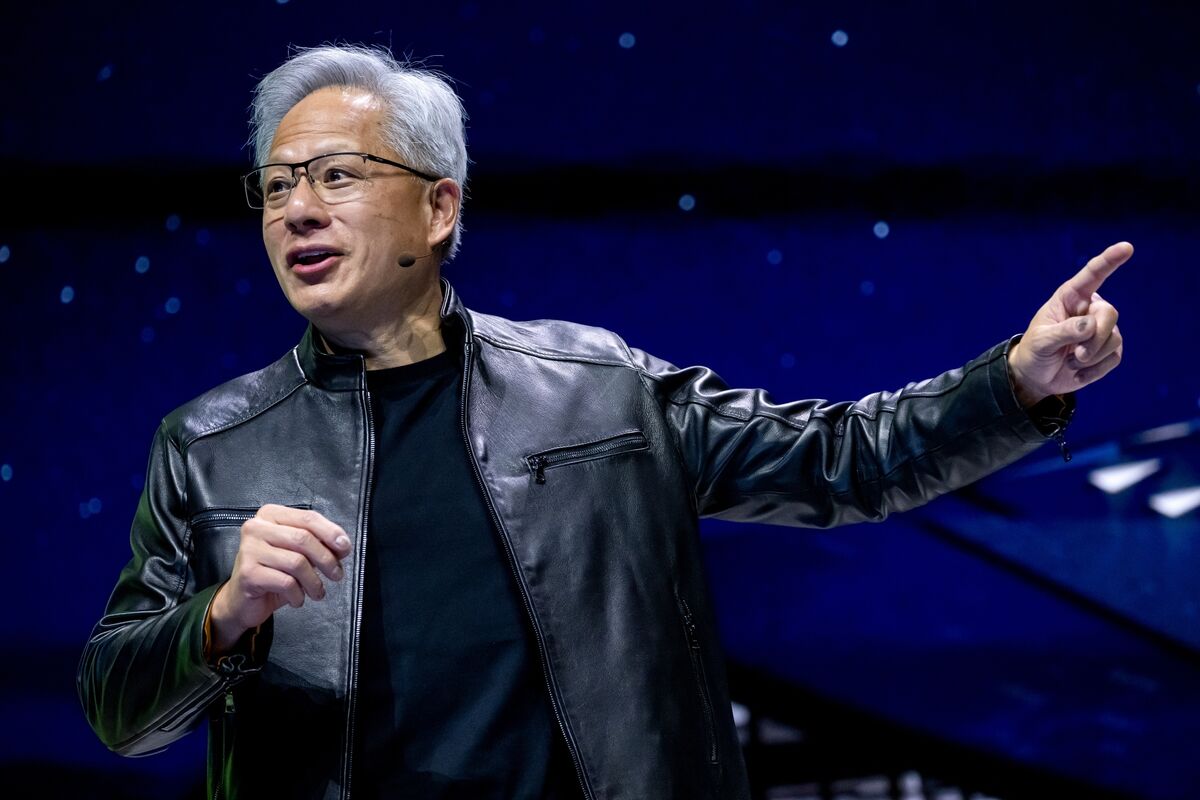
Nvidia CEO Jensen Huang urged AI leaders to warn responsibly but avoid fearmongering at the company’s technology conference, commenting specifically on Anthropic’s handling of Pentagon contract negotiations. This is primarily a reputational/messaging stance with limited near-term market impact but signals Nvidia management’s emphasis on measured public communication around AI technology.
The public tone from industry leadership is a de‑facto lever on both regulator and buyer behavior; calmer messaging can materially shorten procurement and enterprise adoption cycles by removing headline-driven political reflexes. If sales cycles compress by 3–6 months for large enterprise/government procurements, GPU and accelerator vendors could see ~5–10% earlier revenue realization over the next 12 months simply from timing — that magnifies quarterly cadence and EPS optics for market leaders.
Incumbent suppliers and hyperscalers benefit disproportionately: firms that already own the hardware/software stack capture incremental spend with near-zero marginal customer-acquisition cost, while smaller pure-play AI vendors face elongated validation windows and higher bid/ask spreads for large contracts. The supply chain effect is visible two layers down — memory, interconnect, and ODM capacity utilization becomes less lumpy, raising visibility for suppliers that have been operating with constrained orders.
Tail risks remain non-trivial: a single high-profile model failure, credible leak, or new legislative push could re‑ignite stricter procurement rules and drive a 20–30% haircut in near-term demand forecasts within weeks. Watch catalysts on three horizons — headlines (days), procurement cycles and contract awards (months), and legislation/regulatory frameworks (12–36 months) — any of which could flip sentiment rapidly.
The market is likely underpricing the value of tone and governance as a competitive moat; companies that demonstrate credible, consistent messaging and governance earn not just reputational benefit but measurable acceleration of TAM capture. That creates asymmetric opportunities to take concentrated exposure to high-quality infrastructure providers while hedging regulatory shock scenarios with short-duration protection.
AI-powered research, real-time alerts, and portfolio analytics for institutional investors.
Request DemoOverall Sentiment
neutral
Sentiment Score
0.00
Ticker Sentiment
