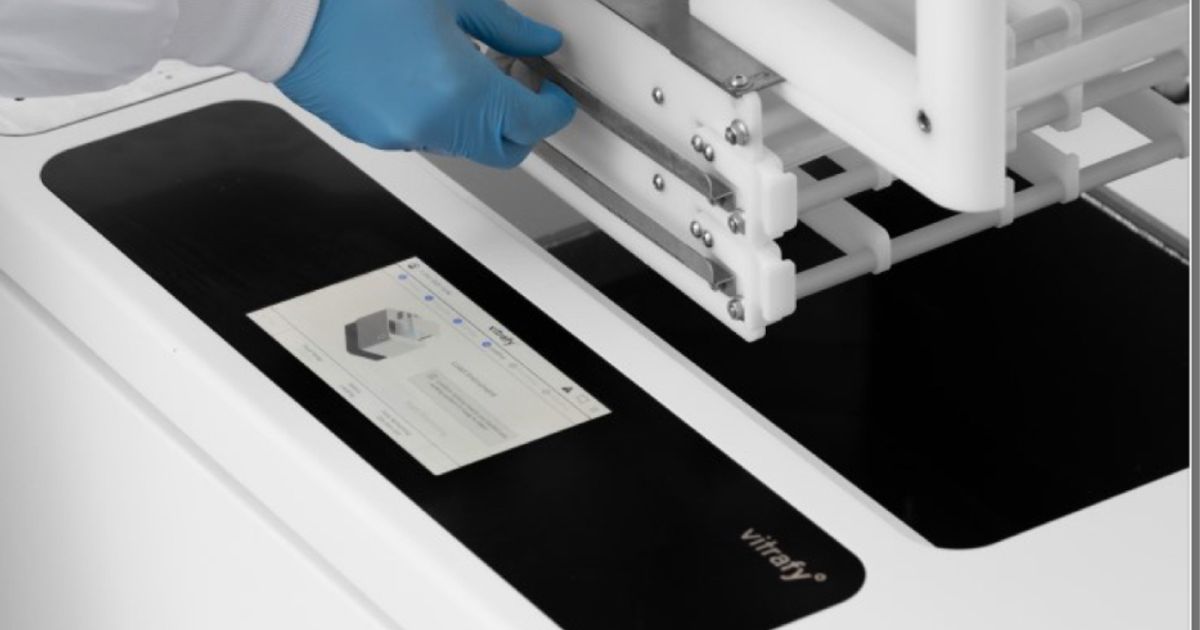
Vitrafy Life Sciences is raising A$30 million via an institutional placement at A$2.60 per share, a 31.6% discount to its last close, to expand Guardion manufacturing and accelerate U.S. commercial growth. The company also plans a non-underwritten Share Purchase Plan targeting up to A$2 million for retail investors. Proceeds will fund additional device production, U.S. sales expansion, working capital, and capital raising costs as it advances toward commercialization and medical device registration milestones.
This raise is less about liquidity and more about de-risking a scale-up bottleneck: in medtech, demand often looks strong on paper until manufacturing throughput becomes the constraint. By financing capacity ahead of revenue recognition, the company is effectively buying option value on U.S. customer conversion, which can matter more than near-term dilution if installed base economics are sticky. The key second-order effect is that a larger deployed footprint in the U.S. can shorten sales cycles by reducing supply uncertainty for blood-bank partners, which tends to improve renewal odds and accelerate referral-driven adoption.
The discount to the last trade price signals the market was already pricing in either financing risk or a near-term need for execution proof. That usually creates a near-term technical overhang in the stock, but it also resets expectations lower, which can be constructive if operational milestones land over the next 1-2 quarters. The main risk is that the equity raise becomes a substitute for proof: if manufacturing capacity expands before demand is truly validated, working-capital intensity rises and the market may start to model a recurring capital need rather than self-funding growth.
From a competitive lens, the biggest loser is not a named peer but any smaller cryopreservation or blood-processing vendor that relies on constrained supply as a moat; additional capacity can shift bargaining power back toward the company and its channel partners. The contrarian read is that the market may be underestimating how quickly U.S. commercialization can inflect once regulatory and procurement milestones are crossed, because healthcare equipment adoption often comes in step-changes rather than linear ramps. If management converts this raise into visible shipment growth within 90-180 days, the stock could re-rate well before full regulatory completion.
Near term, the SPP can create a short-term technical bid if retail demand is strong, but the larger signal is institutional validation at a time when execution risk is still high. The move is probably constructive over 6-12 months if the company can demonstrate gross margin preservation while scaling, because that determines whether the raise funds growth or merely funds churn. If margin compression appears in the next two reporting periods, the market will likely punish the story sharply despite the fresh capital.
AI-powered research, real-time alerts, and portfolio analytics for institutional investors.
Request DemoOverall Sentiment
moderately positive
Sentiment Score
0.62
