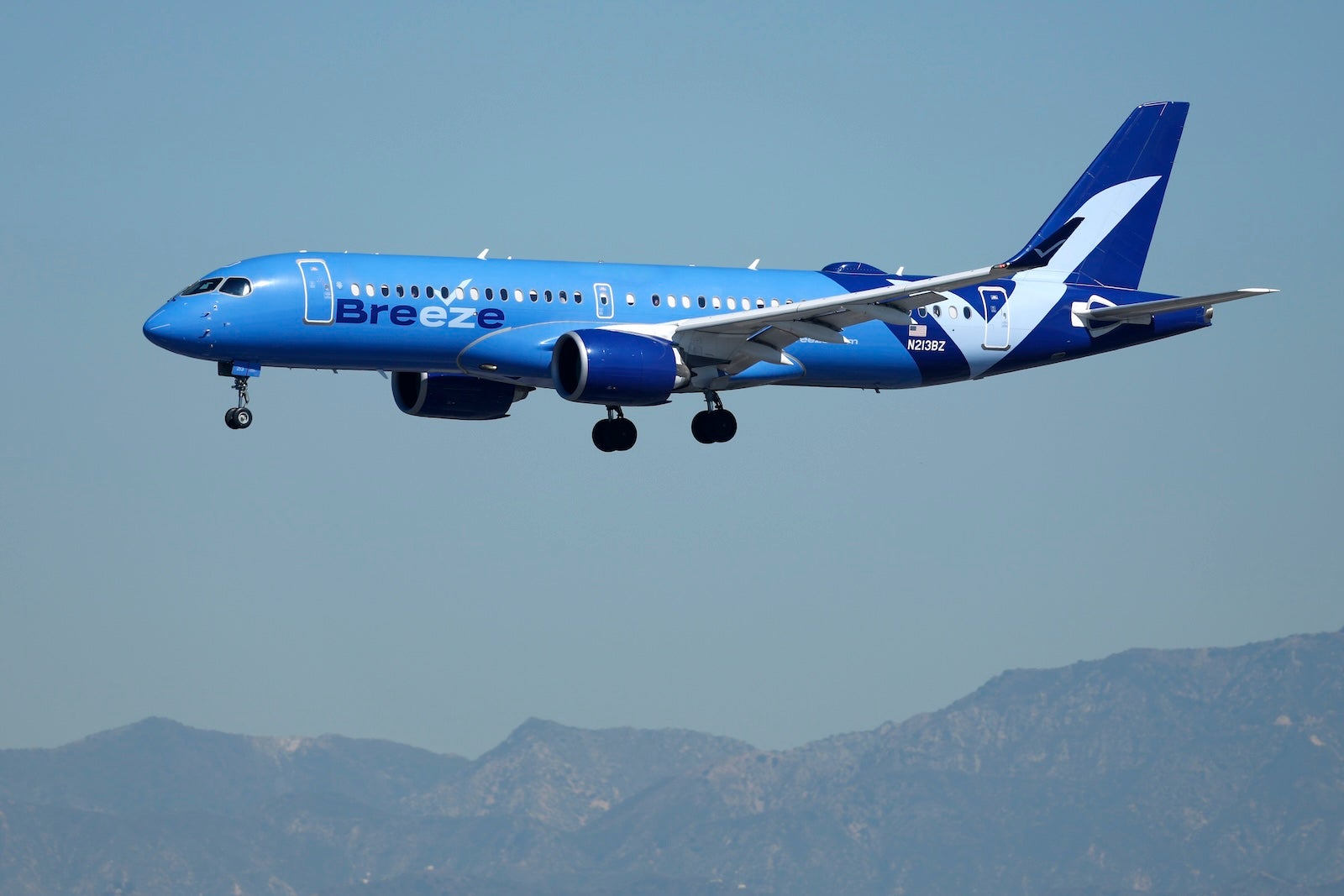
Breeze Airways announced an 11-route expansion, including four new Atlantic City nonstop routes that replace services previously operated by Spirit Airlines and seven additional routes to Florida, Mexico, the Caribbean, and St. Thomas. The move expands Breeze's footprint into underserved leisure markets, with first-ever service to St. Thomas and new nonstop links from Richmond and Tampa to Cancun and St. Thomas, respectively. The news is constructive for Breeze's growth trajectory but is unlikely to have a broad market impact.
The economic signal here is less about one carrier adding seats and more about how quickly capacity is being re-priced into Spirit’s abandoned leisure corridors. Those routes are structurally attractive because they are short-haul, high-density, and heavily discretionary, which means load factor can stay resilient even if Breeze undercuts incumbents on headline fare. The second-order effect is that the entire Southeast vacation bucket becomes a tactical yield battleground, pressuring unit revenue for anyone still exposed to Atlantic City, Florida, and Caribbean leisure traffic.
For AAL, the direct read-through is limited, but the competitive implication matters: where American is the incumbent on some Caribbean leisure flows, Breeze’s entry raises the odds of localized fare dilution and higher promotional intensity over the next 1-2 booking cycles. That does not typically move quarterly systemwide numbers, but it can matter at the margin because these routes often carry outsized contribution in peak periods and are among the easiest to copy if they show traction. The real risk is not lost share on day one; it is a slower deterioration in pricing power if multiple ULCCs decide the post-Spirit vacuum is worth chasing.
Contrarian take: the market may be overestimating how much of Spirit’s demand is transferable rather than simply price-absent. Some of this traffic will evaporate if the replacement schedule, airport timing, or ancillary fees are less favorable, which caps the profitability of the capacity redeployment. That creates a good setup for airlines with stronger ancillary monetization and loyalty-driven demand, while smaller entrants may find they are buying low-yield passengers at the cost of margin discipline.
Catalyst-wise, watch the next 30-90 days for booking curves and fare compression on Florida/Virgin Islands leisure routes, not the press releases. If load factors come in strong without heavy discounting, the strategic takeaway is that Spirit’s share was more fragile than expected; if yields slide, this becomes a warning that ULCC capacity is being over-added into a softening leisure shoulder season.
AI-powered research, real-time alerts, and portfolio analytics for institutional investors.
Request DemoOverall Sentiment
mildly positive
Sentiment Score
0.35
Ticker Sentiment
