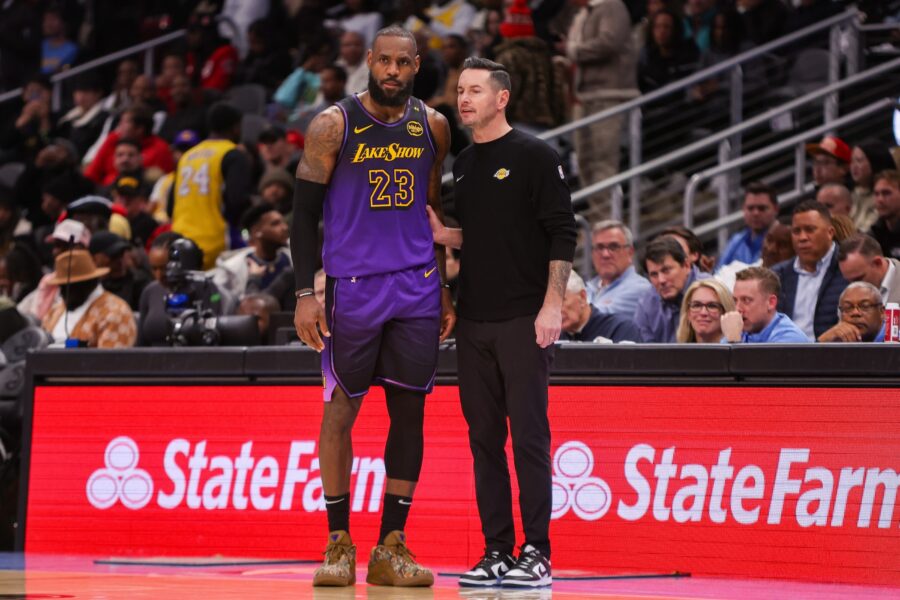
The Lakers signaled a willingness to re-sign LeBron James in free agency while also expressing strong interest in retaining Austin Reaves, as the team looks to keep its core of James, Reaves and Luka Doncic together. Rob Pelinka said roster construction will be retrofitted around Doncic, and JJ Redick highlighted defense and bench depth as offseason priorities. The update is mainly team-operations and roster-planning commentary, with limited direct market impact.
The market is treating this as a sentimental retention story, but the more important signal is capital allocation discipline. If Los Angeles commits meaningful money and usage to a 42-year-old, it implicitly constrains roster optionality around Luka’s prime window and raises the probability of a thin bench, which is exactly where postseason teams break down. The incremental on-court value of a full-season James is likely negative versus a younger two-way wing at the margin, so the question is not “can he still help?” but “can the Lakers survive his declining availability while preserving lineup balance?”
The second-order effect is that this could accelerate a bifurcation in the Western Conference: contenders with stable depth and shooting gain relative ground if the Lakers choose continuity over fit. Any overcommitment to legacy stars typically compresses the minutes available to development assets and raises the volatility of the half-court offense when one of the stars sits. That creates a subtle but tradable distinction between regular-season brand value and playoff win equity; the former may improve, the latter may not.
Consensus is underpricing the chance that negotiation optics matter more than dollars. If James wants a coherent plan, the Lakers are effectively being judged on whether they can present a credible exit path from older-star dependency, and any ambiguity there could slow the deal or force a shorter term. The real catalyst is not the signing itself but whether management uses the offseason to reprice minutes toward athletic, defendable role players; if they do not, the team’s title probability can decline even if the headline talent remains intact.
AI-powered research, real-time alerts, and portfolio analytics for institutional investors.
Request DemoOverall Sentiment
neutral
Sentiment Score
0.05
