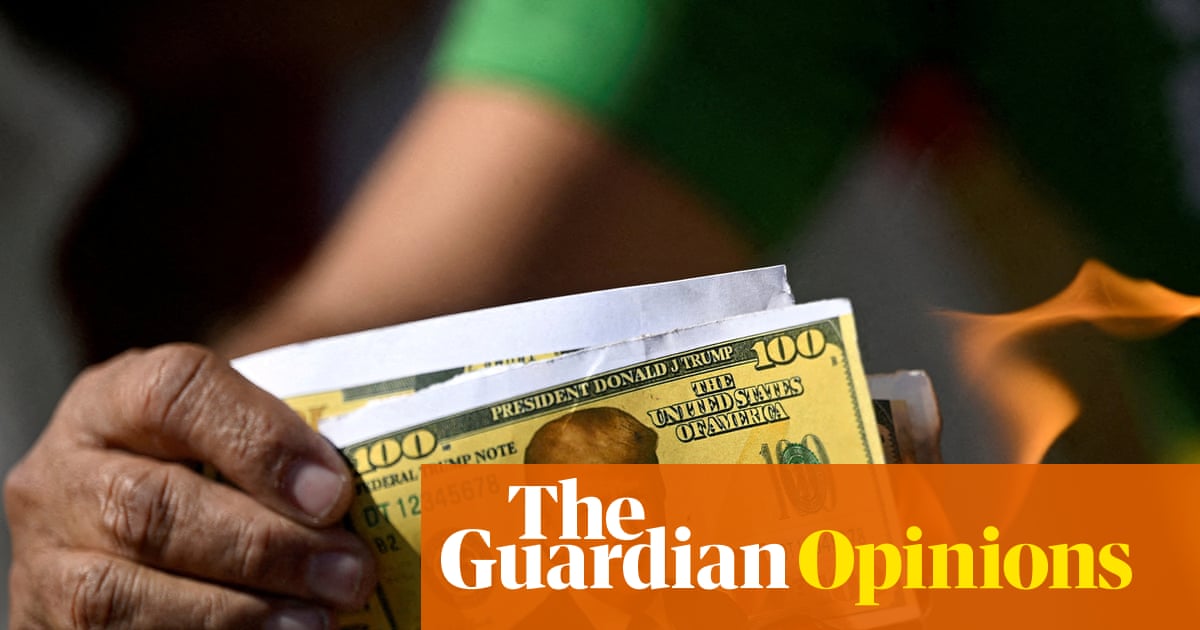
Donald Trump's trade war has escalated with new tariffs on Canada, Brazil, India, and Taiwan, yet the US stock market remains near record highs despite a recent 1% dip. The US economy has shown surprising resilience, with 3% Q2 annualized growth, attributed to businesses stockpiling goods, the hot-cold nature of Trump's policy suggesting future deals, and a lack of widespread retaliatory measures. However, this resilience is temporary; as stockpiles deplete, consumer prices are expected to rise significantly, with the average US tariff jumping from approximately 2% to 15% post-August 1st, a level not seen since the 1930s, indicating that while an economic hurricane may be avoided, significant costs and uncertainty for businesses and consumers are still anticipated.
The US market is exhibiting a notable divergence between escalating trade policy risks and resilient equity valuations. While President Trump's new tariffs on key trading partners have elevated the average US tariff rate from approximately 2% to 15%—a level not seen since the 1930s—the stock market remains near record highs, with only a minor 1% setback. This apparent stability is underpinned by several temporary factors. The headline 3% annualized Q2 GDP growth is misleading, as it is distorted by a Q1 contraction, bringing the first-half average growth to a more modest 1.25%, well below the 2.8% rate for 2024. The economy's resilience is largely attributable to pre-emptive stockpiling by US companies, which has so far buffered consumers from price hikes. Furthermore, some multinationals, such as Sony, are mitigating US-centric cost pressures by raising prices in other international markets, while analysts at Deutsche Bank note that other firms are absorbing costs through reduced profit margins. However, these mitigating effects are finite. The article flags significant forward-looking risks, including the inevitable depletion of stockpiles, which will likely push tariff costs onto consumers, and recent worrying US jobs data that suggests uncertainty is already impacting business confidence and investment. Investor sentiment currently relies on the expectation that severe outcomes will be negotiated away, but even a 'deal' scenario, like the 10% tariff on UK goods, represents a significant deterioration from the prior trade environment.
AI-powered research, real-time alerts, and portfolio analytics for institutional investors.
Request DemoOverall Sentiment
Negative
Sentiment Score
-0.40
Ticker Sentiment
