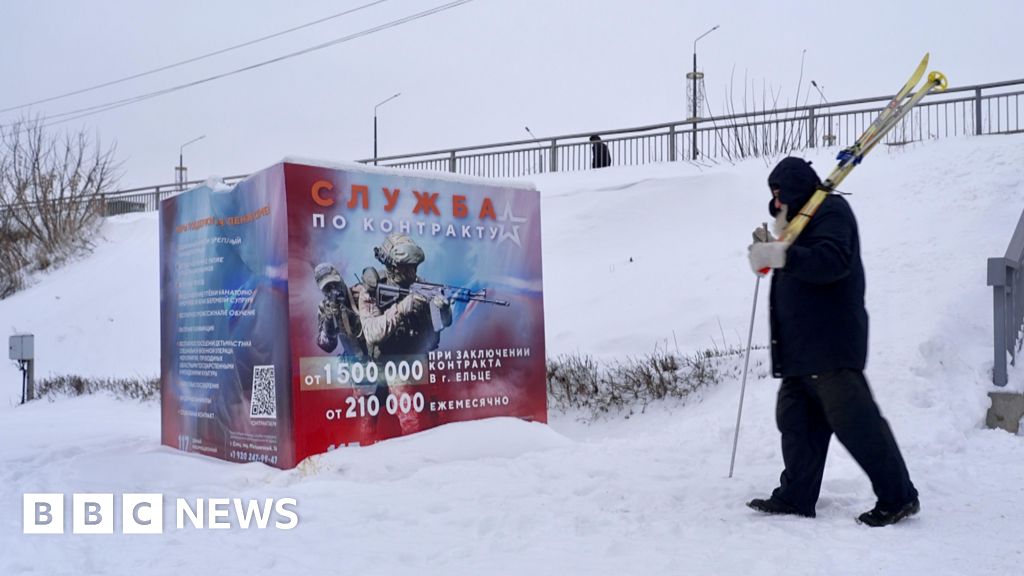
Four years into the full-scale invasion of Ukraine, Russia faces growing fiscal strain and a stagnating domestic economy as the government raises VAT from 20% to 22%—the Finance Ministry says the extra revenue will fund defence and security—while running a widening budget deficit. Local reports describe rising utility bills, price increases squeezing household real incomes and small businesses (e.g., bakeries passing on higher costs), and recruitment incentives (one-off sign-on equivalent to ~£15,000) and continued casualties reinforcing elevated defence spending. The persistent war dynamics and tax-driven hit to consumption point to downside pressure on Russian domestic demand and corporate margins, increasing fiscal risk and keeping risk-off sentiment for investors with Russian exposure.
Market structure: The domestic shift in Russia — higher VAT (+2pp), rising defence outlays and widened budget deficits — reallocates demand from consumer services/SMEs to defense and energy revenue channels. Winners: large defense primes (benefit from higher NATO/EU budgets too) and commodity exporters; losers: Russian consumer SMEs, regional real estate and domestic banks exposed to rising NPLs. Supply/demand: constrained Russian labor and capital will tighten non-energy supply (higher prices), while energy supply disruption risk keeps oil/gas prices structurally firmer over 3–18 months.
Risk assessment: Tail risks include large-scale escalation (NATO involvement or targeted strikes inside Russia), expanded sanctions (financial disconnection, frozen FX liquidity) or a sovereign/Ruble crisis — each could spike volatility and cause >20% moves in energy and EM credit within days. Immediate (days): political/commodity volatility; short (weeks–months): budget-driven tax/pass-through depresses consumption and earnings; long (quarters+): chronic stagnation and fiscal crowding out. Hidden dependencies: China’s willingness to buy Russian energy and European storage cycles; catalysts include OPEC+ cuts, major battlefield offensives, or EU sanctions rounds.
Trade implications: Tactical long allocation to large defense primes (LMT, RTX, GD) and energy majors (XOM, CVX, XLE) for 6–18 months, hedge with GLD exposure as tail-risk insurance. Short Russian beta (RSX) and long USD vs RUB via forwards/ETNs if accessible; deploy 6–12m call spreads on LMT/RTX (10–15% OTM) to balance cost and convexity. Rotate out of EM consumer discretionary and regional banks into energy/defense and precious metals.
Contrarian angles: Consensus prices prolonged war — but defense equities may already front-run funding; mispricing exists in mid-cap cyber/ISR suppliers and European small-cap defense names that trade below replacement value. Ruble weakness could be overstated if Brent stays >$85 for 60+ days; that scenario would re-rate Russian fiscal capacity and pressure short-RUB trades. Unintended consequence: prolonged Western energy purchases from other suppliers accelerates Russia’s permanent market-share loss, capping long-term energy revenue upside.
AI-powered research, real-time alerts, and portfolio analytics for institutional investors.
Request DemoOverall Sentiment
moderately negative
Sentiment Score
-0.60
