
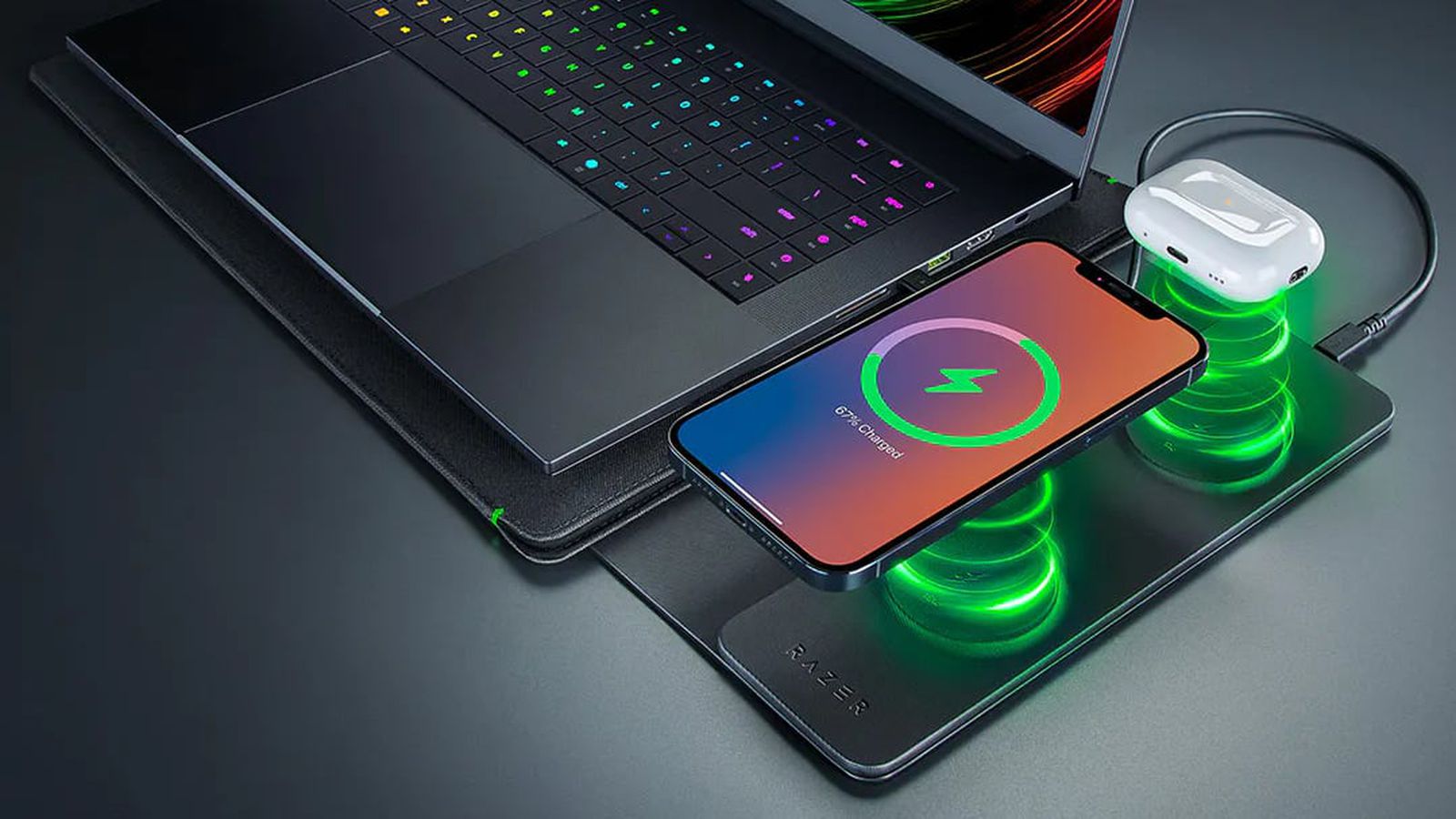
Razer launched a 16-inch laptop sleeve with integrated MagSafe-compatible wireless charging zones, priced at $130 and available on its website. The sleeve supports simultaneous charging of an iPhone (single 15W spot) and AirPods (5W spot) via a USB-C connection to a 30W+ adapter, includes padding and a water-resistant polyester exterior sized for 16-inch MacBook Pros, and is positioned as an accessory add-on rather than a major product line driver. The product's technical limitations (15W max for phones) and niche utility suggest limited near-term revenue impact but represent a modest expansion of Razer’s peripherals offering.
Market structure: This product primarily benefits third‑party accessory makers and the wireless power supply chain (wireless-coil and PMIC suppliers) by monetizing bundling (Razer sells a $130 sleeve with charging). Standalone MagSafe puck and low‑margin retail sellers are modest losers; Apple (AAPL) may see slight cannibalization in accessory ASPs but impact is immaterial to services/hardware revenue (<1% revenue shock). The pricing/margins suggest niche, not mass, adoption given the 15W cap vs. newer iPhones’ 25W potential.
Risk assessment: Tail risks include product safety/thermal incidents and Apple compatibility/legal restrictions around MagSafe standards that could trigger recalls or delists; probability low but impact outsized in weeks after launch. Immediate market reaction is negligible (days); expect measurable effects on supplier order flows in the next 1–3 quarters and potential earnings revisions for component suppliers over 3–12 months. Hidden dependency: accessory demand scales only if Apple’s MagSafe/form factor remains dominant and holiday season pull is healthy.
Trade implications: Favor semiconductor suppliers of wireless power/connectivity over retailers—these are high‑conviction, modest‑sized tactical longs (3–12 month horizon). Option structures (3–6 month call spreads) can express the trade while capping premium. Rebalance sector exposure toward analog/power semis and away from low‑margin consumer retail, with clear entry/exit and stop thresholds to control execution risk.
Contrarian angle: Consensus may overstate ecosystem benefit to Apple while understating technical limits (15W) that cap consumer utility; accessory bundling historically re‑prices peripheral markets but rarely moves OEM core metrics. Watch for returns/negative reviews after 4–8 weeks as a leading indicator; if adoption is weaker than headlines, semiconductor names could be priced for a disappointment.
AI-powered research, real-time alerts, and portfolio analytics for institutional investors.
Request TrialOverall Sentiment
mildly positive
Sentiment Score
0.25
Ticker Sentiment
