


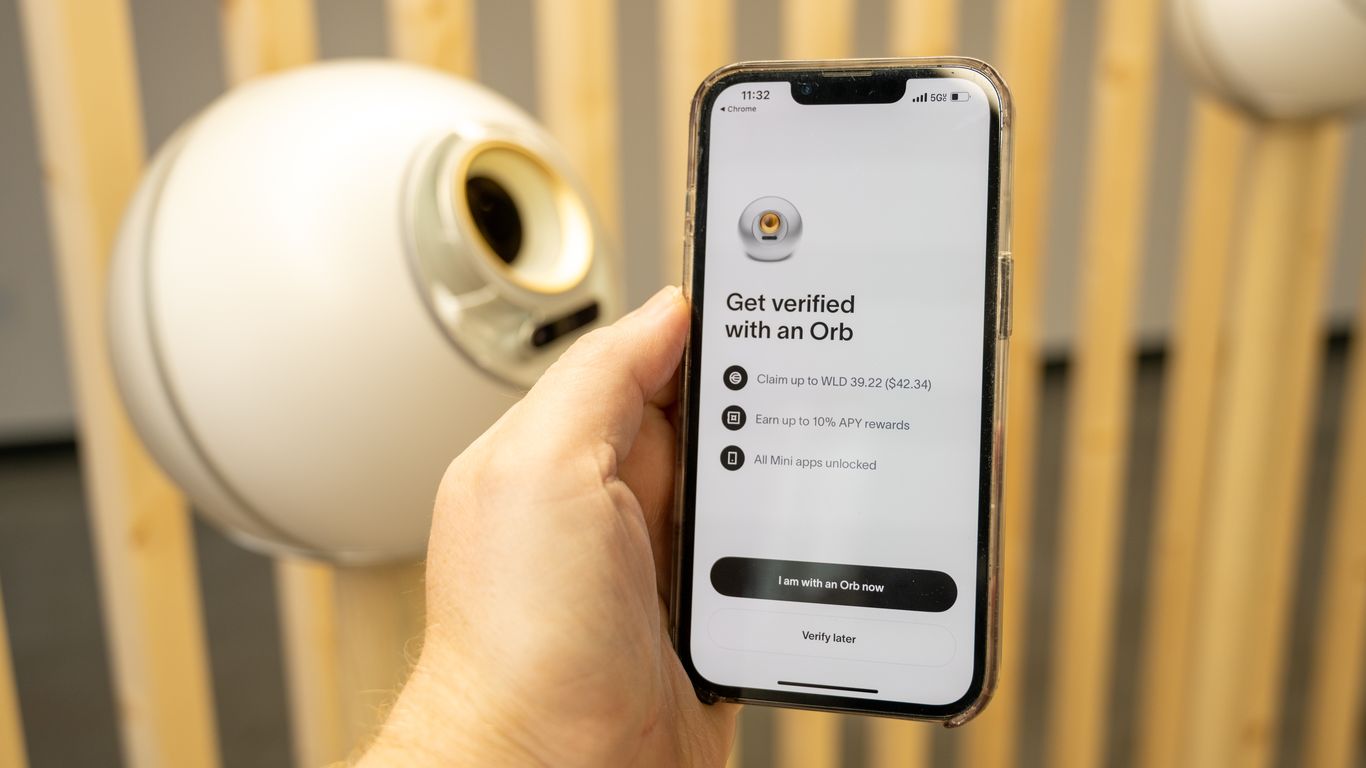
World announced new and expanded integrations with Zoom, DocuSign, Tinder, Okta, Shopify and VanEck, while open-sourcing its World ID protocol and launching a standalone World ID app. The company says the initiative is aimed at verifying that a real human is behind an online interaction, with 17.9 million people signed up globally and about 1.1 million in North America. The news is positive for adoption prospects, but near-term market impact appears limited because it is primarily a product and partnership rollout rather than a financial update.
This is less a consumer-identity story than an infrastructure wedge for the emerging agent economy. If AI systems are going to transact, sign, message, and reserve on behalf of humans, the bottleneck shifts from content authenticity to action authorization, which should help any workflow vendor that can become the default verification rail. That creates a subtle but important competitive shift: the value accrues not to the biometric layer itself, but to the control points where enterprises already sit, especially document execution, IAM, and commerce checkout.
For DOCU and OKTA, the optionality is real because both sit at high-frequency trust junctures with measurable fraud loss and low tolerance for false positives. The near-term monetization is likely modest, but even small attach rates can expand ACV if World or similar tools become a standard step-up verification method for high-risk actions; think of this as a feature-led upsell rather than a standalone product market. SHOP is a lower-conviction beneficiary because bot mitigation at checkout helps conversion quality, but any friction added to the purchase funnel can also reduce top-line volume, so the net is more about margin protection than growth acceleration.
The contrarian point is that adoption could be slower than headline partnerships imply because the problem is socially important but operationally annoying. Consumers and enterprises will tolerate extra verification only when fraud costs are obvious, which suggests the first real traction is in narrow use cases like ticketing, dating, and admin actions—not broad login replacement. That means the equity reaction in DOCU/OKTA may over-discount a multi-year revenue opportunity while underestimating the reputational and regulatory drag on the identity vendor itself.
Over a 3-6 month horizon, the better trade is to own the incumbents that can distribute verification, not the vendor trying to create the category. The key risk to the thesis is a security incident, governance controversy, or regulatory pushback that makes enterprises cautious about outsourcing trust; in that case integration pilots stay pilots and the revenue impact gets pushed out 12-24 months.
AI-powered research, real-time alerts, and portfolio analytics for institutional investors.
Request TrialOverall Sentiment
mildly positive
Sentiment Score
0.15
Ticker Sentiment
