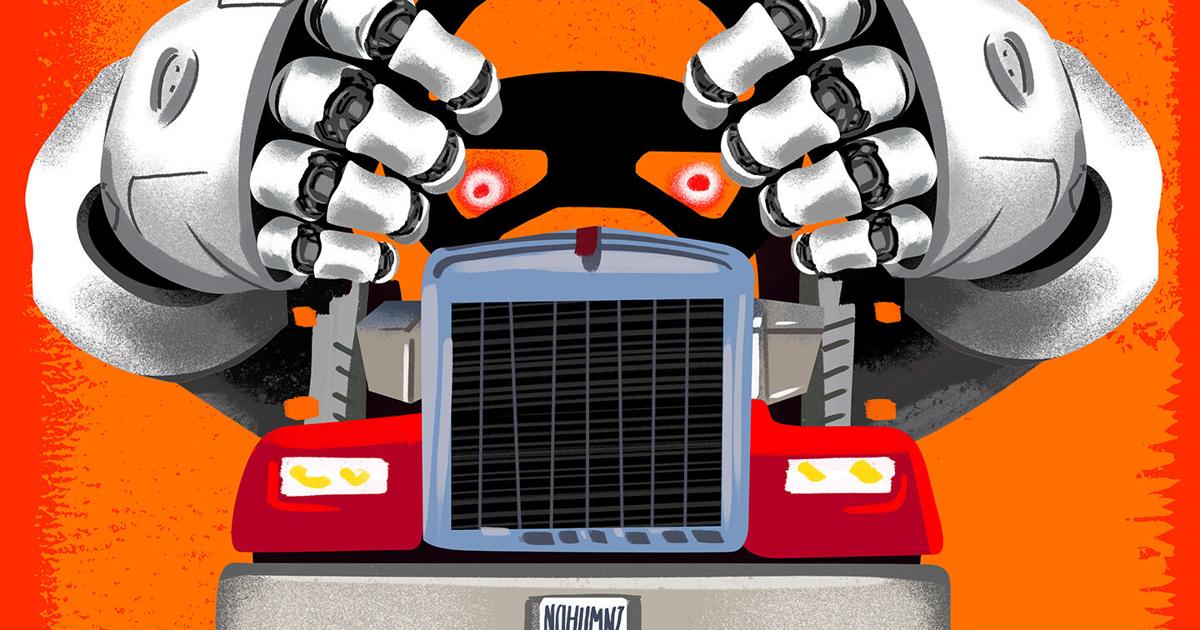
California’s DMV issued new rules opening a path for autonomous heavy trucks, with a staged testing process requiring 500,000 miles with safety drivers and 500,000 driverless miles before commercial deployment. The regulations also permit testing and rollout of publicly operated self-driving commuter shuttles, while still barring autonomous use in larger buses, motorcycles, and moving vans. The move is positive for AV developers such as Gatik, Kodiak AI, Aurora, and others, but it faces strong opposition from Teamsters and some politicians, keeping legal and political risk elevated.
The biggest near-term winner is not the autonomous-truck equity itself, but the ecosystem that lowers the regulatory friction of proving safety at scale: freight-route software, remote-ops stacks, lidar/compute suppliers, and insurers willing to underwrite commercial pilots. The step-up in mileage requirements creates a de facto moat for companies already accumulating Texas miles, because they can convert out-of-state data into California approvals faster than late entrants. That should widen the gap between the few operators with real highway exposure and the rest of the field, while pushing capital toward platforms that can monetize both trucking and low-speed shuttle deployments.
The market is likely underestimating how long the “testing” phase can still support revenue without full commercial deployment. A one- to two-year pilot window means the initial P&L effect is more about capex, partnerships, and contract announcements than realized fleet economics; the first tradable catalyst is permit progression, not driverless revenue. In parallel, any legal challenge from labor groups creates a binary overhang that can delay fleet scaling by quarters, but it also improves the odds that the eventual winners are the better-capitalized, compliance-heavy operators rather than pure-play vaporware.
The contrarian view is that the headline sounds more permissive than it is. The high mileage bar, safety-driver phase, and local authority controls all make this a gated rollout, so consensus may be too quick to price a rapid labor-displacement wave or a near-term autonomous-freight margin reset. The real second-order effect is on incumbents: if a few routes prove safe, shippers will use autonomous capacity as bargaining leverage against truckload pricing, which could pressure margins across the brokerage and asset-heavy carrier complex before fully driverless trucks are commonplace.
For traders, the cleanest setup is a relative-value long in the technology enablers against the least-efficient regional carriers, with the thesis that permit milestones will support the former while the latter face slow-burn pricing pressure. The timing matters: this is a months-to-years story, so any position should be built on regulatory pullbacks or permit news, not on the initial rule headline.
AI-powered research, real-time alerts, and portfolio analytics for institutional investors.
Request DemoOverall Sentiment
neutral
Sentiment Score
0.15
Ticker Sentiment
