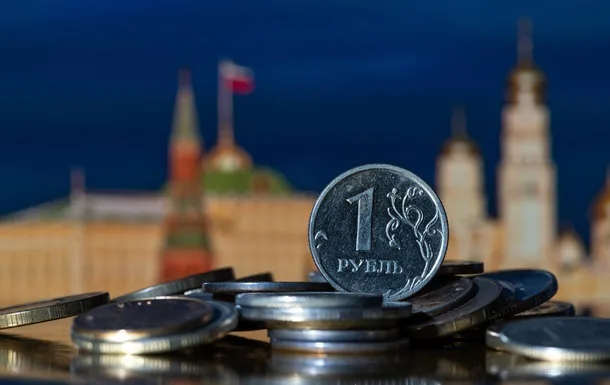
Russia's economy slowed to about 1% in 2025 from 4.9% a year earlier and contracted 0.2% in Q1 2026, with Reuters citing sanctions, high rates, ruble strength, and drone strikes on refineries as key pressures. Roughly a quarter of Russian oil refining capacity has been affected, raising fuel-shortage risks and underscoring the economic cost of the war. The article says Russian business and even some political figures are increasingly arguing that ending the war is the best path to restore growth.
The key second-order effect is that Russia’s war economy is shifting from a growth machine to a self-reinforcing squeeze on domestic liquidity. As policy stays tight to defend the currency and manage inflation, the marginal beneficiary is no longer heavy industry but the fiscal-military complex, which crowds out civilian capex and delays any private-sector re-rating. That makes the slowdown sticky: even if headline GDP stabilizes, the composition worsens, and that typically feeds weaker labor demand, lower consumer confidence, and softer non-energy imports over the next 2-4 quarters.
The more tradable implication is on energy reliability rather than absolute crude supply. Damage to refining and logistics increases the probability of regional fuel dislocations, which can force the state to prioritize domestic product supply over export optimization. That creates intermittent support for refined products, especially diesel and gasoline cracks, while leaving crude exports more vulnerable to discounting and gray-market routing frictions. In other words, the market should think less about a clean barrel reduction and more about higher volatility in product spreads and shipping risk premia.
For sanctions-sensitive assets, the real signal is that the regime is starting to price the war as an economic constraint rather than a strategic asset. If that internal calculus hardens, the first market response is usually a relief rally in Russian risk assets and select Europe-facing cyclicals, but the more likely path is repeated false starts: brief peace headlines, sharp squeezes, then renewed disappointment. That backdrop argues for fading any sustained improvement in Russian risk pricing unless there is an actual policy shift on negotiations or sanctions, because the economic incentive is moving faster than the political mechanism.
The contrarian read is that this is not yet a collapse thesis; it is a constraints thesis. Russia still has enough policy tools, reserve control, and energy revenue to avoid a sudden macro break, so the near-term trade is more about relative deterioration than outright crisis. The cleanest expression is to own volatility and relative winners from higher product tightness while avoiding directional bets on a decisive geopolitical resolution without confirmation from both sanctions language and battlefield tempo.
AI-powered research, real-time alerts, and portfolio analytics for institutional investors.
Request TrialOverall Sentiment
strongly negative
Sentiment Score
-0.72
