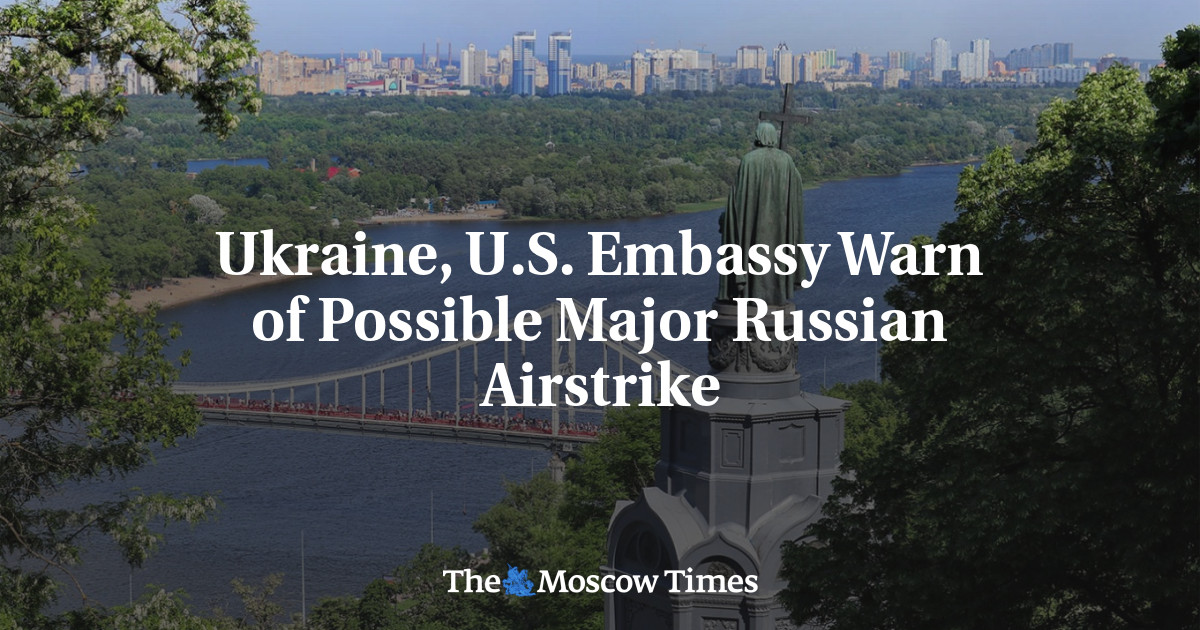
Ukraine and the U.S. embassy warned of a potentially significant Russian air attack within the next 24 hours, with alerts covering all parts of Ukraine including Kyiv. Zelensky said Russia may be preparing a combined strike involving the Oreshnik missile, while Russian officials also reported 18 deaths from a Ukrainian strike in Russian-occupied eastern Ukraine. The escalation raises near-term geopolitical and defense risk and could spur broader risk-off sentiment.
This is less about the strike itself than the market signaling function: when both sides telegraph escalation and embassy language turns to broad, short-horizon warning, the probability distribution shifts toward an air-defense/geopolitical premium rather than a one-day headline fade. The immediate second-order effect is on European risk sentiment, which should spill into industrial cyclicals, transport, and frontier/Eastern Europe exposures before it shows up in broad indices. The biggest loser is any asset with embedded tail-risk assumption that the conflict remains geographically contained; that includes regional banks, airlines, and select EM credit proxies with indirect Russia/Ukraine trade links.
The more important catalyst is whether this warning is followed by a measurable change in strike pattern: if Russia uses a mixed salvo with a visible high-end system, the market will extrapolate a higher baseline for NATO-adjacent escalation and a lower ceiling for any peace premium. That would also support defense procurement names on both sides of the Atlantic, because procurement urgency tends to reprice faster than actual budget approvals. Conversely, a non-event after a high-visibility warning would briefly compress volatility, but it would not erase the new floor under geopolitical risk because the underlying signaling now includes strategic weapons and Belarus staging.
The contrarian view is that the immediate macro selloff may be overdone if investors treat this as a binary wartime escalation instead of a recurring headline risk event. Unless there is a credible expansion beyond Ukraine’s borders, the durable market impact is likely to remain concentrated in defense, energy logistics, and Eastern Europe risk premia rather than a sustained broad de-risking. The better trade is therefore not outright index shorts, but selective hedges against Europe-facing exposure and relative longs in security beneficiaries.
AI-powered research, real-time alerts, and portfolio analytics for institutional investors.
Request DemoOverall Sentiment
strongly negative
Sentiment Score
-0.80
