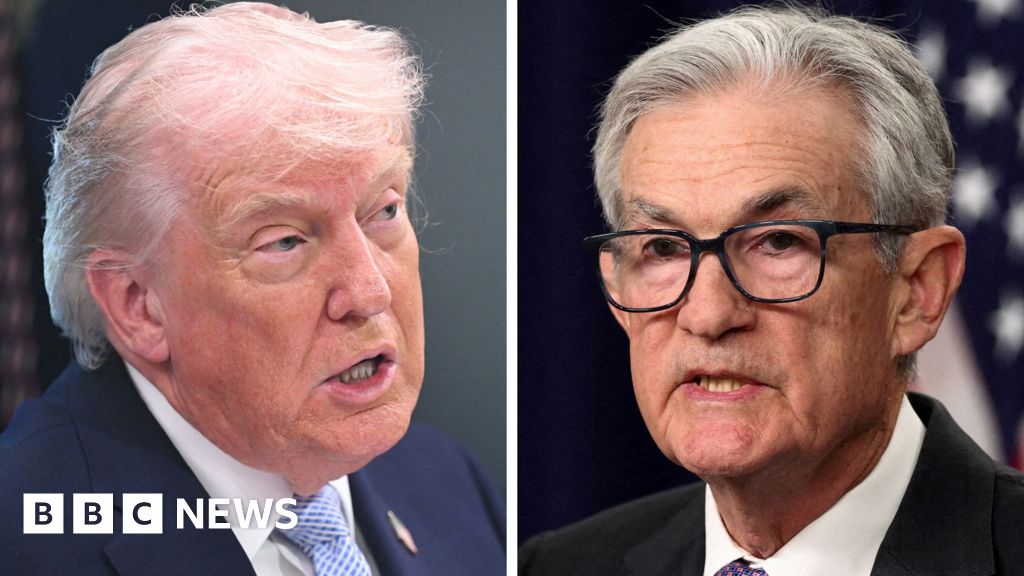
The article centers on Donald Trump’s repeated attacks on Fed Chair Jerome Powell over interest-rate policy, with the Fed having cut rates three times in 2025 while delaying further cuts amid tariff-related inflation concerns. It also highlights a dispute over the Fed building renovation costs ($2.7bn estimated versus Trump’s $3.1bn claim) and a now-dropped DoJ probe that briefly threatened Powell’s independence. The broader market relevance is high because the story touches Fed independence, rate-cut timing, and political pressure on monetary policy.
The market implication is less about Powell personally and more about the signaling effect on Fed governance: a politically constrained chair tends to compress rate volatility in the near term but widen the tail distribution over 6-18 months. That matters because the front end may price a faster easing path into risk assets, while the long end can reinsert a term premium if investors start demanding compensation for institutional drift. In practice, the first-order winner is duration-sensitive beta; the second-order loser is any asset whose valuation assumes a clean, rules-based reaction function.
The most underappreciated channel is cross-asset correlation. If the next chair is viewed as pliant, equities may initially celebrate lower policy rates, but the dollar and long-dated Treasuries can underperform simultaneously if credibility concerns rise, creating a less friendly mix for leveraged carry and USD-funded trades. That would be especially painful for banks and real-estate-heavy credit, where lower policy rates help financing costs but weaker confidence in the policy framework can steepen curves and widen credit spreads.
The legal angle is a near-term catalyst with asymmetric impact: a probe being opened or dropped can move the confirmation process and the market’s perception of continuity over days to weeks. The deeper issue is that once personnel choices become a proxy for independence risk, every data release gains more market significance because investors will fear policy is being led by politics rather than inflation. That increases the odds of sharp but temporary rallies on dovish headlines, followed by reversals if longer-term inflation expectations or term premium start to reprice.
Consensus likely underestimates how much of the benefit from easier policy is already in cyclicals and small caps, while underpricing the risk premium repricing in the long end if the transition is viewed as credibility-negative. The better contrarian setup is not simply 'buy duration' or 'buy banks,' but to own beneficiaries of lower front-end rates while hedging against curve steepening and dollar weakness. If the new chair quickly validates independence, that hedge should bleed; if not, it pays off convexly.
AI-powered research, real-time alerts, and portfolio analytics for institutional investors.
Request DemoOverall Sentiment
neutral
Sentiment Score
-0.10
