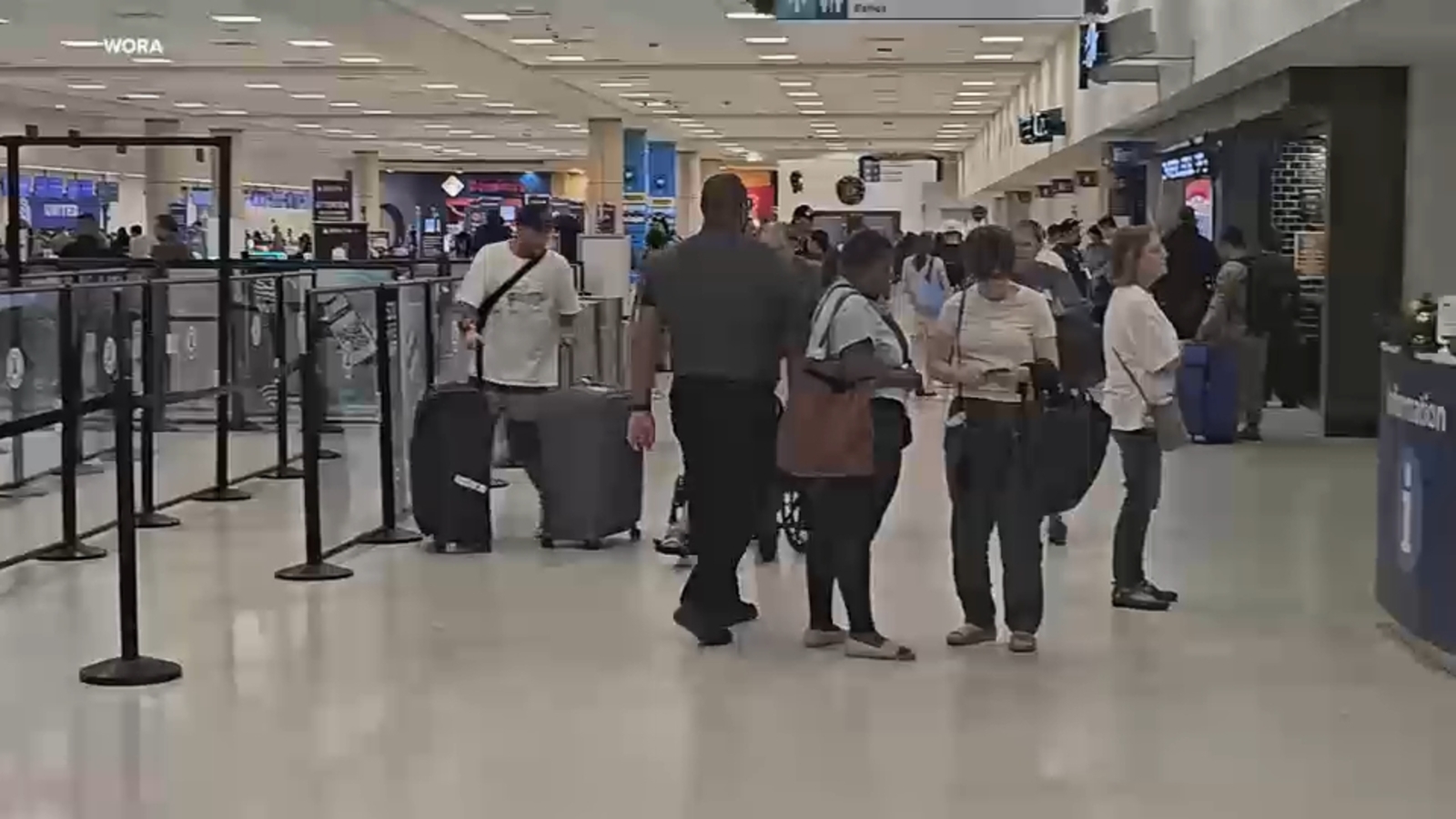
A U.S. military operation tied to the capture of Venezuelan President Nicolás Maduro prompted temporary FAA Caribbean airspace closures that led to more than 1,000 flight cancellations nationwide on Saturday; American Airlines is adding roughly 3,000 seats by scheduling extra flights and using larger aircraft while JetBlue expects to resume normal operations. Luis Muñoz Marín International Airport said FAA-ordered restrictions suspended most American commercial service to Puerto Rico (foreign and military flights exempt), leaving many passengers stranded as carriers scramble to rebook and reposition aircraft. The episode represents a short-term operational and revenue disruption for carriers serving the Caribbean but is unlikely to cause broad, sustained market moves.
Market structure: Short, regional Caribbean routes and carriers with high exposure to Puerto Rico/Venezuela (American Airlines, AAL) are immediate losers from revenue displacement, rebooking costs and elevated IRROPS; low-cost domestic-focused carriers (e.g., LUV) and charter/adjacent operators can pick up incremental demand as airlines add capacity. Pricing power shifts are transient — expect ticket yields in affected lanes to spike 5–15% on remaining inventory for 1–3 weeks while overall industry ASK reduction is <1% domestically. Cross-asset: modest near-term upside for travel insurers and aircraft lessors; corporate credit spreads for Caribbean-exposed airlines could widen 10–30 bps if disruptions persist beyond two weeks; oil/FX impact is negligible unless conflict broadens.
Risk assessment: Tail risks include escalation of military action or prolonged NOTAMs leading to multi-week closures, insurance premium repricing and regulatory travel advisories that could inflict a 1–3% revenue hit for exposed carriers in a quarter. Immediate (days) risks are operational costs and strike-price IV spikes; short-term (weeks) is revenue deferral and comps; long-term (quarters/years) is higher route hedging/insurance costs and potential yield management changes. Hidden dependencies: airport infrastructure bottlenecks (Puerto Rico ground capacity) and crew positioning can create stickiness in recovery even after NOTAMs lift. Key catalysts: FAA NOTAM updates, carrier operational bulletins, and Venezuelan government actions over the next 7–30 days.
Trade implications: Direct short/hedge AAL risk: small, time-defined positions—expect mean reversion within 1–4 weeks unless company guidance changes. Pair trades: overweight carriers with strong domestic networks (LUV) vs underweight AAL for 1–3 months to capture network flexibility premium. Options: buy short-dated AAL put spreads or call spreads on domestic peers to express asymmetry while limiting premium decay; target trades with expiries 14–45 days. Sector rotation: modestly trim Latin America/Caribbean travel leisure exposure (2–4% portfolio) and reallocate to U.S. domestic leisure and travel insurers.
Contrarian angles: The market may overprice persistent damage — operational disruptions historically normalize in 7–21 days; if AAL share price drops >7% on this news without fresh guidance, that is an oversell opportunity to buy downside protection and consider mean-reversion longs. Conversely, underappreciated consequences include higher airline insurance and reroute fuel burn that can shave 30–60 bps off airline margins if regional instability recurs. Historical parallels: 1–2 week NOTAM-driven shocks (e.g., 2019 volcanic ash) rebounded quickly; if geopolitical scope remains contained, losses will be transient and trading volatility not fundamentals-driven.
AI-powered research, real-time alerts, and portfolio analytics for institutional investors.
Request DemoOverall Sentiment
mildly negative
Sentiment Score
-0.25
Ticker Sentiment
