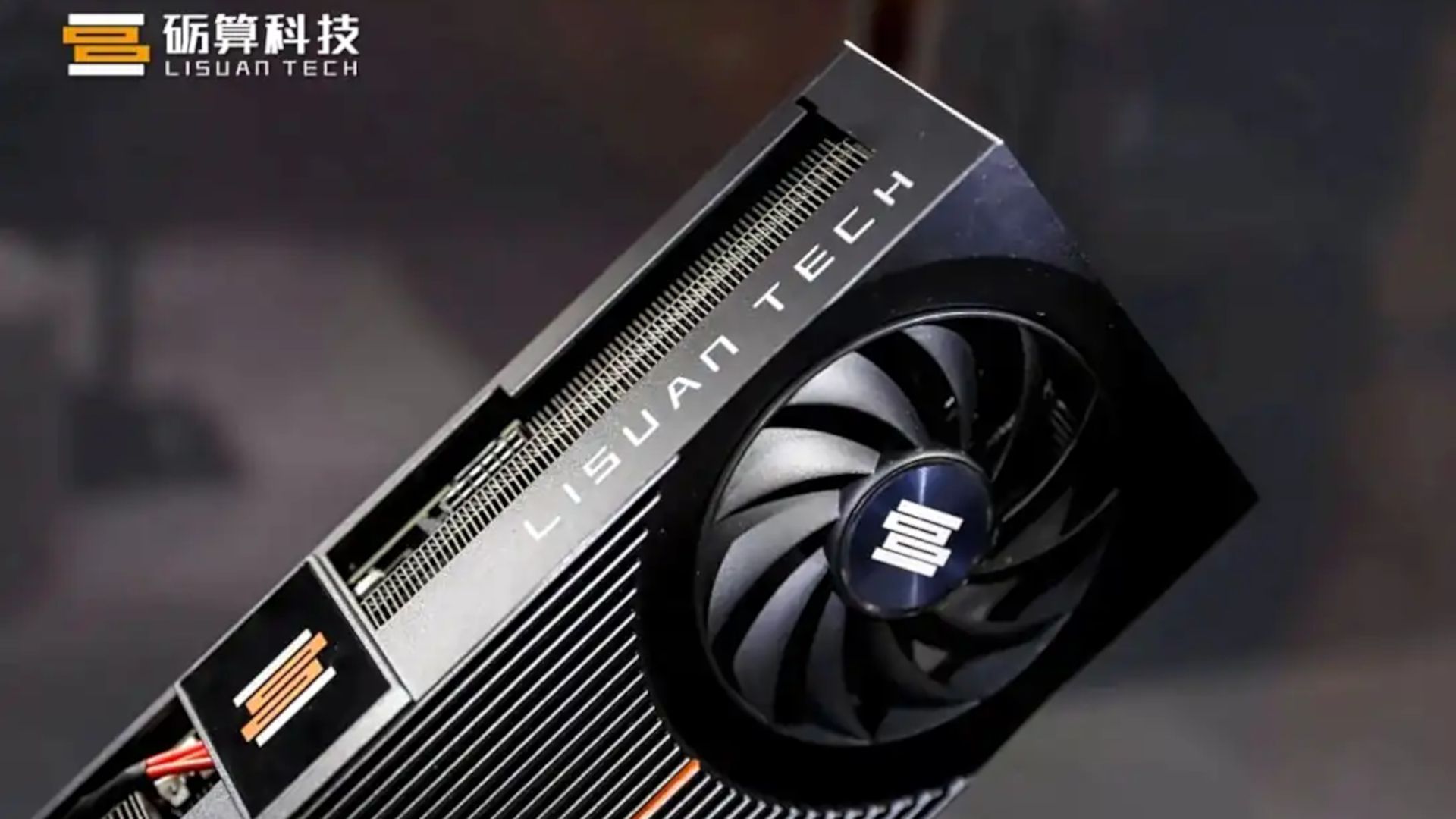
Lisuan has begun initial customer deliveries of its G100 family—China’s first homegrown 6nm discrete GPUs—after production started on September 15, 2025. The lineup includes the gaming-focused 7G106 (12GB GDDR6, 192-bit, ~24 TFLOP FP32, compared to RTX 4060-level claims) and the workstation 7G105 (24GB GDDR6 with ECC); both are built on TSMC N6, support DX12 and PCIe 4.0, and feature a proprietary upscaling solution (NSRR) and Windows-on-Arm support. This commercialization marks a strategic step toward Chinese self-reliance in high-end GPUs and a potential challenger to the AMD/Nvidia duopoly, though independent benchmarks and broader market uptake will determine the financial and competitive impact.
Market structure: Lisuan shipping 6nm G100s is a targeted shock to the China mid‑range discrete GPU market — winners are TSM (N6 wafer demand), Chinese OEMs and system integrators; losers are incumbents (AMD, NVDA) primarily on China mid‑tier ASPs. Expect localized ASP compression of ~5–15% in the RTX 4060-equivalent segment in China over 6–12 months and a modest incremental GDDR6 demand bump (~3–5%) that benefits memory suppliers short-term. Risk assessment: Key tail risks include Western export-control escalation against TSMC or Lisuan, IP litigation (Imagination/others), and failure of drivers/NSRR — any of which could destroy commercial momentum. Immediate impact is likely muted; independent bench reviews in 2–8 weeks are the gate; 12–36 months determines market share meaningfully, and outcomes hinge on TSMC N6 allocation and MSFT/driver ecosystem support. Trade implications: Tactical plays favor small, asymmetric positions: modest long exposure to TSM (capture N6 revenue) and selective long MSFT (Windows-on-Arm upside), with hedges against AMD/NVDA China exposure. Use options to limit downside: 3-month put spreads on AMD or regionally exposed distributors if benchmarks validate performance; scale trades after government procurement signals (1–3 quarters). Contrarian angles: The market may overstate Lisuan’s immediate global threat — historical Chinese silicon entrants struggled on drivers, ISV support and exportability. If benchmarks disappoint, incumbents’ moat (software, software‑defined features like DLSS) will reassert pricing power; conversely, a government procurement push could rapidly flip local share within 6–12 months.
AI-powered research, real-time alerts, and portfolio analytics for institutional investors.
Request DemoOverall Sentiment
mildly positive
Sentiment Score
0.28
Ticker Sentiment
