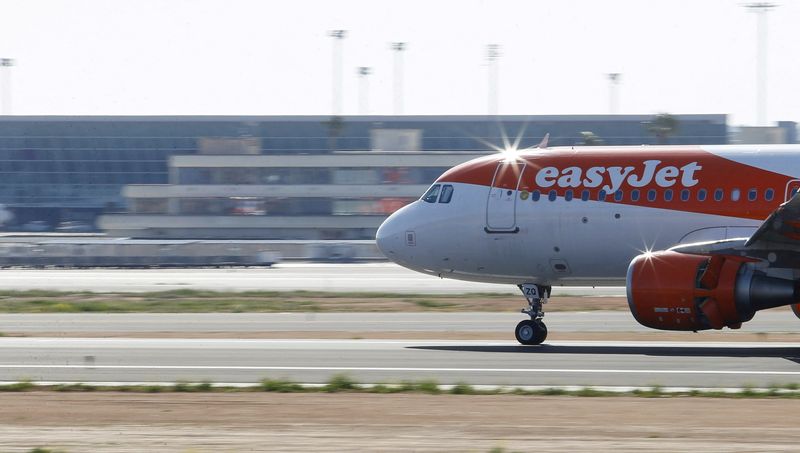
EasyJet reported a £552 million headline loss before tax for the six months ended March 31, within guidance, as higher Middle East conflict costs and legal provisions offset a 12% rise in revenue to £3.95 billion. Passenger numbers rose 6% to 42 million, load factor improved to 90%, and adjusted net cash remained solid at £434 million with total liquidity of £4.7 billion. However, booked RASK is down 4% year-on-year and fourth-quarter bookings are still 3 percentage points lower than a year ago, keeping the outlook cautious despite improved summer demand.
The market is reading the airline print as a proof point that balance-sheet strength can offset near-term geopolitical noise, but the bigger signal is dispersion inside travel. Hedged fuel and a cash-rich balance sheet buy time, yet the forward-booking mix implies revenue quality is deteriorating at the exact moment cost inflation is still sticky, so the earnings recovery is likely to be slower and more volatile than the headline capacity growth suggests. In other words, this is less a clean demand thesis than a liquidity-backed survivability thesis.
Second-order, lower spot fuel is helpful but only with a lag because hedging dampens the immediate pass-through; the real benefit accrues into later quarters if current crude/jet weakness persists. That creates a window where the stock can under-react to improving fuel economics before catching up, but it also means any rebound in energy prices would hurt twice: first through margins, then through renewed booking caution from consumers. The stronger competitive angle is that carriers with weaker balance sheets and less flexibility may have to discount harder if demand softens into Q4, which could compress industry yields even for well-run names.
The market is likely underestimating how much of the medium-term upside is already funded by operational simplification rather than traffic growth. Fleet retirement and cost-efficiency targets matter because they change the airline’s break-even slope over FY27-28, making today’s valuation more a function of duration and execution than a single quarter’s RASK print. The contrarian view is that the stock may be cheap only if you believe booking trends stabilize; if not, a low-multiple airline can stay cheap for a long time while cash is redeployed into maintenance and restructuring instead of shareholder returns.
AI-powered research, real-time alerts, and portfolio analytics for institutional investors.
Request DemoOverall Sentiment
mixed
Sentiment Score
-0.05
Ticker Sentiment
