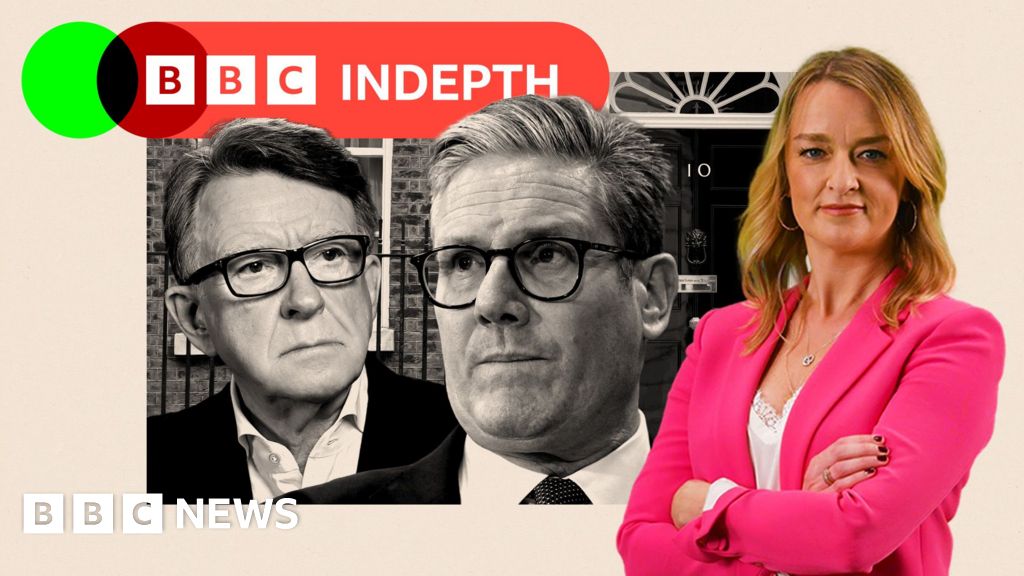
The article says Sir Keir Starmer’s handling of Peter Mandelson’s US ambassadorship has triggered a major political backlash, with Whitehall anger, Labour frustration, and the firing of senior official Sir Olly Robbins. It highlights alleged failures in vetting, process, and ministerial oversight, and says the scandal is creating further damage ahead of elections in Scotland, Wales, and across England. The piece is politically significant but has limited direct market impact.
This is less a one-off personnel scandal than a governance failure that increases the discount the market should apply to Labour’s execution capacity. The near-term issue is not policy content but bandwidth: every minute spent on damage control raises the probability of slippage on tax, planning, and spending decisions that matter far more to domestically exposed UK assets than headline approval ratings do. The second-order effect is a weaker hand with civil servants, which usually translates into slower implementation, more legalistic process, and lower odds of surprise reform.
The most tradable consequence is a risk premium reset in UK domestic cyclicals ahead of the local election window. If the government’s authority is perceived as weakened, the market should expect a more defensive fiscal posture and a lower hit rate on discretionary initiatives, which is negative for UK small caps, housebuilders, retail, and infrastructure names that depend on policy continuity. By contrast, large-cap UK multinationals with foreign earnings are insulated and may outperform on relative rotation if sterling starts to price in governance drift.
The contrarian angle is that the headline may be closer to an accountability event than a structural regime shift. If the government confines the fallout to one scapegoat and the election outcomes are merely mixed rather than disastrous, the selloff in domestic UK risk could reverse quickly as the market refocuses on rates and earnings. The bigger tail risk is a broader narrative that Starmer cannot manage his own machine; if that sticks for several weeks, it becomes a leadership-capacity trade, not a scandal trade, and those tend to last months rather than days.
AI-powered research, real-time alerts, and portfolio analytics for institutional investors.
Request TrialOverall Sentiment
strongly negative
Sentiment Score
-0.55
