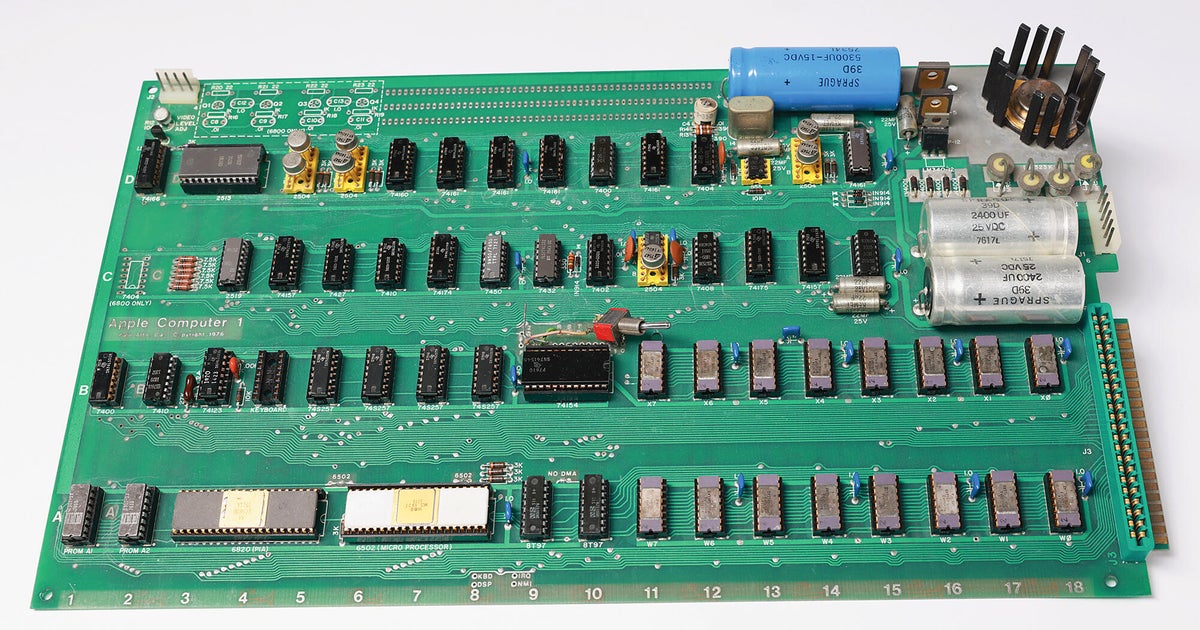
RR Auction opened bids on 191 Steve Jobs and early Apple items to mark Apple's 50th anniversary, led by the inaugural Apple check dated March 16, 1976 signed by Jobs and Wozniak (which drew $32,000 within 24 hours and is expected to fetch $500,000+), and an Apple‑1 prototype motherboard that hit $55,000 so far but is estimated to sell for at least half a million. The sale also includes a functional Lisa‑1, a jailbroken first‑generation iPhone, period marketing posters and personal artifacts from Jobs' stepbrother John Chovanec (bowties, Bob Dylan 8‑tracks, and the wooden desk from his Los Altos bedroom); bids are open through Jan. 29.
Market structure: The auction reinforces Apple’s intangible moat — scarcity of original Jobs-era artifacts increases perceived brand rarity and supports premium pricing for Apple-related collectibles. Direct winners are auction houses (RR Auction) and high-net-worth collectors; Apple (AAPL) as an issuer of new products receives only indirect PR benefit, not incremental revenue. Supply is fixed-to-declining (unique vintage items) while demand from collectors with liquid capital is rising, pushing single-item price discovery into 5-6 figure territory and creating asymmetric upside for provenance-verified pieces.
Risk assessment: Tail risks include provenance disputes, estate litigation, or fraud that could produce negative headlines and transient dilution of brand aura; low-probability but high-impact reputational events could knock 1-3% off short-term sentiment for AAPL. Time horizons split cleanly: immediate (auction closes Jan 29 — event-specific price moves of collectibles), short-term (4–12 weeks — sentiment bump around 50th anniversary), long-term (years — brand equity reinforcement). Hidden dependencies: collector liquidity and macro liquidity conditions (rates/liquidity tightening can depress memorabilia prices quickly).
Trade implications: Tactical equity exposure to AAPL is justified for a sentiment trade: consider a 1–2% portfolio long AAPL for 4–8 weeks with a 6% stop and 5–8% target; complement with options: buy a 6–10 week bull call spread sized to 0.5–1% of portfolio (buy ~10% OTM call, sell ~25% OTM call) to cap downside. Allocate a small 0.25–0.5% position to auction-house equities (e.g., Sotheby’s BID) for 3–12 months to capture secular growth in high-end collectibles; avoid allocating >0.5% to physical memorabilia unless provenance is independently verified.
Contrarian angles: The market may underprice the asymmetric optionality of cultural anniversaries: if Apple coordinates product/PR around the 50th, a 3–5% stock re-rate in weeks is plausible and underowned by funds focused on fundamentals. Conversely, the reaction can be overdone — memorabilia mania doesn’t translate into earnings, so cap allocations and prefer capped-loss options structures. Historical parallels (Beatles/rare art surges) show collectibles can decouple from corporate fundamentals for months, then revert; plan exits on objective triggers (auction final sales, Apple event dates).
AI-powered research, real-time alerts, and portfolio analytics for institutional investors.
Request DemoOverall Sentiment
neutral
Sentiment Score
0.10
Ticker Sentiment
