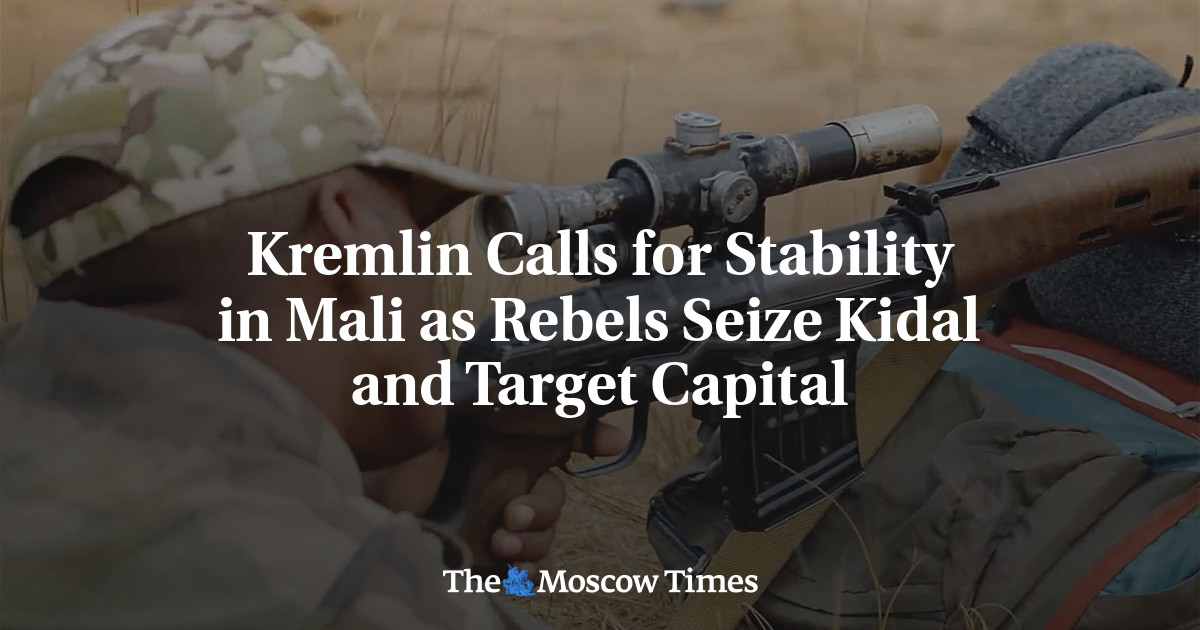
Mali’s government faces a severe security setback after rebel forces captured Kidal, forcing Russia’s Africa Corps to retreat after more than 24 hours of fighting. The article says the defense minister was killed, Assimi Goïta is reportedly in hiding, and militants are attempting to seize key facilities in Bamako, including the presidential palace. The Kremlin and Russia’s Defense Ministry both signaled continued support, but the situation is described as challenging and among the most serious threats to Mali’s central government since 2012.
This is less an isolated security event than a credibility shock to Russia’s Africa project. The second-order effect is that Moscow’s low-cost power-projection model now looks brittle: if the client regime cannot hold northern territory or even protect the capital perimeter, the deterrence value of Russian advisers, drones, and contractors falls sharply across the Sahel. That raises the probability of force reallocations, higher replacement costs, and a more defensive posture from Moscow that crowds out future expansion into neighboring weak states.
For Mali specifically, the market is underestimating how quickly a governance collapse can morph into a payments-and-logistics event. Any disruption around the presidency, airports, fuel depots, and road corridors would hit customs collections, mining exports, and import financing within days to weeks, while the larger macro damage compounds over months through wider spreads, FX weakness, and delayed donor engagement. The biggest spillover is regional: Burkina Faso and Niger are exposed to copycat insurgent signaling and potentially more militarization, which would be negative for border trade and any cross-border infrastructure thesis.
The contrarian angle is that the immediate move may be overpricing regime fragility while underpricing a negotiated reset. If the junta survives with Russian backing, the near-term reaction could be a harsh but temporary security crackdown rather than a full state break, which would blunt the trade after 1-3 weeks. The real medium-term risk to the Kremlin is reputational, not just tactical: visible retreat in Mali increases the odds that clients elsewhere demand better terms, more hardware, or alternative sponsors, raising Russia’s marginal cost of influence across frontier markets.
AI-powered research, real-time alerts, and portfolio analytics for institutional investors.
Request DemoOverall Sentiment
strongly negative
Sentiment Score
-0.70
