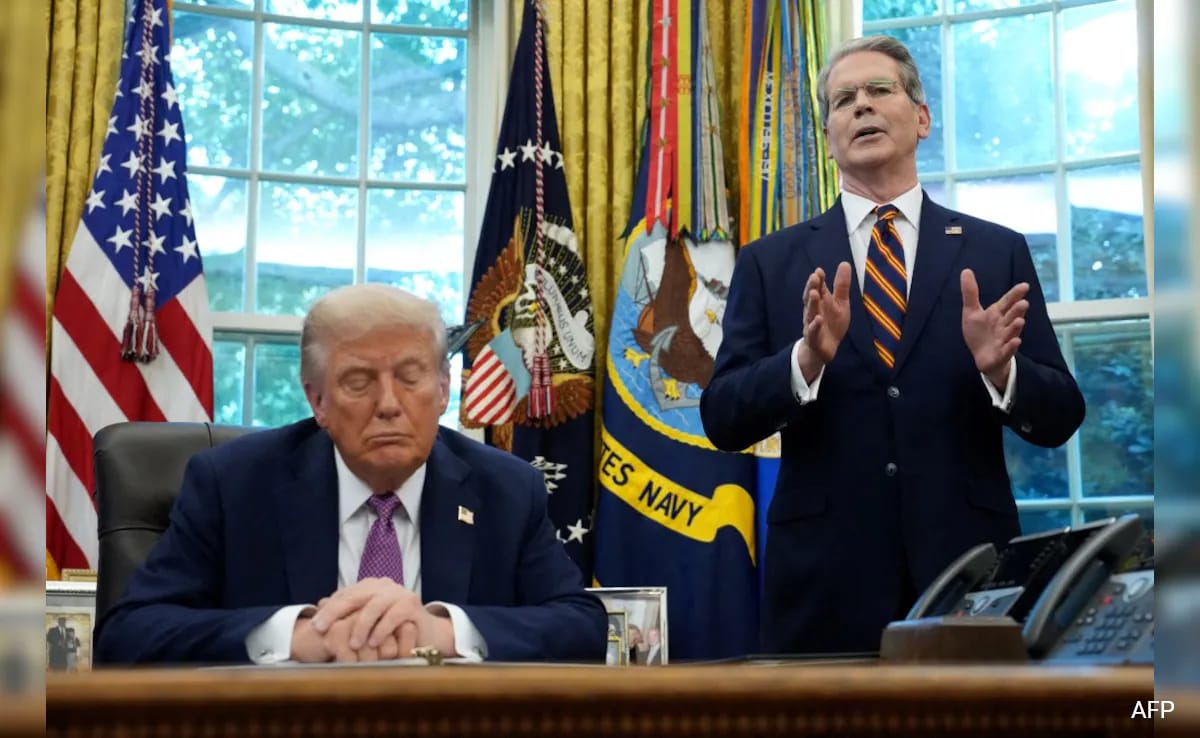
Treasury Secretary Scott Bessent announced a new H-1B visa policy under President Trump, which will temporarily bring skilled foreign workers to the U.S. for 3-7 years to train American workers, aiming to rebuild domestic manufacturing in critical sectors like semiconductors and shipbuilding through a "knowledge transfer" initiative. This policy seeks to repatriate industries and reduce long-term reliance on overseas labor. Bessent also confirmed discussions about a potential USD 2,000 tariff rebate for families earning under USD 100,000, aligning with the administration's broader "Parallel Prosperity" economic agenda.
Treasury Secretary Scott Bessent announced a new H-1B visa policy designed to temporarily bring skilled foreign workers to the U.S. for 3-7 years, specifically to facilitate "knowledge transfer" and train American workers. This initiative aims to address the current lack of domestic talent in critical high-skilled manufacturing roles, as highlighted by the administration's stance that "US Doesn't Have Enough Talent" for these jobs currently.
The policy targets the revitalization of key U.S. manufacturing sectors, including semiconductors and shipbuilding, which have experienced significant outsourcing over decades. By repatriating these industries, the administration seeks to reduce reliance on imports and rebuild domestic production capabilities, fostering long-term self-sufficiency.
Furthermore, Bessent confirmed discussions regarding a potential USD 2,000 tariff rebate for families earning under USD 100,000, aligning with the administration's "Parallel Prosperity" economic agenda. This broader strategy aims to ensure both Wall Street and Main Street benefit from economic policies, supported by a stable Treasury market, contributing to an overall optimistic market sentiment.
AI-powered research, real-time alerts, and portfolio analytics for institutional investors.
Overall Sentiment
strongly positive
Sentiment Score
0.75
Ticker Sentiment
