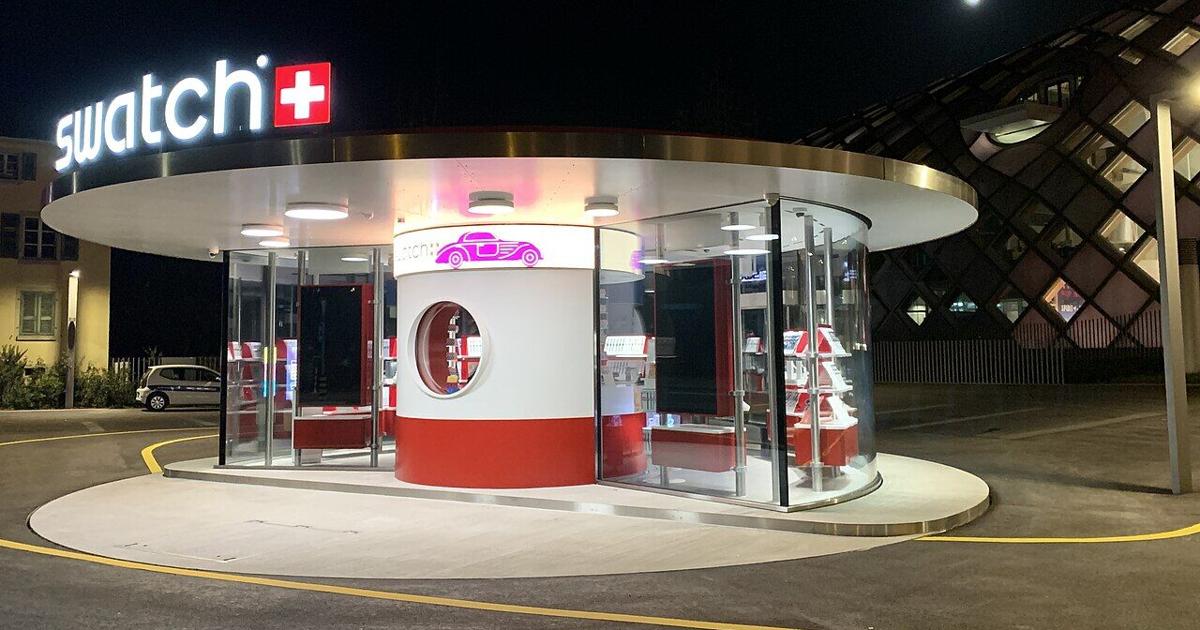
Swatch's launch of the Bioceramic Royal Pop Collection triggered crowds at more than 30 stores globally, forcing closures in cities including Paris, London, Toronto, Atlanta, and Dubai for public safety reasons. Police intervened at locations in New York, where at least one arrest was reported and some shoppers were reportedly pepper-sprayed. The episode highlights strong consumer demand and resale-driven hype, but the article does not indicate a material financial impact.
The immediate economic winner is not the watchmaker but the resale venue ecosystem. When a launch is engineered to create visible scarcity and queue-driven social proof, the first-order margin sits with the brand, but the second-order monetization accrues to platforms that capture arbitrage and urgency; EBAY is the cleanest listed beneficiary because it monetizes the gap between retail price and perceived collectible value without inventory risk. The fact that product was positioned as non-limited while behaving like a limited drop is especially supportive for aftermarket liquidity: it pulls in both genuine collectors and short-term flippers, which is the ideal mix for continued listings and bid-side discovery.
The harder-to-spot risk is reputational fatigue. Crowd-control incidents widen the window for regulatory scrutiny around store allocation, queuing rules, and potentially online-only releases, which would compress the very scarcity premium that drives aftermarket activity. That creates a near-term tradeoff: if Swatch responds by broadening access over the next few weeks, resale spreads should normalize quickly; if it keeps distribution tight, the hype can persist for several drops, but the brand may absorb more negative consumer sentiment and lower conversion on future collaborations.
For equities, the signal is stronger for marketplace flows than for luxury demand itself. This type of event does not prove durable watch demand; it proves the market will pay up for narrative-driven collectibles, and that supports transaction volume on platforms where price discovery happens. The contrarian read is that the move may be overdone on the brand side but underappreciated on the marketplace side: the raw value is not in the $400 product, it is in the thousands of dollars of secondary-market turnover created by each successful buyer.
The main catalyst to monitor is whether future drops move online or adopt stricter anti-flip measures within days to weeks. A move to verified customer allocation would cut the speculative loop, while continued physical-store scarcity should keep social-media-driven demand elevated for another 1-2 launch cycles.
AI-powered research, real-time alerts, and portfolio analytics for institutional investors.
Request DemoOverall Sentiment
neutral
Sentiment Score
0.05
Ticker Sentiment
