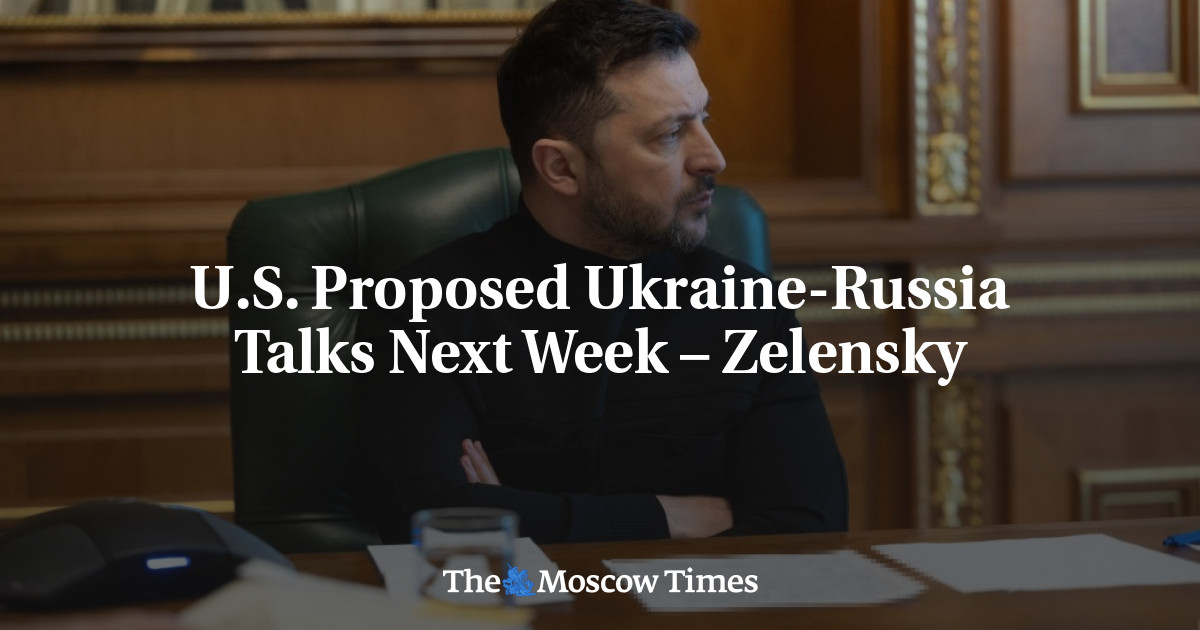
The U.S. has proposed another Washington-mediated trilateral Russia-Ukraine talk next week after two prior rounds failed to break the stalemate in the four-year war; the meeting was postponed from last week and could be held in Switzerland or Turkey (which offered to host). Zelensky urged the West not to lift sanctions — including on Russian oil — and the EU opposes removing oil sanctions, while Putin has warned Moscow will seize the rest of eastern Ukraine if talks fail. The development keeps geopolitical risk and the energy-risk premium elevated and could materially move oil and regional risk assets if talks change the sanctions outlook or if negotiations collapse.
The US-led mediation path creates a near-term binary that markets will price as a volatility catalyst rather than a linear de-risking. In the first 1–4 weeks expect realized volatility in energy and defense sectors to spike on headlines; the clearest transmission mechanism is maritime and insurance costs (which can swing effective delivered oil costs by several dollars per barrel) and short-term LNG destination switching that amplifies regional spreads.
Sanctions are the structural valve in this shock: political frictions make wholesale relief unlikely in the medium term, so the prudent base case is persistent constraint on Russian energy flows with episodic supply relief only if there are narrowly carved exceptions. That implies multi-quarter upside optionality for defense contractors, specialty insurers, and logistics firms that profit from longer voyages and complex routing, while refiners and high-beta European industrials are second-order losers due to feedstock and freight cost headwinds.
Catalysts to watch: (1) any concession language that creates carve-outs for energy or insurance will compress the risk premium within days-weeks; (2) public posture shifts from major EU capitals or a bilateral backchannel with Ankara will move markets faster than formal trilateral communiques; (3) battlefield dynamics — if Russia secures a noticeable territorial gain in months, expect a sustained policy response boosting defense budgets and long dated risk premia. Contrarian angle: the market’s reflex to “talks = peace” underestimates how mediation can harden negotiating positions, making a near-term price snap-back less likely than a volatility regime that benefits asymmetric long exposure to defense/energy insurance vectors.
AI-powered research, real-time alerts, and portfolio analytics for institutional investors.
Request DemoOverall Sentiment
neutral
Sentiment Score
0.00
